OLACDE highlights the Relevance of Energy Efficiency in Latin America during IEA Event in São Paulo

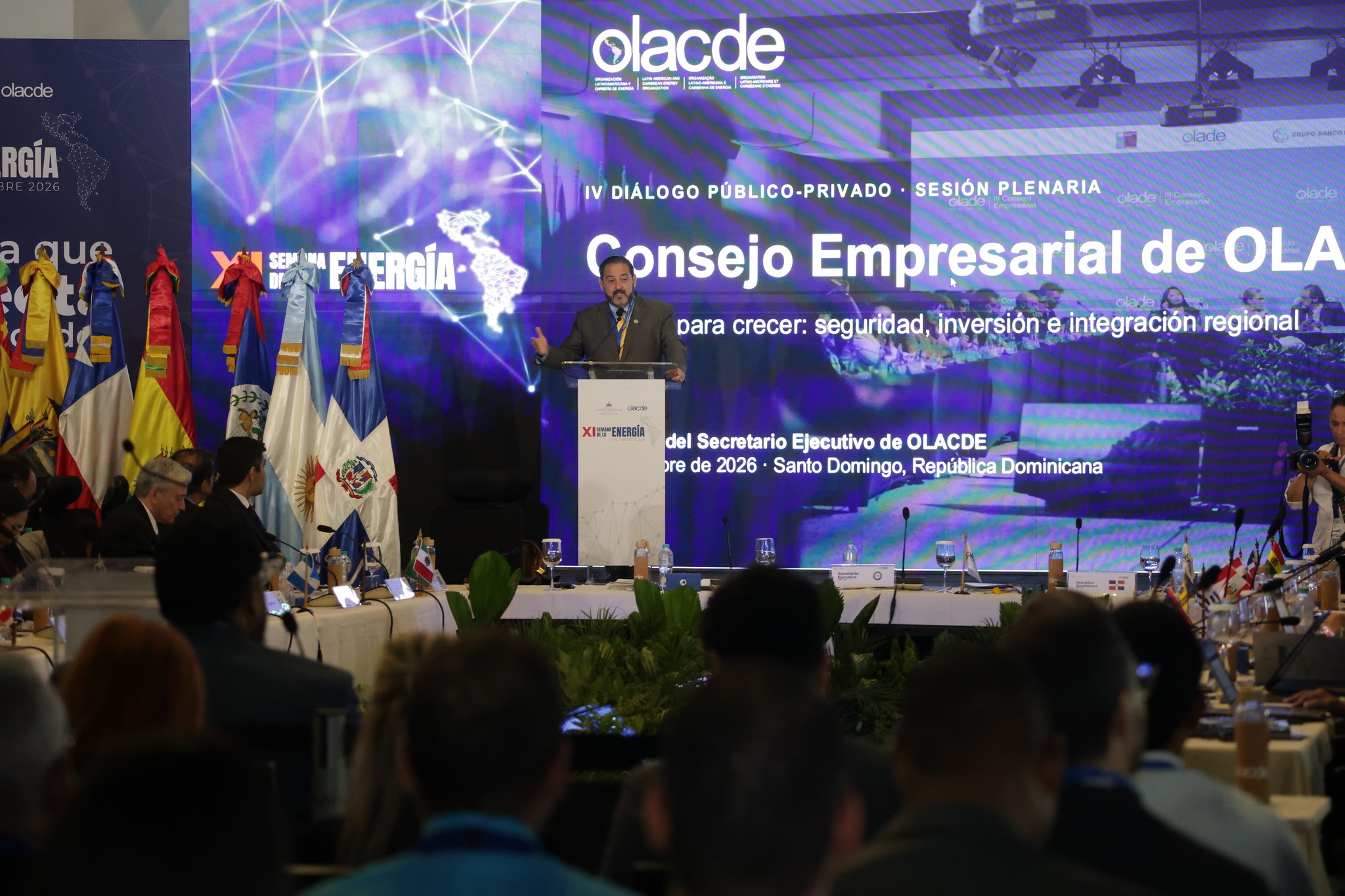
The International Energy Agency (IEA) organized the Energy Efficiency Policy Training Week for Latin America, a key event held in São Paulo that brought together more than 2,500 professionals from over 120 countries, primarily from government institutions and support organizations in emerging economies. The main objective of the Training Week was to build capacity among policymakers in the region, providing tools and knowledge to design and implement effective energy efficiency initiatives aligned with local and global needs. Among the prominent participants was Mijal Brady, Chief of Staff of The Latin American and Caribbean Energy Organization (OLACDE), who delivered an inspiring address on the strategic role of energy efficiency in the sustainable development of Latin America and the Caribbean. During her speech, Brady emphasized the intrinsic connection of the region with renewable energy sources such as solar and wind, highlighting energy efficiency as a fundamental pillar for transitioning towards a more sustainable future. “It’s not just about reducing consumption, but about maximizing the benefits derived from its implementation,” she stated. Brady underscored the importance of adopting a multisectoral approach to energy efficiency policies, integrating not only energy savings but also the multiple additional benefits, including:
  • Reduction of greenhouse gas (GHG) emissions.
  • Improvements in the quality of life of communities.
  • Promotion of technological innovation and industrial competitiveness.
Her address concluded with a call to action: “Energy efficiency must be a shared task among governments, the private sector, academia, and local communities. Only through joint efforts can we achieve a more sustainable energy future for our region.” The event made it clear that energy efficiency is not only a tool for saving energy but also a key component in addressing current climate and social challenges. Through regional and international collaboration, Latin America and the Caribbean continue to strengthen their path toward sustainable energy development.
Share this news

OLACDE highlights the Relevance of Energy Efficiency in Latin America during IEA Event in São Paulo

Newsletter summary

The International Energy Agency (IEA) organized the Energy Efficiency Policy Training Week for Latin America, a key event held in São Paulo that brought together over 2,500 professionals from more than 120 countries, with OLACDE participating.

Capacity building & knowledge

We advance high-level technical training programs that foster experience-sharing and develop the human and institutional capacities required to drive energy transformations across our region.

Our academic programs offer executive courses, postgraduate diplomas, master’s degrees, and innovative initiatives focused on key areas such as the energy transition, conventional and renewable energy, electromobility, and regional integration.

OLACDE builds a regional network of energy expertise, connecting governments, young professionals, academics, and industry experts to foster collaborative solutions through technical cooperation and talent development to address future energy and climate challenges.

Technical cooperation & climate finance

We strengthen South-South and triangular cooperation as key drivers to accelerate energy transitions across Latin America and the Caribbean. OLACDE unites efforts among governments, multilateral organizations, academic institutions, and the private sector to mobilize financing, technical expertise, and innovative solutions tailored to our regional context.

We advance strategic initiatives aimed at directing resources toward decarbonization, conventional energy, renewables, and energy justice projects—building a more efficient, inclusive, and sustainable regional cooperation architecture.

Regional energy community

We are building a regional energy community with a global outlook, positioning Latin America and the Caribbean as a pivotal player on the international stage. OLACDE amplifies regional representation in key multilateral energy, trade, and climate forums by fostering strategic alliances and international cooperation.

Through flagship events such as Energy Week and new spaces for high-level dialogue, we champion a collective voice that attracts investment, drives technical partnerships, and unlocks sustainable development opportunities across our region

Energy transition & strategic projects

We foster a regional energy transition built on sustainability, energy security, and social inclusion. OLACDE supports Member Countries in adopting emerging technologies—such as energy efficiency, storage solutions, green hydrogen, electromobility, and grid digitalization—to accelerate the sector’s decarbonization.

Our approach promotes strategic projects that strengthen energy resilience across Latin America and the Caribbean, reducing emissions while building a cleaner, more competitive energy infrastructure. Key regional initiatives, including OEMLAC, position our region as a benchmark for climate innovation and sustainable energy development.

Energy information and data

We develop regional platforms dedicated to energy intelligence, technical analysis, and strategic data systems that empower both public and private decision-making across the sector. OLACDE drives digital transformation in energy by leveraging artificial intelligence, georeferencing, and advanced analytical tools to map regional energy trends.

The integration of systems such as SieLAC, along with new regional digital platforms, consolidates reliable, up-to-date technical data—enabling modern, interoperable, and evidence-based energy planning.

Regional energy integration

We foster cooperation across the regional energy sector by prioritizing infrastructure development, cross-border collaboration, and regulatory alignment to enhance energy security in Latin America and the Caribbean. OLACDE coordinates strategic projects in power grid interconnections, natural gas integration, and joint energy planning to build resilient, sustainable partnerships.

Working alongside the governments of our 27 Member States, regional blocs, multilateral institutions, and key public and private stakeholders, we drive initiatives that introduce innovative energy exchange mechanisms, strengthen national capacities, and accelerate a unified regional energy transition.