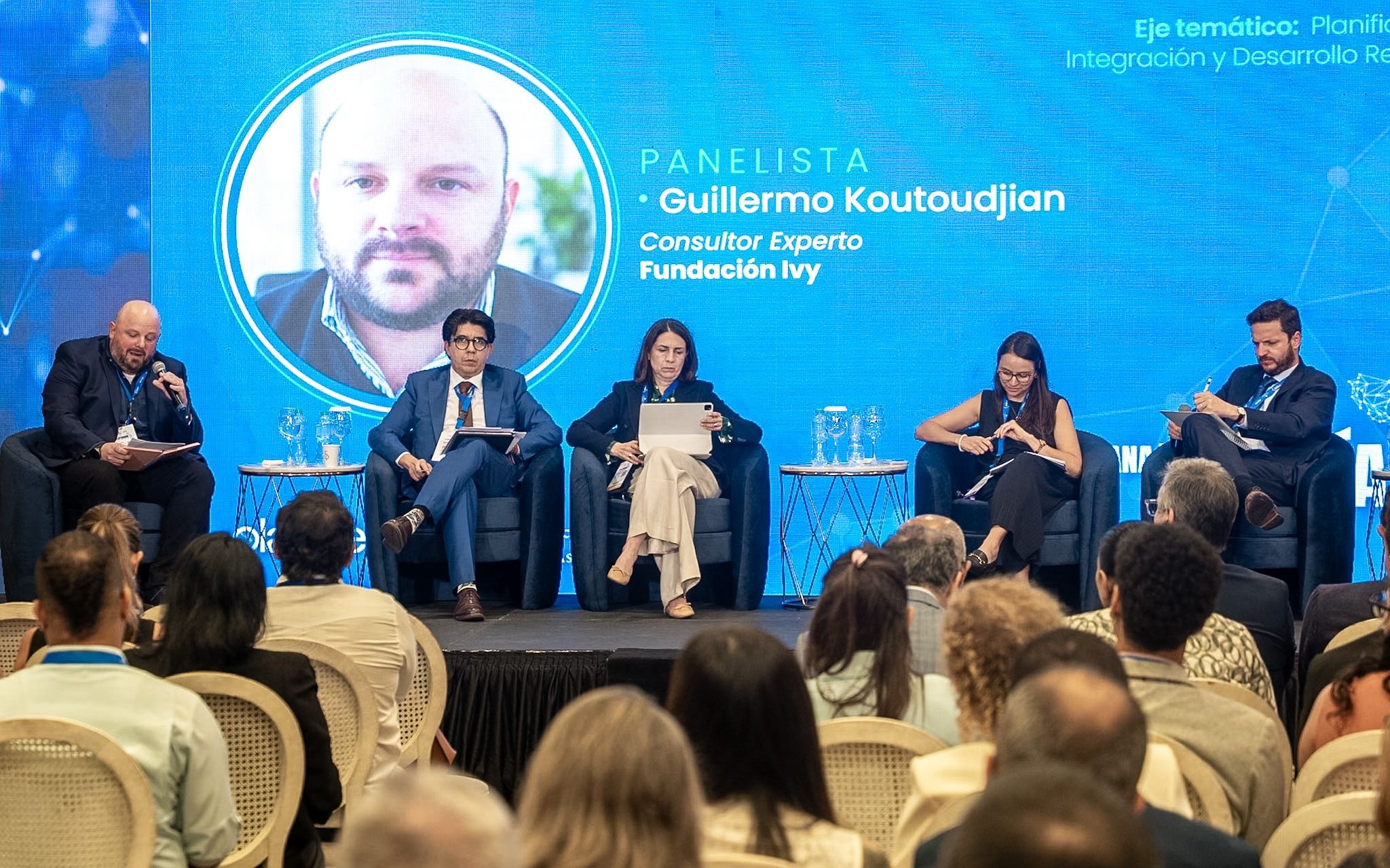
The 11th Energy Week highlighted renewed interest in nuclear energy across Latin America and the Caribbean. Countries in the region presented progress in planning, regulation, and capacity building, while international organizations, financial institutions, and industry representatives examined emerging technologies and the conditions needed to turn these initiatives into viable projects.
Santo Domingo, October 2026. The 11th Energy Week dedicated a special session to the evolving nuclear energy landscape in Latin America and the Caribbean. The discussion linked growing interest among several countries and advances in small modular reactors (SMRs) with one of the sector’s main challenges: structuring projects capable of securing financing.
In his opening remarks, Guido Maiulini, Head of Strategic Advisory at OLACDE, recalled that the region has decades of experience in nuclear technology, along with scientific, technological, and industrial capabilities developed in both electricity generation and other applications. “When we talk about nuclear energy, we are not only talking about energy, but also about peace and technological, scientific, economic, and social development,” he stated.
Maiulini also noted that renewed interest in nuclear energy coincides with the emergence of smaller, modular reactors, which reduce project scale and offer alternatives for electricity systems that do not require large-scale power plants. He highlighted that this technological shift is also reshaping investment and financing conditions, emphasizing that OLACDE supports these processes through a policy of technological neutrality, respecting the different energy pathways pursued by countries across the region.
Facundo Delucchi, from the International Atomic Energy Agency (IAEA) and moderator of both sessions, emphasized that the discussion is no longer limited to the future potential of nuclear technology, but now reflects concrete initiatives already underway. Growing electricity demand, the need for firm power generation, technological advances, and new financing opportunities are prompting an increasing number of countries to consider nuclear energy as an option.
Ilse Berdellians, from the International Atomic Energy Agency (IAEA), explained that the agency supports countries through a 19-milestone methodology that enables them to progressively assess the feasibility of a nuclear power program and develop the capacities needed for its potential implementation. According to the projections presented, Latin America and the Caribbean could add approximately 8 GW of new nuclear capacity by 2060, of which nearly 40% would come from small modular reactors (SMRs).
Countries reported varying levels of progress along this path. Mauricio Bejarano, Vice Minister of Mines and Energy of Paraguay, noted that rapidly growing electricity demand has led the country to include nuclear energy as an option in its long-term planning and to initiate the process recommended by the IAEA. Gabriel Velásquez, Technical Director of Energy Planning of Guatemala, explained that the country has already modeled the potential introduction of its first nuclear power plant and is working with the international agency to conduct further studies and develop its legal framework.
For her part, Gaddis Corporan Segura, Vice Minister of Nuclear Energy of the Dominican Republic, explained that the country is moving forward with an implementation plan, specific legislation, an interinstitutional framework, and studies to assess potential sites. The possibility of introducing smaller-scale reactors is part of the country’s long-term planning in response to projected growth in electricity demand and the need to reduce dependence on imported fuels.
Representing the industry, Gerardo Alemany, Project Manager at Candu Energy Argentina, highlighted the opportunities that global nuclear expansion presents for Latin American professionals and suppliers. He showcased the experience of Argentina’s Embalse Nuclear Power Plant and its life extension project as an example of the technical and industrial capabilities already available in the region, while noting the growing international demand for skilled professionals and specialized supply chains.
The second part of the session focused on financing. Jari Väyrynen, from the World Bank, explained that the institution has resumed its engagement in the nuclear sector and can support projects through technical assistance, feasibility and site assessment studies, institutional capacity building, infrastructure development, guarantees, and the mobilization of public and private capital. He also highlighted opportunities across the nuclear energy value chain.
Lina Escobar, Energy Division Specialist at the Inter-American Development Bank (IDB), presented the recent cooperation agreement with the International Atomic Energy Agency (IAEA) and noted that initial support will focus on helping countries establish the institutional and regulatory conditions needed to assess nuclear power programs. At later stages, the Bank may explore instruments such as guarantees and financing options through its public and private sector arms.
Nelly Abrego, Director of the agency responsible for implementing El Salvador’s nuclear power program, presented one of the most advanced initiatives among countries newly exploring nuclear energy. El Salvador already has specific legislation, a regulatory authority, and an implementation roadmap in place, and is now advancing technical studies, site assessments, regulatory harmonization, and capacity building to support a future decision.
The sessions highlighted a tangible shift in the regional nuclear energy agenda: countries newly exploring nuclear energy are moving beyond initial interest toward technical studies, regulatory frameworks, and dedicated institutional structures. At the same time, technical organizations, development banks, and industry stakeholders are beginning to coordinate their capabilities to support these processes and expand the energy options available to Latin America and the Caribbean.