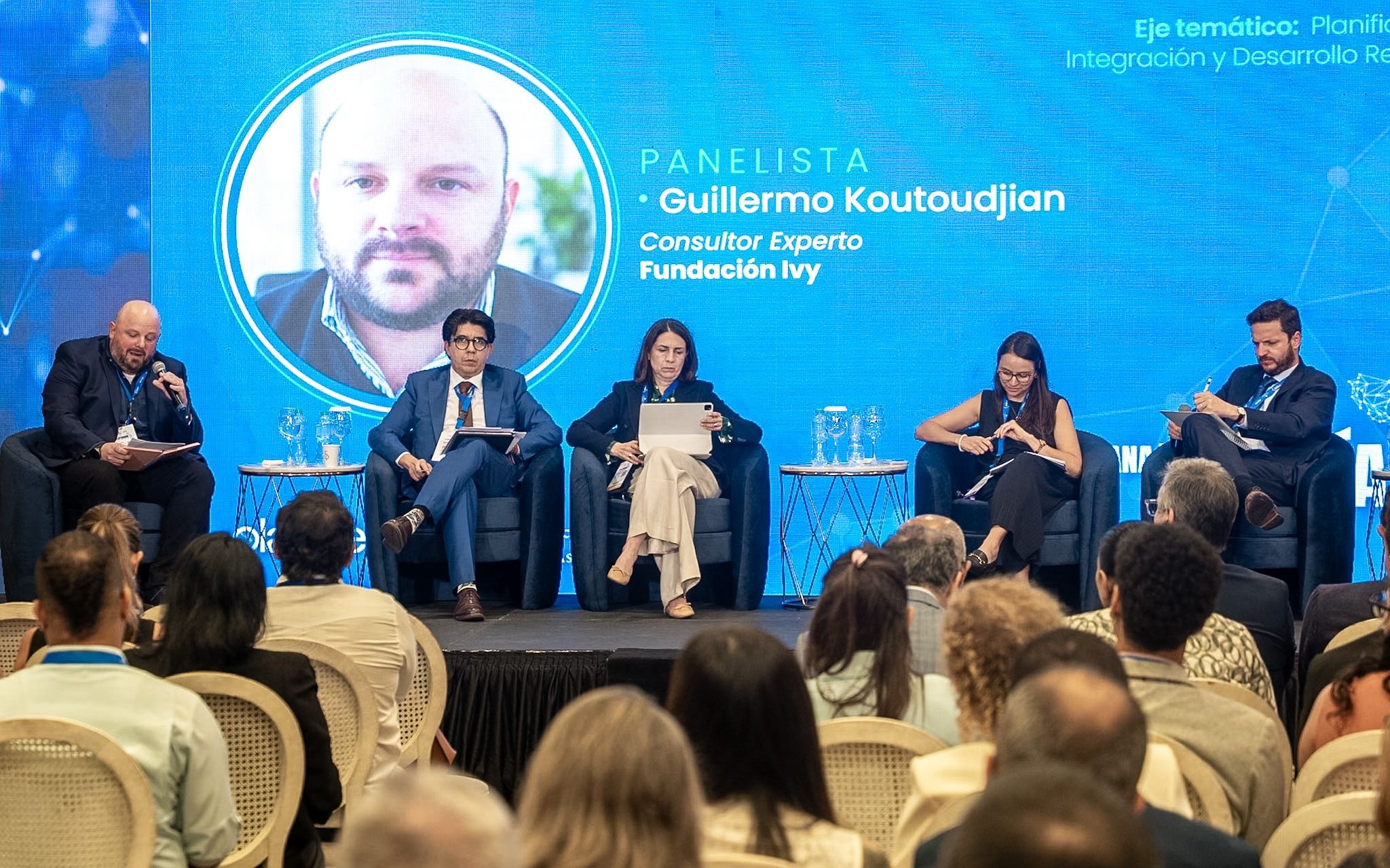
The 11th Energy Week addressed one of the region’s major energy policy challenges: how to protect vulnerable populations without compromising fiscal sustainability, investment incentives, and the efficiency of energy systems. Panelists agreed on the need to reduce blanket subsidies, improve targeting, and make transparent all costs that currently remain hidden within the energy sector.
Santo Domingo, October 2026. The session “Energy Subsidies in Latin America and the Caribbean: Fiscal Sustainability, Social Equity, and Energy Transition” brought together experts from the World Bank, the Inter-American Development Bank (IDB), Argentina’s Ministry of Economy, and the Ivy Foundation / Inter-American Dialogue to examine the design, management, and impacts of energy subsidies on public finances, investment, and the energy transition.
Esteban Kiper, OLACDE Consultant and moderator of the panel, highlighted the central challenge: subsidies are a tool to expand energy access and reduce energy poverty, but they also compete for resources with the investments needed for infrastructure, resilience, and the energy transition.
Representing the World Bank, Energy Specialist Lucía Spinelli emphasized that there is no one-size-fits-all solution and that any reform must balance the protection of vulnerable populations, fiscal sustainability, and the viability of the energy system itself. “We need coordination, we need dialogue, and we need governance,” she summarized.
Augusto Bonzi, Energy Specialist at the Inter-American Development Bank (IDB), noted that an effective policy requires clearly defined objectives and beneficiaries, integrated social and energy registries, transparency regarding fiscal costs, and mechanisms for periodic review.
Antonio Milanese, Undersecretary of Energy Efficiency and Information at Argentina’s Ministry of Economy, highlighted the regressive nature of blanket subsidies and emphasized the importance of gradually moving toward more targeted support.
For his part, Alfonso Blanco, Chief Operating Officer of the Ivy Foundation and Director of the Energy and Climate Program at the Inter-American Dialogue, warned that a significant portion of subsidy costs remains outside visible budgetary transfers, taking the form of below-cost fuel prices, tariff deficits, or deferred investments. He noted that these distortions also affect energy efficiency and investment decisions.
Panelists agreed that providing better protection does not mean increasing subsidies, but rather identifying beneficiaries more precisely, ensuring cost transparency, and reducing distortions. In his closing remarks, Kiper emphasized that simple rules and price signals more closely aligned with actual costs can provide a stronger foundation for policies aimed at expanding energy access, improving efficiency, and advancing the energy transition.