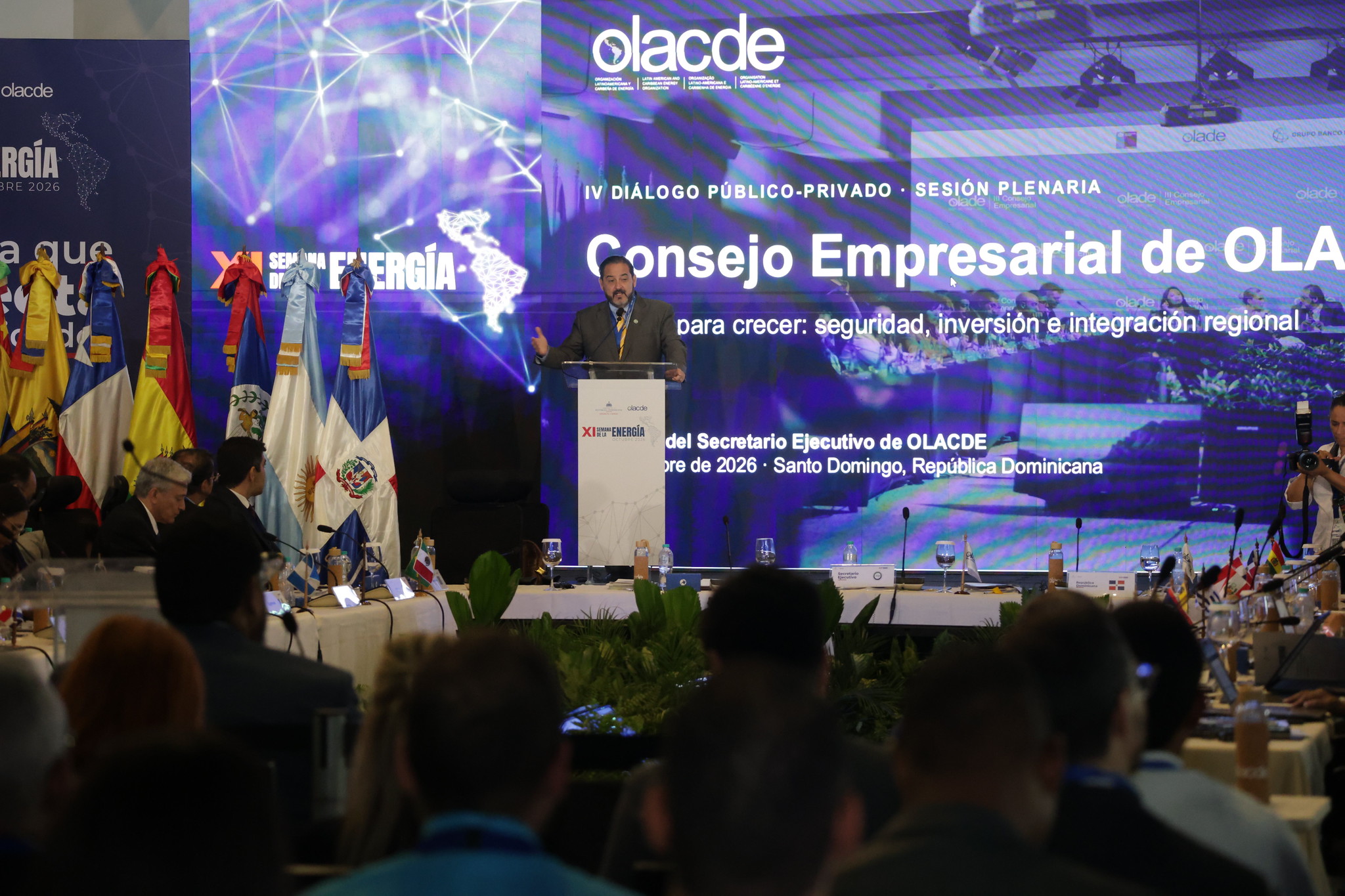
For its elaboration, several relevant points were considered among them, the current opportunities for the use of own energy resources, both renewable and fossil; in particular, wind, solar, marine and geothermal energy; the potential of hydroelectric generation; biomass and biofuels, as well as the use of both conventional and unconventional hydrocarbons, which provides opportunities for greater energy self-sufficiency to our countries and subregions.
In accordance with the objectives set forth in the Lima Agreement, the constituent instrument of the Organization, OLACDE promotes the regional commitment, through the Lima Declaration that contains the following postulates:
FIRST. Highlight the effectiveness of the guiding principles of the constitutive treaty of OLACDE, as well as the need to adapt it to the new times by defining priorities of regional scope to update the institutional agenda.
SECOND. Reaffirm the importance of OLACDE as the most suitable space to maintain permanent and high-level sectoral political dialogue, and as the effective platform to lead the region to the achievement of the energy development of Latin America and the Caribbean, through the coordination and exchange of information at the regional level for interaction and collaboration on issues of global scope.
THIRD. Strengthen regional energy integration through the undertaking of joint efforts aimed at promoting synergies for collaboration, complementarity and exchange; recognizing the need to support and strengthen the role of OLACDE in this process as a regional entity that has the institutional capacity and expertise necessary to propose, accompany and promote the initiatives that are generated in energy integration among its Member Countries.
FOURTH. Grant the nature of regional priorities to complementarity and regional energy integration, promoting the revitalization and creation of regional electric energy markets and liquid, solid and gaseous fuels, including renewable sources; assess the need to have open, transparent, modern and reliable information systems, strengthening the legal and institutional framework, as well as the capacities of decision makers in matters of policy and energy planning.
FIFTH. Support, according to each country’s capacities, the efforts undertaken by the Organization and its Member Countries in order to guarantee the admission and incorporation of Permanent Observers and Non-Full Members to OLACDE, thus extending its activities to other geographic areas by taking advantage of the benefits of cooperation, technology diffusion and lessons learned in replicable good practices.
SIXTH. Ratify the commitment assumed by the Member Countries of OLACDE, regarding the recognition of the energy transitions process, undertaken by Latin America and the Caribbean, as an essential element of the development strategies aimed at harmonizing economic growth with the abatement of Greenhouse Gas emissions, respecting the different routes, stages and alternatives defined at the national level corresponding with the development level of the countries.
SEVENTH. Recognize that there are still more than 18 million people in Latin America and the Caribbean without access to electricity or other energy services and that it is a priority to achieve universal access to energy for our population, accelerating actions aimed at reducing the existing gaps, through advising and accompanying the implementation of policies and plans to cover the last mile to achieve this objective, based on the recognition of the national regulations and capacities of the OLACDE Member Countries.
EIGHTH. Consider the importance of giving continuity to the undertaking of effective actions aimed at encouraging greater use of the potential of renewable energy sources, available in Latin America and the Caribbean, with the purpose of increasing the percentage share of these sources in the regional energy matrix, considering as fundamental elements for the achievement of these objectives: the exchange of knowledge regarding public policies, the development of regional markets, the promotion of technologies adapted to our region and monitoring of results achieved.
NINTH. Highlight the important role of innovation in the development of the future energy systems for our region, identifying the need to act collaboratively and permanently among the OLACDE Member Countries, promoting research and development.
TENTH. Assess the need to strengthen regional actions in energy efficiency, through the development of collaborative schemes and exchange between countries aimed at contributing to the development and improvement of regulatory, normative and institutional frameworks that support long-term public policies aimed at energy efficiency.
ELEVENTH. Recognize the need of a progressive pursuit of cleaner and resilient energy generation alternatives, assuming that reducing external dependence to guarantee energy security and the improvement of human development indicators, make relevant the role of conventional and non-conventional hydrocarbons in the regional energy matrix, mainly in the countries that have these resources.
TWELFTH. Continue with the efforts for the compliance of the acquired commitments by the Member Countries of OLACDE within the scope of the 2030 Agenda, as well as in the United Nations Framework Convention on Climate Change.
THIRTEENTH. Reaffirm the role of OLACDE as the Latin American and Caribbean intergovernmental mechanism aimed at coordinating and promoting the development of the region on energy issues, reiterating the willingness of the Member Countries to carry out the necessary actions aimed at guaranteeing the good functioning of the Organization.