
CAF and OLACDE sign agreement to promote energy integration in South America

The development bank of Latin America and the Caribbean (CAF) and The Latin American and Caribbean Energy Organization (OLACDE) are pleased to announce the signing of a Technical Cooperation Agreement to promote energy integration in MERCOSUR countries, Bolivia, and Chile. This agreement, which consolidates the collaboration between both institutions, aims to contribute to a fair energy transition by leveraging gas resources through the optimization and expansion of natural gas transportation infrastructure.

Current and future challenges in the region
In recent decades, the energy landscape has evolved with the incorporation of new sources of supply and liquefied natural gas (LNG) regasification technology in Chile, Argentina, and Brazil. The development of unconventional deposits, such as the Vaca Muerta formation in Argentina, and the advancement of hydrocarbon resources in Brazil’s deep waters, have opened new opportunities and challenges in the energy sector. Additionally, since the 2000s, the global development of the LNG market has driven the installation of regasification plants in Chile, Argentina, and Brazil to ensure a constant energy supply.

“Regional energy integration is a fundamental pillar for the sustainable development of Latin America. This partnership with OLACDE allows us to join efforts to create a stronger and more efficient energy network that benefits all the countries involved,” said Antonio Silveira, CAF’s Manager of Physical Infrastructure and Digital Transformation.

For his part, the Executive Secretary of The Latin American and Caribbean Energy Organization (OLACDE) stated, “At OLACDE, we are proud to formalize this cooperation agreement with CAF. This strategic alliance marks a milestone in our commitment to promoting energy integration in MERCOSUR countries, Bolivia, and Chile. This agreement not only strengthens our inter-institutional collaboration but also underscores our shared vision of moving towards a fair and sustainable energy transition.”

The regional gas integration project driven by CAF and OLACDE will seek to create a regional gas balance that optimizes the use of existing and projected infrastructure. Additionally, work will be done on regulatory convergence scenarios that allow for strategic planning tailored to each country’s energy and economic needs, overcoming historical barriers and advancing toward more equitable and inclusive integration, enabling all countries in the region to benefit from an efficient and secure energy network.

The work will be divided into 5 phases, each culminating in an in-person validation and consensus session with relevant stakeholders: (i) review and consolidation of available studies, (ii) projection of supply and demand, (iii) optimization of existing infrastructure, (iv) optimization with new infrastructures, and (v) preparation of project profiles.

“This agreement marks a milestone in our commitment to a fair and inclusive energy transition. Natural gas will play a crucial role as a transition energy, allowing us to reduce emissions while ensuring reliable and affordable energy access for all,” said Jorge Srur, CAF’s Regional Manager for the South.

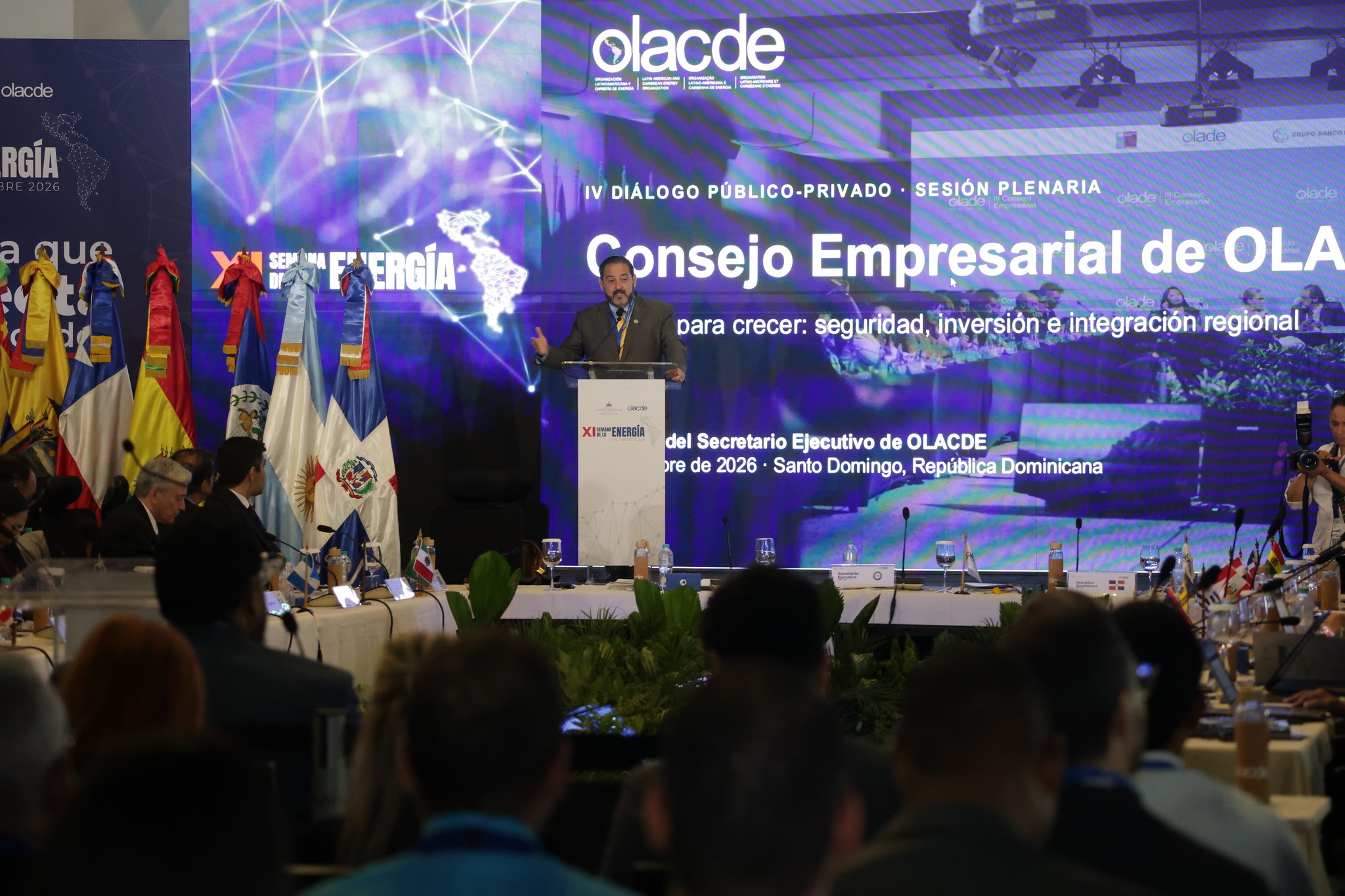
The signing of the agreement took place in Asunción, Paraguay, as part of the IX Energy Week, an event that brings together the main regional energy actors to discuss challenges and opportunities in the sector’s transformation.
 

Share this news

CAF and OLACDE sign agreement to promote energy integration in South America

Newsletter summary

The initiative seeks to optimize the use of existing and projected gas infrastructure in MERCOSUR countries, Bolivia, and Chile, contributing to a fair energy transition in the region.

Capacity building & knowledge

We advance high-level technical training programs that foster experience-sharing and develop the human and institutional capacities required to drive energy transformations across our region.

Our academic programs offer executive courses, postgraduate diplomas, master’s degrees, and innovative initiatives focused on key areas such as the energy transition, conventional and renewable energy, electromobility, and regional integration.

OLACDE builds a regional network of energy expertise, connecting governments, young professionals, academics, and industry experts to foster collaborative solutions through technical cooperation and talent development to address future energy and climate challenges.

Technical cooperation & climate finance

We strengthen South-South and triangular cooperation as key drivers to accelerate energy transitions across Latin America and the Caribbean. OLACDE unites efforts among governments, multilateral organizations, academic institutions, and the private sector to mobilize financing, technical expertise, and innovative solutions tailored to our regional context.

We advance strategic initiatives aimed at directing resources toward decarbonization, conventional energy, renewables, and energy justice projects—building a more efficient, inclusive, and sustainable regional cooperation architecture.

Regional energy community

We are building a regional energy community with a global outlook, positioning Latin America and the Caribbean as a pivotal player on the international stage. OLACDE amplifies regional representation in key multilateral energy, trade, and climate forums by fostering strategic alliances and international cooperation.

Through flagship events such as Energy Week and new spaces for high-level dialogue, we champion a collective voice that attracts investment, drives technical partnerships, and unlocks sustainable development opportunities across our region

Energy transition & strategic projects

We foster a regional energy transition built on sustainability, energy security, and social inclusion. OLACDE supports Member Countries in adopting emerging technologies—such as energy efficiency, storage solutions, green hydrogen, electromobility, and grid digitalization—to accelerate the sector’s decarbonization.

Our approach promotes strategic projects that strengthen energy resilience across Latin America and the Caribbean, reducing emissions while building a cleaner, more competitive energy infrastructure. Key regional initiatives, including OEMLAC, position our region as a benchmark for climate innovation and sustainable energy development.

Energy information and data

We develop regional platforms dedicated to energy intelligence, technical analysis, and strategic data systems that empower both public and private decision-making across the sector. OLACDE drives digital transformation in energy by leveraging artificial intelligence, georeferencing, and advanced analytical tools to map regional energy trends.

The integration of systems such as SieLAC, along with new regional digital platforms, consolidates reliable, up-to-date technical data—enabling modern, interoperable, and evidence-based energy planning.

Regional energy integration

We foster cooperation across the regional energy sector by prioritizing infrastructure development, cross-border collaboration, and regulatory alignment to enhance energy security in Latin America and the Caribbean. OLACDE coordinates strategic projects in power grid interconnections, natural gas integration, and joint energy planning to build resilient, sustainable partnerships.

Working alongside the governments of our 27 Member States, regional blocs, multilateral institutions, and key public and private stakeholders, we drive initiatives that introduce innovative energy exchange mechanisms, strengthen national capacities, and accelerate a unified regional energy transition.