Andrés Rebolledo Smitmans assumes the position of OLACDE’s Executive Secretary

  • The Chilean economist was elected as Executive Secretary of OLACDE at the LII Meeting of Energy Ministers of Latin America and the Caribbean, held in December 2022.
  • Rebolledo will succeed Uruguayan engineer Alfonso Blanco, who held the position of Executive Secretary for two consecutive terms.
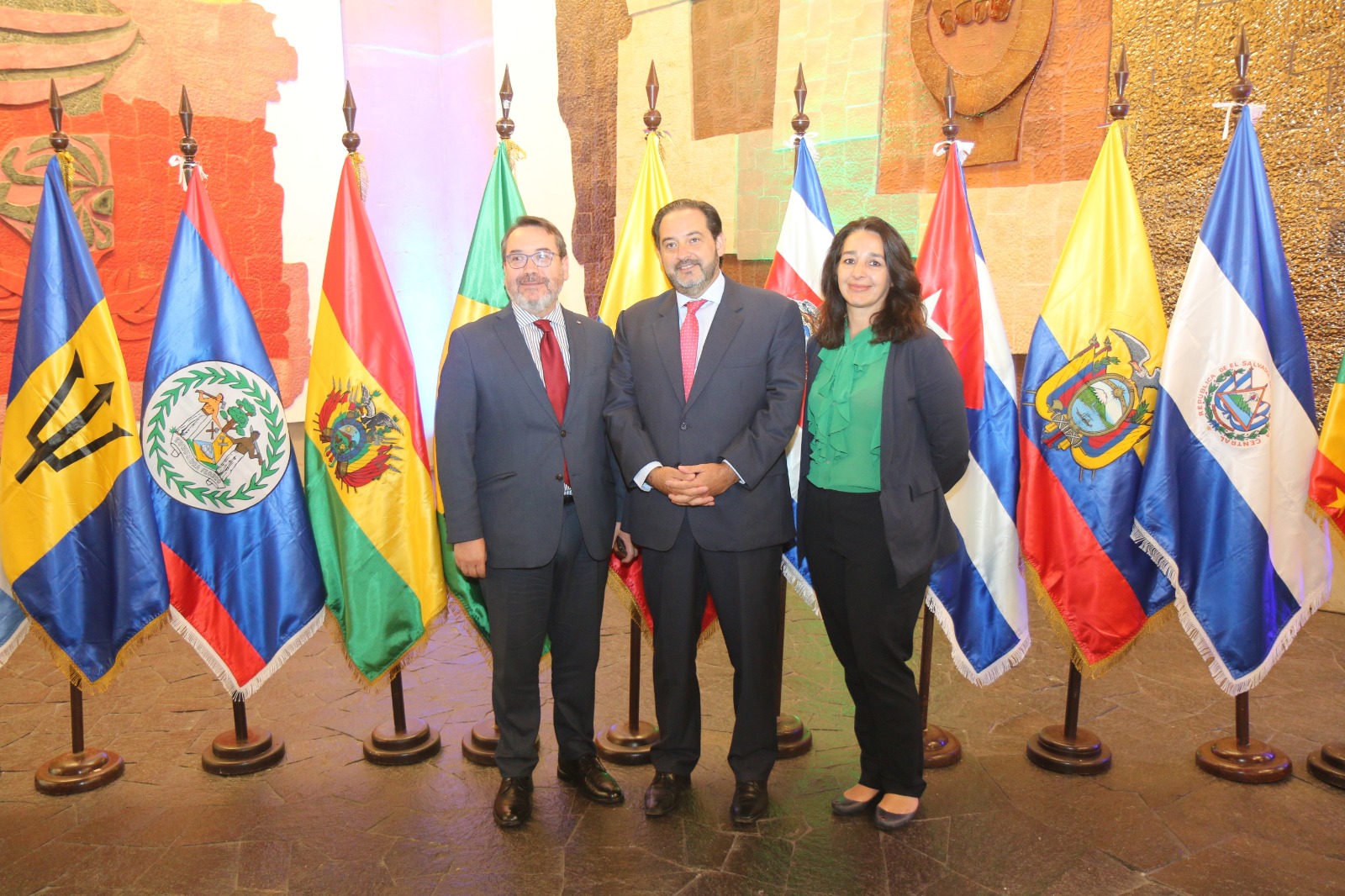
March 1 , 2023, Quito, Ecuador. The Chilean economist and former Minister of Energy during Michelle Bachelet’s administration in Chile, took office as the new Executive Secretary of The Latin American and Caribbean Energy Organization (OLACDE) for the 2023-2025 period, with “solidarity, justice and regional integration” as the guidelines for his administration.   “Our region’s agenda continues to be the development agenda: economic growth and inequality reduction are our imperatives. More integrated economies, more efficient markets, greater investment and employment are objectives of all governments in the region.  The current international context full of threats also presents opportunities for Latin America and the Caribbean. It is a region greatly privileged by its wealth of natural resources, a leader in the incorporation of renewable energy sources, with a high degree of complementarity between our countries, and an appreciable endowment of human capital and institutional capacities,” said OLACDE’s new Executive Secretary during the inauguration ceremony held at the emblematic cultural space “La Capilla del Hombre,” an initiative of the renowned Ecuadorian painter Oswaldo Guayasamín.   The new secretary presented his management plan focused on supporting regional integration in a pragmatic and concrete manner, promoting energy security, strengthening the region’s energy-climate agenda and accompanying energy transitions, promoting innovation and technological change, and intensifying actions to improve inclusion.   “We will seek to multiply cooperation between the countries of Latin America and the Caribbean, support energy integration projects in the region, establish an institutional dialogue with the private sector and strengthen the organization’s structure,” he said.   Rebolledo considers it “essential for OLACDE to renew its activism in order to promote regional agreements to mitigate risks and optimize the opportunities of the countries’ energy complementarity.”   The new Executive Secretary stated the need for OLACDE’s decisive participation in the global energy debate as the bearer of “a clear and strong voice for Latin America and the Caribbean.”   During the next three years, work will focus on strategic pillars such as Energy Complementarity and Regional Integration; Technical Cooperation; Energy Security, Access and Equity; Energy Transitions, Carbon Neutrality, Innovation, Technological Changes and New Energies, among others.   Rebolledo, has a relevant professional career of more than 30 years in which it stands out his performance as Minister of Energy of Chile in the period 2016-2018 and President of the National Petroleum Company of Chile, Vice Minister of International Economic Relations of Chile, Ambassador in Uruguay, Representative to ALADI and consultant to the Inter-American Development Bank (IDB). It is worth noting that during his term as Minister of Energy in Chile, Andrés Rebolledo implemented an important transformation of the Chilean energy sector with the massive incorporation of non-conventional renewable energies, working together with all the relevant stakeholders in the sector, which also allowed the development of a regulatory framework to promote electromobility and introduce technologies and energy sources not explored in the country, such as green hydrogen.   Communications and Institutional Relations Department gabriela.jarrin@OLACDE.org
Share this news

Andrés Rebolledo Smitmans assumes the position of OLACDE’s Executive Secretary

Newsletter summary

The Chilean economist and former Minister of Energy during Michelle Bachelet’s administration in Chile, took office as the new Executive Secretary of The Latin American and Caribbean Energy Organization (OLACDE) for the 2023-2025 period, with “solidarity, justice and regional integration” as the guidelines for his administration.

Capacity building & knowledge

We advance high-level technical training programs that foster experience-sharing and develop the human and institutional capacities required to drive energy transformations across our region.

Our academic programs offer executive courses, postgraduate diplomas, master’s degrees, and innovative initiatives focused on key areas such as the energy transition, conventional and renewable energy, electromobility, and regional integration.

OLACDE builds a regional network of energy expertise, connecting governments, young professionals, academics, and industry experts to foster collaborative solutions through technical cooperation and talent development to address future energy and climate challenges.

Technical cooperation & climate finance

We strengthen South-South and triangular cooperation as key drivers to accelerate energy transitions across Latin America and the Caribbean. OLACDE unites efforts among governments, multilateral organizations, academic institutions, and the private sector to mobilize financing, technical expertise, and innovative solutions tailored to our regional context.

We advance strategic initiatives aimed at directing resources toward decarbonization, conventional energy, renewables, and energy justice projects—building a more efficient, inclusive, and sustainable regional cooperation architecture.

Regional energy community

We are building a regional energy community with a global outlook, positioning Latin America and the Caribbean as a pivotal player on the international stage. OLACDE amplifies regional representation in key multilateral energy, trade, and climate forums by fostering strategic alliances and international cooperation.

Through flagship events such as Energy Week and new spaces for high-level dialogue, we champion a collective voice that attracts investment, drives technical partnerships, and unlocks sustainable development opportunities across our region

Energy transition & strategic projects

We foster a regional energy transition built on sustainability, energy security, and social inclusion. OLACDE supports Member Countries in adopting emerging technologies—such as energy efficiency, storage solutions, green hydrogen, electromobility, and grid digitalization—to accelerate the sector’s decarbonization.

Our approach promotes strategic projects that strengthen energy resilience across Latin America and the Caribbean, reducing emissions while building a cleaner, more competitive energy infrastructure. Key regional initiatives, including OEMLAC, position our region as a benchmark for climate innovation and sustainable energy development.

Energy information and data

We develop regional platforms dedicated to energy intelligence, technical analysis, and strategic data systems that empower both public and private decision-making across the sector. OLACDE drives digital transformation in energy by leveraging artificial intelligence, georeferencing, and advanced analytical tools to map regional energy trends.

The integration of systems such as SieLAC, along with new regional digital platforms, consolidates reliable, up-to-date technical data—enabling modern, interoperable, and evidence-based energy planning.

Regional energy integration

We foster cooperation across the regional energy sector by prioritizing infrastructure development, cross-border collaboration, and regulatory alignment to enhance energy security in Latin America and the Caribbean. OLACDE coordinates strategic projects in power grid interconnections, natural gas integration, and joint energy planning to build resilient, sustainable partnerships.

Working alongside the governments of our 27 Member States, regional blocs, multilateral institutions, and key public and private stakeholders, we drive initiatives that introduce innovative energy exchange mechanisms, strengthen national capacities, and accelerate a unified regional energy transition.