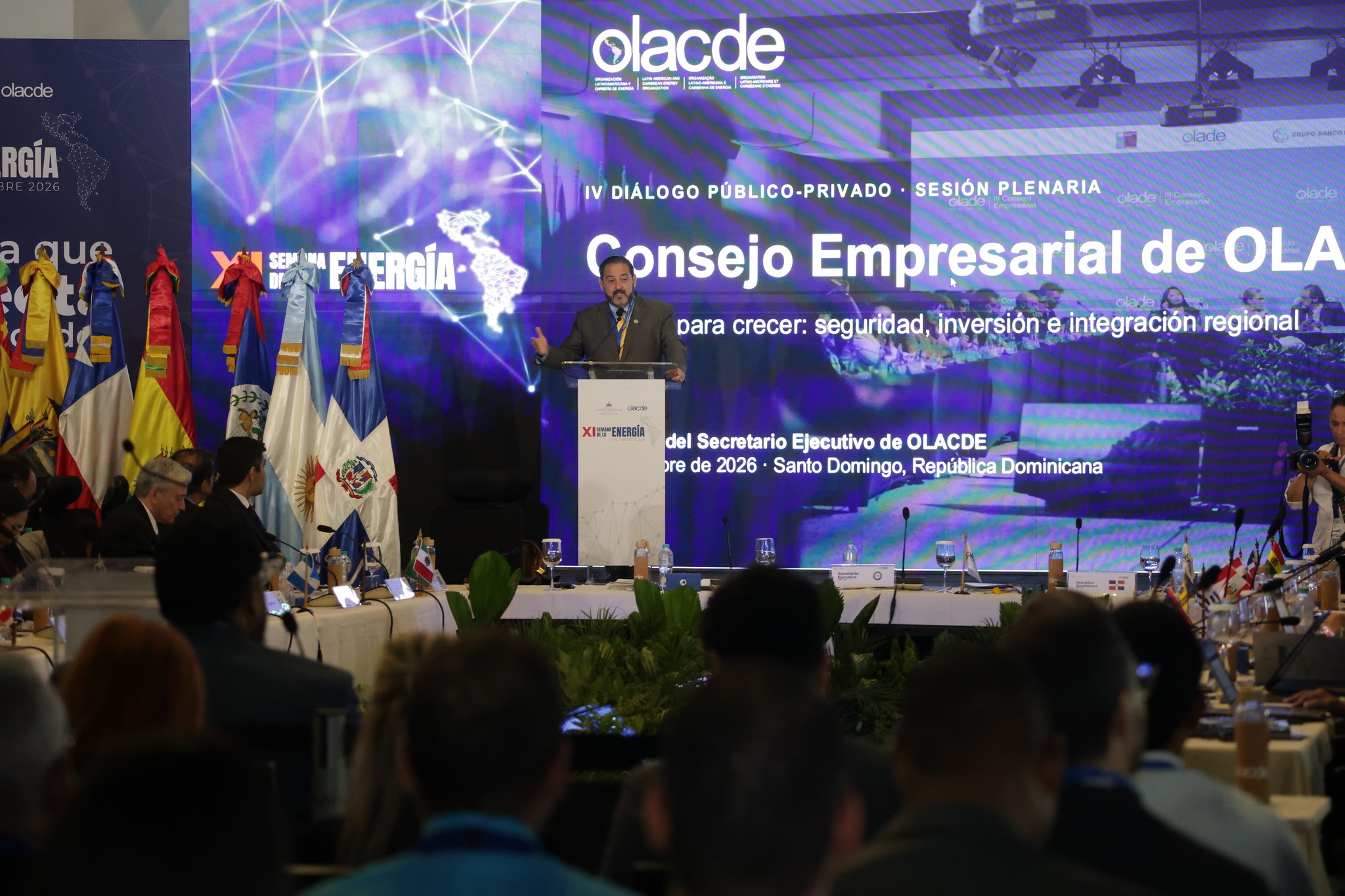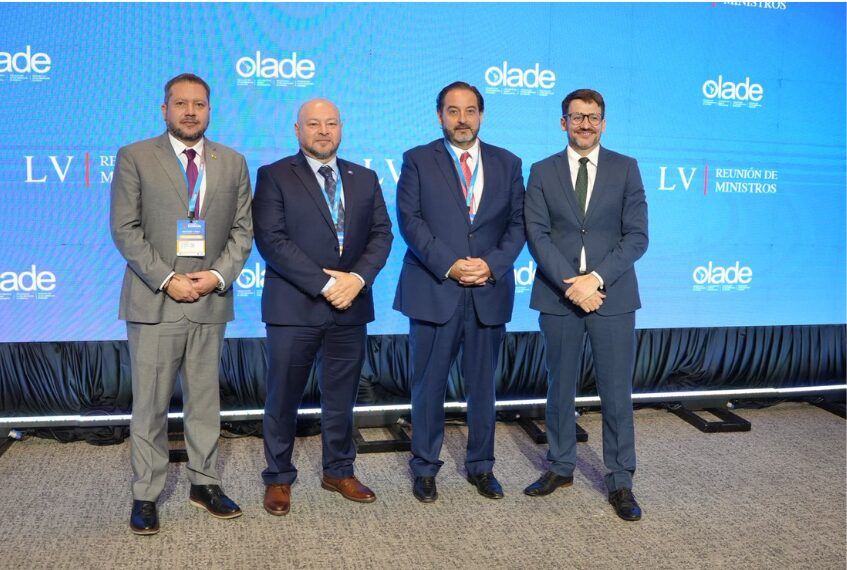
As part of the LV Meeting of Ministers and Ministers of Energy of the Latin American and Caribbean Energy Organization (OLACDE), held in Santiago during the X Energy Week, the President of the Republic of Chile, Gabriel Boric Font, led the opening ceremony of the region’s highest political decision-making body on energy matters.
The Chilean President highlighted the country’s progress in the energy sector, including the 2024 Energy Transition Law, the push for green hydrogen, the Rural Solar Water initiative, the Better School program, and the implementation of the first municipal Community Solar Park in Talagante.
In his remarks, OLACDE’s Executive Secretary, Andrés Rebolledo, stressed that “energy has stopped being a sectoral issue and has become the cross-cutting axis that defines the direction of our economies, the stability of our societies, and the hope of future generations.” He also noted that Latin America and the Caribbean are the greenest region in the world, having reached 70% renewable electricity generation in April 2025, in addition to holding strategic production of critical minerals essential to global energy transitions. “Our region is a solution region that contributes to the decarbonization of the planet. The energy transition is not a distant goal; it is an urgent task that demands leadership and bold decisions,” he added.
One of the day’s most notable announcements was the re-election of Andrés Rebolledo as OLACDE’s Executive Secretary for the 2026-2029 term, in recognition of his leadership in regional energy integration and the strengthening of the Organization’s institutional framework. During his 2023-2025 term, OLACDE established itself as a driving force in the regional energy agenda, promoting nine ministerial decisions and four declarations, in addition to following up on prior agreements. On integration, it strengthened its role as CELAC’s Technical Secretariat and promoted initiatives such as RELAC and CertiHLac, while also advancing MERCOSUR’s natural gas integration. Institutionally, the European Union joined as a permanent observer, Algeria and Haiti reactivated their participation, and new bodies were created, including the Regional Planning Council, the Business Council, and the Methane Observatory (OEMLAC). In international cooperation, partnerships were expanded with organizations such as IKI, GEAPP, AFD, AECID, and UNEP, while training initiatives — including a master’s program and two diploma courses — benefited more than 16,500 people. An inclusive agenda was also promoted through programs for women and youth, the strengthening of RedLACME, the creation of the Youth Academy for Energy Transitions, and the organization of the First LAC Youth Energy Meeting. In communications and positioning, OLACDE increased its presence in the international press and launched new monthly publications on generation, energy inflation, and technical notes.
OLACDE’s LV Meeting of Ministers and Ministers of Energy will conclude with the adoption of strategic guidelines on electricity integration, grid modernization, technology diversification, and climate financing, reaffirming the Organization as the main driving force behind the energy agenda of Latin America and the Caribbean.