University of Chile and OLACDE Co-Host International Youth Energy Summit

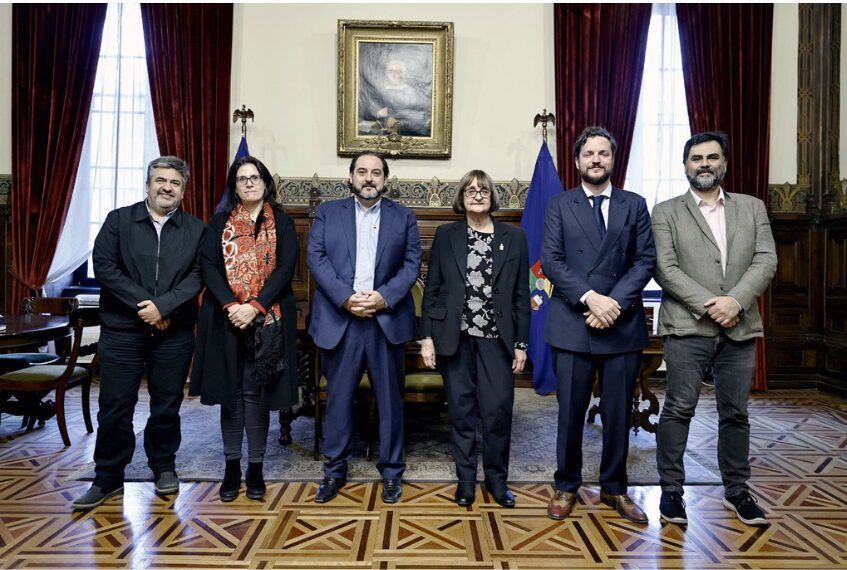
The Executive Secretary of the Latin American and Caribbean Energy Organization, Andrés Rebolledo, visited the Casa Central of the University of Chile to meet with Rector Rosa Devés and other university authorities. One of the main topics of conversation was the 1st Latin American and Caribbean Youth Energy Summit, which will be held at the University of Chile on September 29, 2025, as part of the X Energy Week.

The 1st Latin American and Caribbean Youth Energy Summit will take place on September 29, 2025, and will be hosted at the University of Chile, as part of the X Energy Week. It is a key forum for political and strategic dialogue on energy at the regional level, and will feature the significant participation of energy ministers from the 27 member countries of the Latin American and Caribbean Energy Organization (OLACDE).

“That’s why it was important to speak with Rector Devés: to coordinate actions around that activity and any other area of cooperation we can continue developing,” said OLACDE’s Executive Secretary and former Energy Minister, Andrés Rebolledo, after meeting with University of Chile authorities on Friday, May 30.

The meeting took place at Casa Central, where he was received by the Rector of the University of Chile, Rosa Devés; the Vice-Rector for Economic Affairs and Institutional Management, Sergio Olavarrieta; the director of the Institute of International Studies, Dorotea López; and the Research Director of the Vice-Rectory for Research and Development, Rómulo Fuentes.

Rebolledo, an economist from the University of Chile, has more than 30 years of experience during which he has served as Chile’s ambassador to Uruguay, Minister of Energy, and senior consultant for the Inter-American Development Bank, among other positions. He was elected Executive Secretary of OLACDE in 2022, and his term will run until 2025.

A summit for youth

The 1st Latin American and Caribbean Youth Energy Summit, explained Professor Dorotea López, will be “a morning where young people will come together seeking integration solutions.”

“Without a doubt, Latin America is today the greenest region in terms of energy transition. Energy is fundamental to the world and to our development, it is essential. What is planned for this Summit includes different panels and interaction between young people and professionals, with policy makers, to seek joint solutions to the region’s demands in energy integration and transformation toward green energy,” she explained.

Energy Week has become a space where authorities, leading figures, academics, experts, sector leaders, and business representatives analyze trends, challenges, and opportunities in the region, within a global context of energy transition.

Among the purposes of this event are analyzing the global energy landscape and understanding how regional and national actors are planning development, facilitating spaces for exchange and dialogue among multiple stakeholders in the energy sector, and creating an environment conducive to forming alliances and agreements.

OLACDE, the organization driving this summit and led by Andrés Rebolledo, is an intergovernmental public cooperation, coordination, and technical advisory body, established in 1973 and ratified by 27 countries of Latin America and the Caribbean, whose fundamental objective is to foster the integration, conservation, rational use, marketing, and defense of the Region’s energy resources.

Additionally, this summit is supported by the Energy Center of the Faculty of Physical and Mathematical Sciences at the University of Chile, Youth4Energy, CEUS Chile, the Latin American Observatory of Energy Geopolitics (OLAGE), and the NGO Uno.Cinco.
Share this news

University of Chile and OLACDE Co-Host International Youth Energy Summit

Newsletter summary

The Executive Secretary of the Latin American and Caribbean Energy Organization, Andrés Rebolledo, visited the Casa Central of the University of Chile to meet with Rector Rosa Devés and other university authorities. One of the main topics of conversation was the 1st Latin American and Caribbean Youth Energy Summit, which will be held at the […]

Capacity building & knowledge

We advance high-level technical training programs that foster experience-sharing and develop the human and institutional capacities required to drive energy transformations across our region.

Our academic programs offer executive courses, postgraduate diplomas, master’s degrees, and innovative initiatives focused on key areas such as the energy transition, conventional and renewable energy, electromobility, and regional integration.

OLACDE builds a regional network of energy expertise, connecting governments, young professionals, academics, and industry experts to foster collaborative solutions through technical cooperation and talent development to address future energy and climate challenges.

Technical cooperation & climate finance

We strengthen South-South and triangular cooperation as key drivers to accelerate energy transitions across Latin America and the Caribbean. OLACDE unites efforts among governments, multilateral organizations, academic institutions, and the private sector to mobilize financing, technical expertise, and innovative solutions tailored to our regional context.

We advance strategic initiatives aimed at directing resources toward decarbonization, conventional energy, renewables, and energy justice projects—building a more efficient, inclusive, and sustainable regional cooperation architecture.

Regional energy community

We are building a regional energy community with a global outlook, positioning Latin America and the Caribbean as a pivotal player on the international stage. OLACDE amplifies regional representation in key multilateral energy, trade, and climate forums by fostering strategic alliances and international cooperation.

Through flagship events such as Energy Week and new spaces for high-level dialogue, we champion a collective voice that attracts investment, drives technical partnerships, and unlocks sustainable development opportunities across our region

Energy transition & strategic projects

We foster a regional energy transition built on sustainability, energy security, and social inclusion. OLACDE supports Member Countries in adopting emerging technologies—such as energy efficiency, storage solutions, green hydrogen, electromobility, and grid digitalization—to accelerate the sector’s decarbonization.

Our approach promotes strategic projects that strengthen energy resilience across Latin America and the Caribbean, reducing emissions while building a cleaner, more competitive energy infrastructure. Key regional initiatives, including OEMLAC, position our region as a benchmark for climate innovation and sustainable energy development.

Energy information and data

We develop regional platforms dedicated to energy intelligence, technical analysis, and strategic data systems that empower both public and private decision-making across the sector. OLACDE drives digital transformation in energy by leveraging artificial intelligence, georeferencing, and advanced analytical tools to map regional energy trends.

The integration of systems such as SieLAC, along with new regional digital platforms, consolidates reliable, up-to-date technical data—enabling modern, interoperable, and evidence-based energy planning.

Regional energy integration

We foster cooperation across the regional energy sector by prioritizing infrastructure development, cross-border collaboration, and regulatory alignment to enhance energy security in Latin America and the Caribbean. OLACDE coordinates strategic projects in power grid interconnections, natural gas integration, and joint energy planning to build resilient, sustainable partnerships.

Working alongside the governments of our 27 Member States, regional blocs, multilateral institutions, and key public and private stakeholders, we drive initiatives that introduce innovative energy exchange mechanisms, strengthen national capacities, and accelerate a unified regional energy transition.