
The next generation Is ready to lead the Energy Transition

Imagine, for a moment, what it means to talk about energy when you have your whole life ahead of you. For thousands of young people across Latin America and the Caribbean, energy is not simply a matter of power generation mixes or technologies on paper. It is about asking who has access to quality education, who gets their first meaningful job opportunity, who develops new skills, and who finally earns a seat at the table where critical decisions are made.

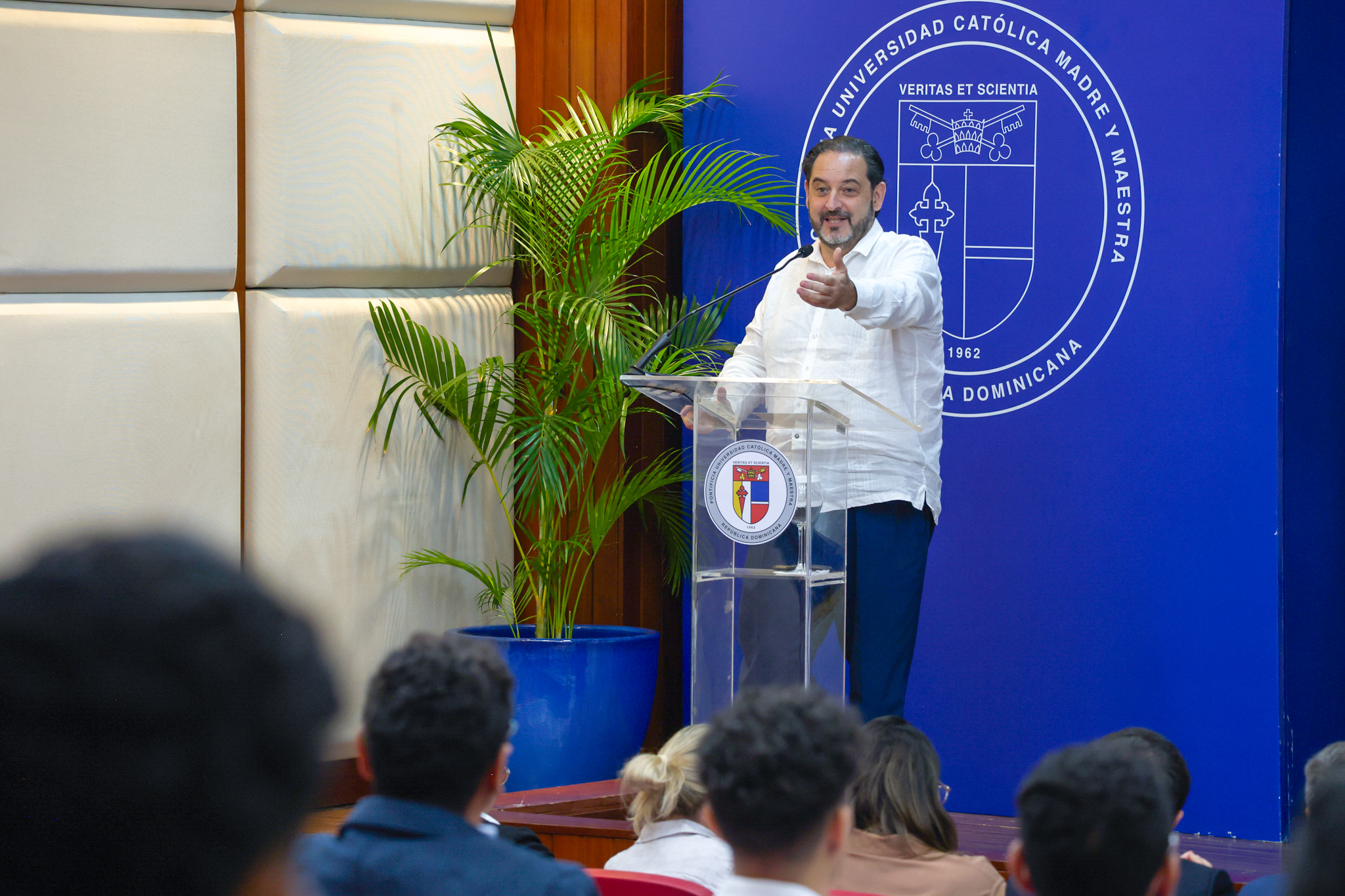
This perspective shaped the morning of October 5, 2026, in Santo Domingo, at the Universidad Nacional Pedro Henríquez Ureña (UNPHU), during the Second Latin American and Caribbean Youth Meeting on Energy, held ahead of the 11th Energy Week.

Organized by the Latin American and Caribbean Energy Organization (OLACDE), together with UNPHU, CEUS Chile, and Youth4Energy, the event had a clear objective: to connect networks of young talent and turn their collective energy into a genuine capacity to influence decisions.

The discussions quickly revealed that meaningful participation goes far beyond training alone. Panels led by young people from across the region explored issues ranging from community leadership and power system flexibility to energy storage, smart grids, workforce reskilling, and emerging skills.

Yet one concern ran through the conversations: how to bridge the gap between knowledge acquired in the classroom and the real opportunities to put it into practice in businesses, governments, universities, and civil society organizations.

The energy transition needs tangible opportunities for young people to work, innovate, launch businesses, and shape public policy—not merely spaces where they are invited to listen or learn.

From a local and community-based perspective, Paola Acevedo of Sustenta Honduras connected the energy transition to a reality often overlooked in technical discussions: rural communities.
Drawing on her work in remote communities across Honduras, she explained how the lack of electricity undermines children’s education and how solar solutions can transform everyday life—from printing classroom materials and studying after sunset to accessing medical care.
Her message carried particular weight: energy innovation must begin with the real needs of communities while creating pathways to training, employment, and leadership for more young people, especially women, to enter the energy sector and shape their own futures.

Echoing this vision, Andrés Rebolledo, Executive Secretary of OLACDE, emphasized a fundamental point: youth participation is not merely a promise for the future. “Not because they will be protagonists in the future, but because they already are today,” he said, highlighting the active role young people already play in academia, civil society, and professional life.

From Brazil, Ana Julia Carvalho of ENETRIX reinforced this message by calling for a decisive shift in the role of young people: “For us to move beyond simply accessing information and begin making decisions, it is important that we participate in developing solutions.” Young people do not simply want to join the debate; they want to design the tools and projects that will transform the energy sector.

The meeting has also helped lay the groundwork for a more formal institutional pathway. Building on the discussions held during the first edition in Santiago, Chile, OLACDE proposed that ministers from its Member Countries establish a youth council to provide formal continuity to this dialogue. One conclusion stands out: the energy future of Latin America and the Caribbean will depend on new networks, technologies, and investment—but, above all, on who is given the opportunity today to envision, design, and govern these transformations.

Bringing young people into the energy transition is neither a generational concession nor a promise to be fulfilled tomorrow. It is an essential condition for ensuring that the transition is genuinely just, responsive to the needs of local communities, and capable of turning innovation into shared development.

Share this news

The next generation Is ready to lead the Energy Transition

Newsletter summary

The Energy Transition needs a generation that will not wait its turn

Capacity building & knowledge

We advance high-level technical training programs that foster experience-sharing and develop the human and institutional capacities required to drive energy transformations across our region.

Our academic programs offer executive courses, postgraduate diplomas, master’s degrees, and innovative initiatives focused on key areas such as the energy transition, conventional and renewable energy, electromobility, and regional integration.

OLACDE builds a regional network of energy expertise, connecting governments, young professionals, academics, and industry experts to foster collaborative solutions through technical cooperation and talent development to address future energy and climate challenges.

Technical cooperation & climate finance

We strengthen South-South and triangular cooperation as key drivers to accelerate energy transitions across Latin America and the Caribbean. OLACDE unites efforts among governments, multilateral organizations, academic institutions, and the private sector to mobilize financing, technical expertise, and innovative solutions tailored to our regional context.

We advance strategic initiatives aimed at directing resources toward decarbonization, conventional energy, renewables, and energy justice projects—building a more efficient, inclusive, and sustainable regional cooperation architecture.

Regional energy community

We are building a regional energy community with a global outlook, positioning Latin America and the Caribbean as a pivotal player on the international stage. OLACDE amplifies regional representation in key multilateral energy, trade, and climate forums by fostering strategic alliances and international cooperation.

Through flagship events such as Energy Week and new spaces for high-level dialogue, we champion a collective voice that attracts investment, drives technical partnerships, and unlocks sustainable development opportunities across our region

Energy transition & strategic projects

We foster a regional energy transition built on sustainability, energy security, and social inclusion. OLACDE supports Member Countries in adopting emerging technologies—such as energy efficiency, storage solutions, green hydrogen, electromobility, and grid digitalization—to accelerate the sector’s decarbonization.

Our approach promotes strategic projects that strengthen energy resilience across Latin America and the Caribbean, reducing emissions while building a cleaner, more competitive energy infrastructure. Key regional initiatives, including OEMLAC, position our region as a benchmark for climate innovation and sustainable energy development.

Energy information and data

We develop regional platforms dedicated to energy intelligence, technical analysis, and strategic data systems that empower both public and private decision-making across the sector. OLACDE drives digital transformation in energy by leveraging artificial intelligence, georeferencing, and advanced analytical tools to map regional energy trends.

The integration of systems such as SieLAC, along with new regional digital platforms, consolidates reliable, up-to-date technical data—enabling modern, interoperable, and evidence-based energy planning.

Regional energy integration

We foster cooperation across the regional energy sector by prioritizing infrastructure development, cross-border collaboration, and regulatory alignment to enhance energy security in Latin America and the Caribbean. OLACDE coordinates strategic projects in power grid interconnections, natural gas integration, and joint energy planning to build resilient, sustainable partnerships.

Working alongside the governments of our 27 Member States, regional blocs, multilateral institutions, and key public and private stakeholders, we drive initiatives that introduce innovative energy exchange mechanisms, strengthen national capacities, and accelerate a unified regional energy transition.