
The energy future is built not only on technology, but also on knowledge

From artificial intelligence to energy poverty, universities and researchers from Latin America and the Caribbean gathered in Santo Domingo to address a critical question: How can scientific knowledge be translated into better lives for people?

In a rural community in Latin America and the Caribbean, access to energy can determine whether a student is able to continue studying after nightfall. Thousands of kilometres away, in a research centre, an artificial intelligence algorithm can help forecast electricity demand and improve grid operations. These are different realities, yet they raise the same fundamental question: What is the value of technological progress if its benefits fail to reach those who need them most?

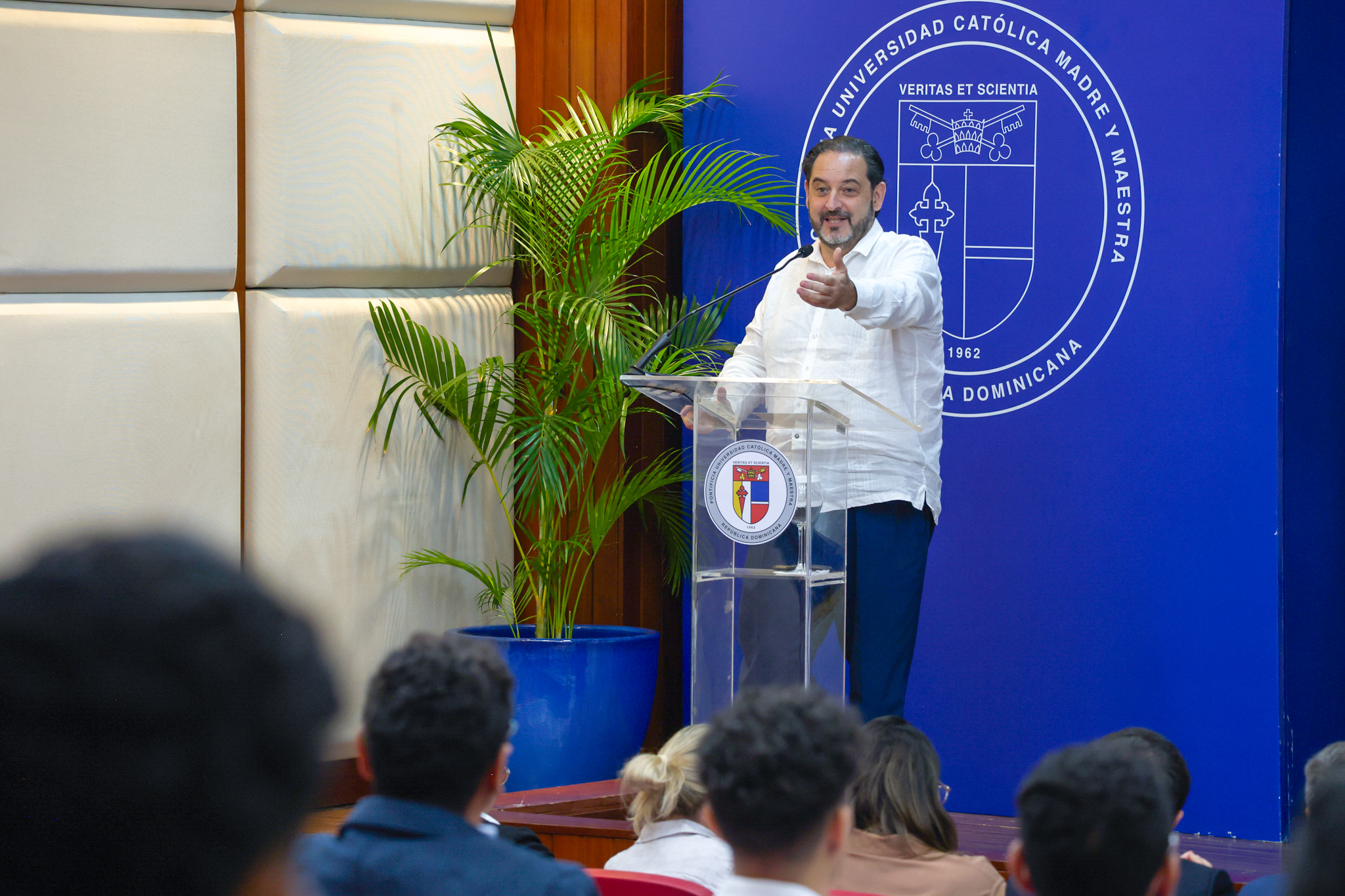
This question was at the heart of “Connecting Minds, Energising the Future,” an academic forum organised by the Latin American and Caribbean Energy Organization (OLACDE), in partnership with the Pontificia Universidad Católica Madre y Maestra (PUCMM) and Universidad Nacional Pedro Henríquez Ureña (UNPHU). Held on 2 October in Santo Domingo as part of the 11th Energy Week programme, the event brought together universities, researchers, students and experts to bridge the gap between scientific knowledge and the real-world challenges facing the energy sector. Now in its second edition, the initiative was held in the Caribbean for the first time.

Latin America and the Caribbean possess strategic resources that position the region to play a significant role in the global energy transformation. Yet access to these resources alone does not guarantee development, competitiveness or well-being. The challenge lies in turning this potential into tangible opportunities for local communities. Discussions throughout the event ranged from energy poverty and community-based solutions to climate resilience, artificial intelligence, energy efficiency and the training of the next generation of professionals. Andrés Rebolledo Smitmans, Executive Secretary of OLACDE, emphasised the need to bring academia and the private sector into a dialogue that has traditionally been dominated by governments.

The discussions also extended across the Pacific. In his closing keynote address, South Korean academic Kim Younkyoo highlighted that energy security no longer depends solely on the production and trade of fuels. Supply chains, critical minerals, electricity grids and digital technologies are increasingly connecting geographically distant regions. His remarks underscored a central message: the energy transition is not simply about moving faster, but about making decisions that secure today’s energy supply without compromising tomorrow’s opportunities.

Perhaps the most significant message, however, came at the close of the event. Gloria Alvarenga, Director of Energy Integration, Access and Security at OLACDE, stressed that the forum’s true impact would not be measured solely by the quality of its presentations, but by the research collaborations it inspires, the projects it helps generate, the decisions informed by stronger evidence and the opportunities it creates for students. In this context, she highlighted plans to work with strategic partners to establish an energy poverty observatory, alongside the importance of strengthening cooperation among universities across the region.

A just energy transition, after all, neither begins nor ends at a power plant, a transmission network or a digital innovation. It also takes shape in classrooms, laboratories and communities, where knowledge can be transformed into practical solutions to real needs. Following its inaugural edition in Chile and its continuation in the Dominican Republic, “Connecting Minds, Energising the Future” reaffirms a fundamental conviction: the energy future of Latin America and the Caribbean depends not only on the resources the region possesses, but also on its ability to connect knowledge with people.

Share this news

The energy future is built not only on technology, but also on knowledge

Newsletter summary

The energy future is built not only on technology, but also on knowledge

Capacity building & knowledge

We advance high-level technical training programs that foster experience-sharing and develop the human and institutional capacities required to drive energy transformations across our region.

Our academic programs offer executive courses, postgraduate diplomas, master’s degrees, and innovative initiatives focused on key areas such as the energy transition, conventional and renewable energy, electromobility, and regional integration.

OLACDE builds a regional network of energy expertise, connecting governments, young professionals, academics, and industry experts to foster collaborative solutions through technical cooperation and talent development to address future energy and climate challenges.

Technical cooperation & climate finance

We strengthen South-South and triangular cooperation as key drivers to accelerate energy transitions across Latin America and the Caribbean. OLACDE unites efforts among governments, multilateral organizations, academic institutions, and the private sector to mobilize financing, technical expertise, and innovative solutions tailored to our regional context.

We advance strategic initiatives aimed at directing resources toward decarbonization, conventional energy, renewables, and energy justice projects—building a more efficient, inclusive, and sustainable regional cooperation architecture.

Regional energy community

We are building a regional energy community with a global outlook, positioning Latin America and the Caribbean as a pivotal player on the international stage. OLACDE amplifies regional representation in key multilateral energy, trade, and climate forums by fostering strategic alliances and international cooperation.

Through flagship events such as Energy Week and new spaces for high-level dialogue, we champion a collective voice that attracts investment, drives technical partnerships, and unlocks sustainable development opportunities across our region

Energy transition & strategic projects

We foster a regional energy transition built on sustainability, energy security, and social inclusion. OLACDE supports Member Countries in adopting emerging technologies—such as energy efficiency, storage solutions, green hydrogen, electromobility, and grid digitalization—to accelerate the sector’s decarbonization.

Our approach promotes strategic projects that strengthen energy resilience across Latin America and the Caribbean, reducing emissions while building a cleaner, more competitive energy infrastructure. Key regional initiatives, including OEMLAC, position our region as a benchmark for climate innovation and sustainable energy development.

Energy information and data

We develop regional platforms dedicated to energy intelligence, technical analysis, and strategic data systems that empower both public and private decision-making across the sector. OLACDE drives digital transformation in energy by leveraging artificial intelligence, georeferencing, and advanced analytical tools to map regional energy trends.

The integration of systems such as SieLAC, along with new regional digital platforms, consolidates reliable, up-to-date technical data—enabling modern, interoperable, and evidence-based energy planning.

Regional energy integration

We foster cooperation across the regional energy sector by prioritizing infrastructure development, cross-border collaboration, and regulatory alignment to enhance energy security in Latin America and the Caribbean. OLACDE coordinates strategic projects in power grid interconnections, natural gas integration, and joint energy planning to build resilient, sustainable partnerships.

Working alongside the governments of our 27 Member States, regional blocs, multilateral institutions, and key public and private stakeholders, we drive initiatives that introduce innovative energy exchange mechanisms, strengthen national capacities, and accelerate a unified regional energy transition.