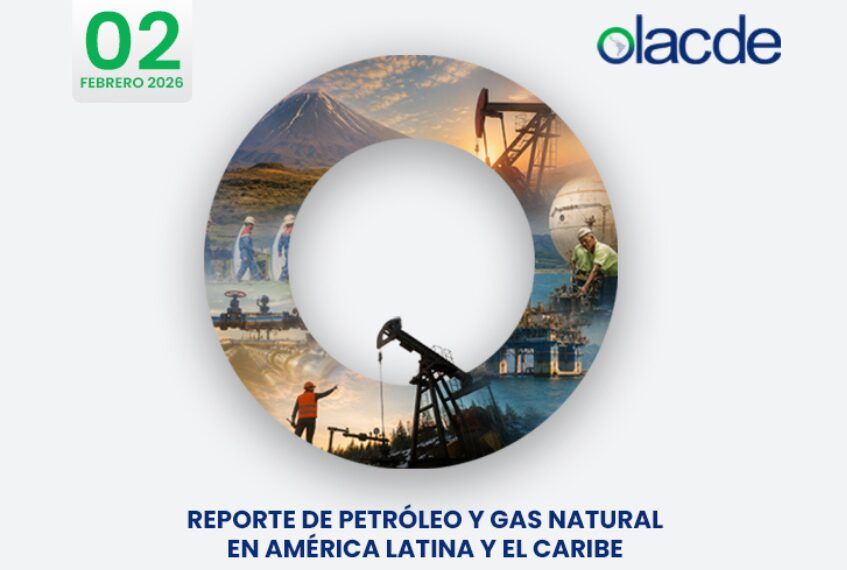
The region is entering a new phase of expansion in the hydrocarbon sector. According to the latest Oil and Natural Gas Report from OLACDE, oil production rose 27% year-on-year in February 2026, reaching 377 million barrels, compared to 298 million in the same month of the previous year.
This increase reflects a significant restructuring of the regional energy landscape. Operating activity in Vaca Muerta (Argentina), record-high extraction from Brazil’s Pre-Salt layer, and rising production in Mexico are pushing regional supply to levels not seen in the past twelve months.
On a monthly basis, growth of 4.4% was also reported compared to January, driven by the recovery observed in Brazil and Venezuela following the previous month’s declines. Brazil, Mexico, and Venezuela account for 68% of all regional oil production, underscoring the crucial role these three countries play in the dynamism of this sector in the region.
Natural gas: even faster growth
Natural gas production grew at an even faster pace. According to the report, it reached 26 billion cubic meters, representing a 30% year-on-year increase.
The driving force behind this advance once again comes primarily from Argentina and Brazil. The development of shale gas in Vaca Muerta, together with unprecedented production from Brazil’s pre-salt fields, is reshaping the regional supply matrix just as natural gas establishes itself as an energy source supporting electricity systems with high renewable penetration.
Argentina and Trinidad and Tobago dominate the market with a 21% share each; they are followed by Brazil with 13%, Peru with 12%, while Venezuela, Bolivia, and Mexico each account for close to 9%.
OLACDE’s report confirms that the region, while leading globally in renewable electricity, is also strengthening its role as a strategic global supplier of hydrocarbons.