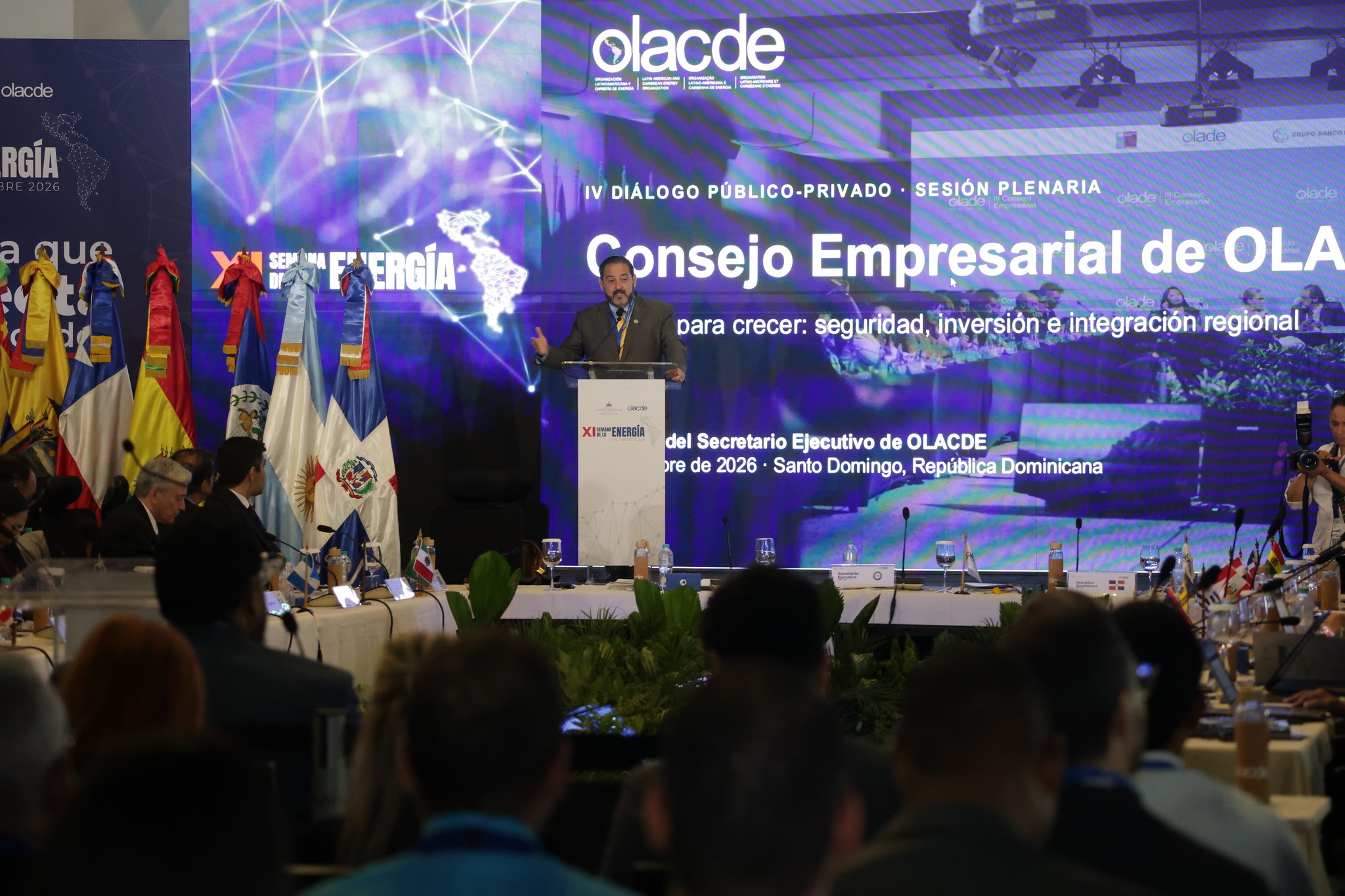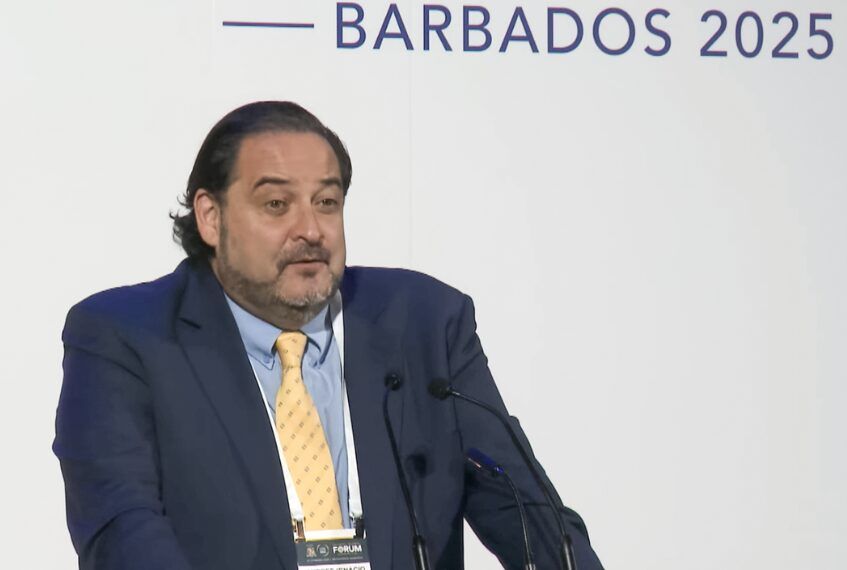
The Latin American and Caribbean Energy Organization (OLACDE) took part in the SEforALL Global Forum, held in Barbados, where representatives from 32 Member States of the region discussed the need to strengthen cooperation to accelerate a just and inclusive energy transition, aligned with the Sustainable Development Goals and the Paris Agreement.
During the Global Ministerial Session, at the close of the SEforALL Global Forum, Gloria Alvarenga, OLACDE’s Director of Integration, Access, and Energy Security, highlighted the importance of strengthening regional cooperation to advance an equitable energy transition in Latin America and the Caribbean.
“Our region is leading the transition to clean energy, generating 70% of its electricity from renewable sources. It is urgent to broaden the focus toward sectors such as transportation and industry, leveraging technological innovation, artificial intelligence, and sustainable financing to ensure a resilient, inclusive, and equitable energy transition,” said Alvarenga.
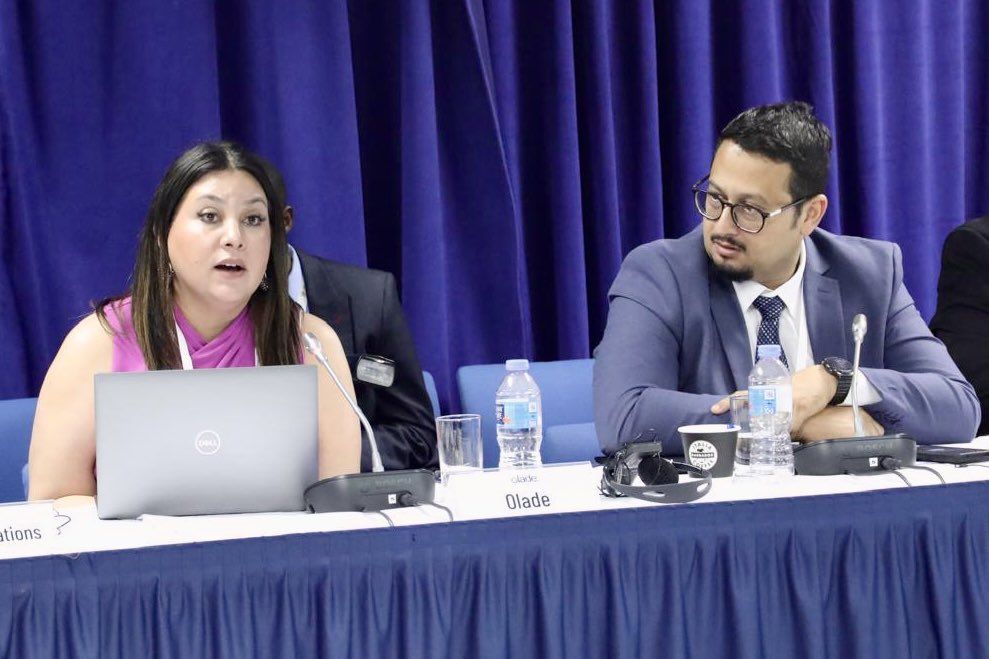
The dialogue brought together international leaders to explore innovative approaches, such as integrating artificial intelligence into energy management and expanding renewable energy. In addition, the need for stable policies that mobilize financing, strengthen regulatory frameworks, and foster collaborative networks among key stakeholders to address global energy challenges was highlighted.
As part of the forum’s agenda, OLACDE’s Executive Secretary took part in high-level meetings and panels, where he stressed the importance of:
– Expanding equitable access to clean energy.
– Promoting accessible financing for the energy transition.
– Encouraging community participation in decision-making.
In addition, key strategies were discussed to strengthen investment in renewable energy, develop local supply chains, and train specialized workers.
International cooperation and the implementation of inclusive public policies will be essential to ensure that the energy transition not only helps mitigate climate change but also drives economic development, job creation, and the reduction of structural inequalities in the region.
Finally, the key role of international cooperation and effective public policies in transforming the energy sector was emphasized, ensuring that the energy transition serves as a tool for sustainable development and equity in Latin America and the Caribbean.