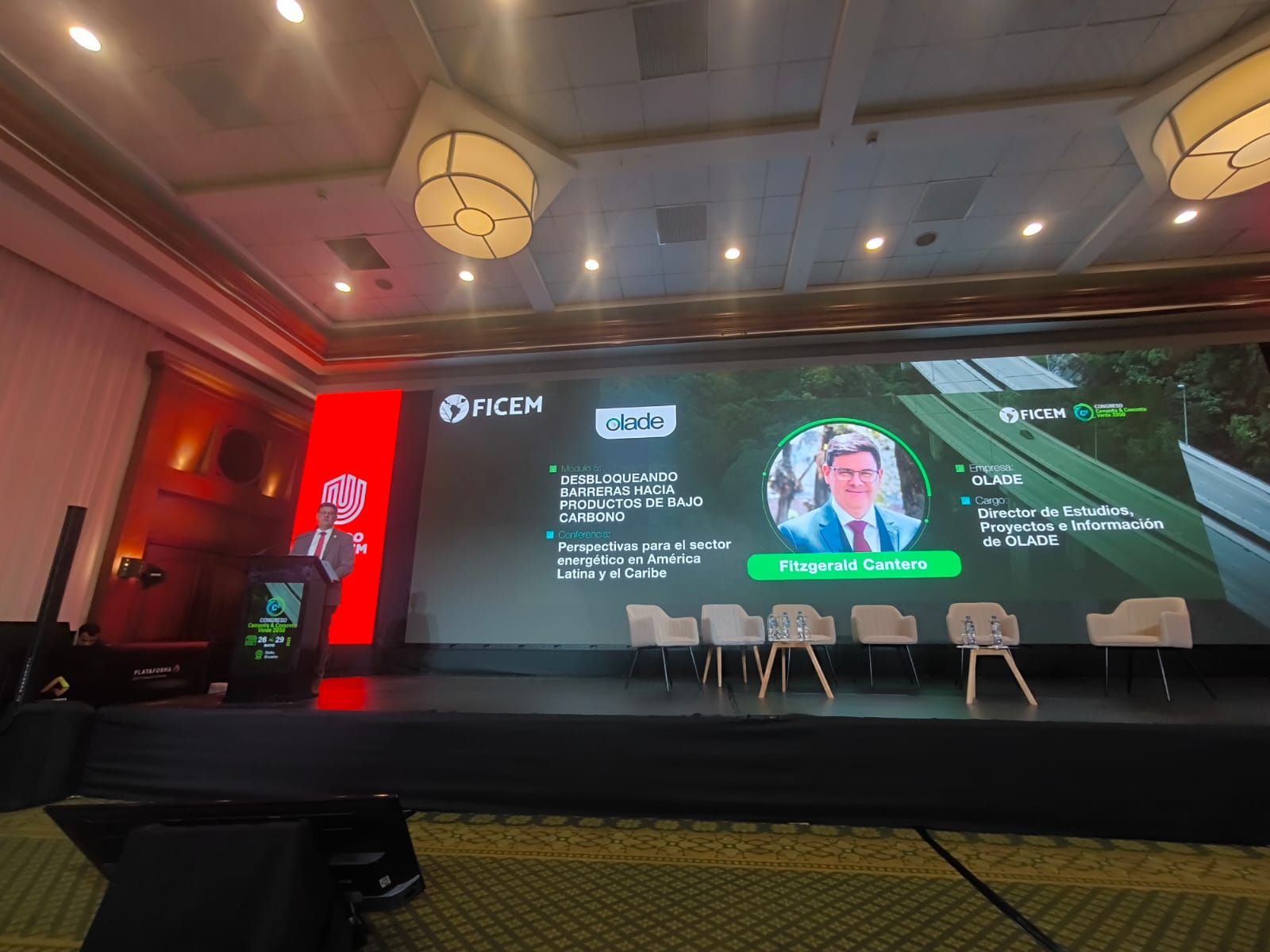
Within the framework of the Green Cement & Concrete 2050 Congress, Fitzgerald Cantero Piali, Director of Studies, Projects and Information at the Latin American and Caribbean Energy Organization (OLACDE), shared strategic information on the role of the energy sector in industrial decarbonization in Latin America and the Caribbean.
During his remarks, Cantero noted that transport and energy are the sectors with the largest share of greenhouse gas emissions in the region. In 2022, the industrial sector accounted for 27% of total energy consumption in Latin America and the Caribbean.
Main energy sources used in regional industry:
- Bioenergy: 28%
- Electricity: 23%
- Natural gas: 22%
- Petroleum products: 15%
- Coal: 11%
- Solar energy: 1%
In terms of emissions, the energy sector is responsible for approximately 15% of total CO₂ emissions in the region. However, a substantial improvement has been recorded in industrial energy intensity, which fell by 30% over the last 20 years, thanks to modernization and efficiency processes.
Key actions to accelerate the reduction of industrial emissions:
- Replacing internal combustion engines with electric ones.
- Replacing coal and petroleum products with natural gas or renewable energy.
- Intensive use of electricity in industrial processes.
- Strengthening energy efficiency and access to sustainable financing.
With this data, OLACDE reaffirms its commitment to the development of evidence-based public policies that promote a cleaner, more competitive industry aligned with global climate objectives.