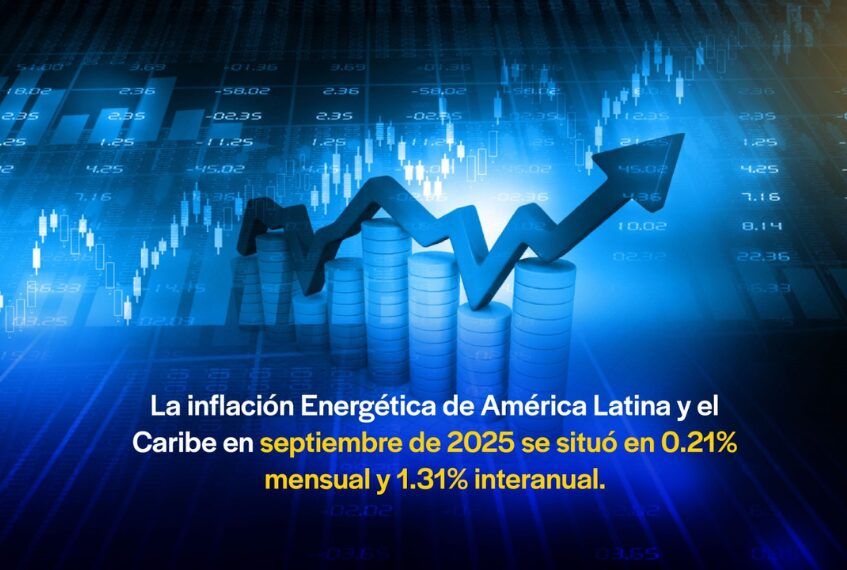
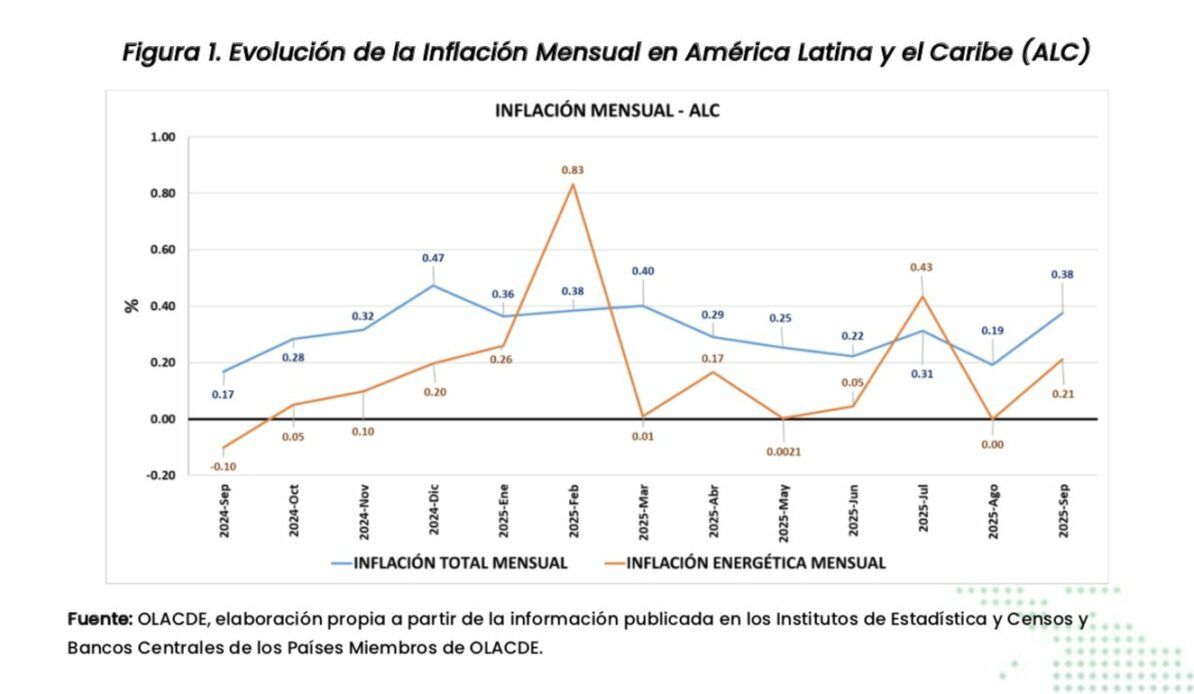
LAC’s monthly energy inflation in September 2025 was 0.21%. Of the 20 countries analyzed in the region, 12 recorded positive changes in price indices (increases), 6 showed negative changes (decreases), and 2 showed no change.
Regarding total monthly inflation, it reached 0.38%, meaning it doubled compared to August, reaching figures similar to those at the start of the year. See Figure 1.
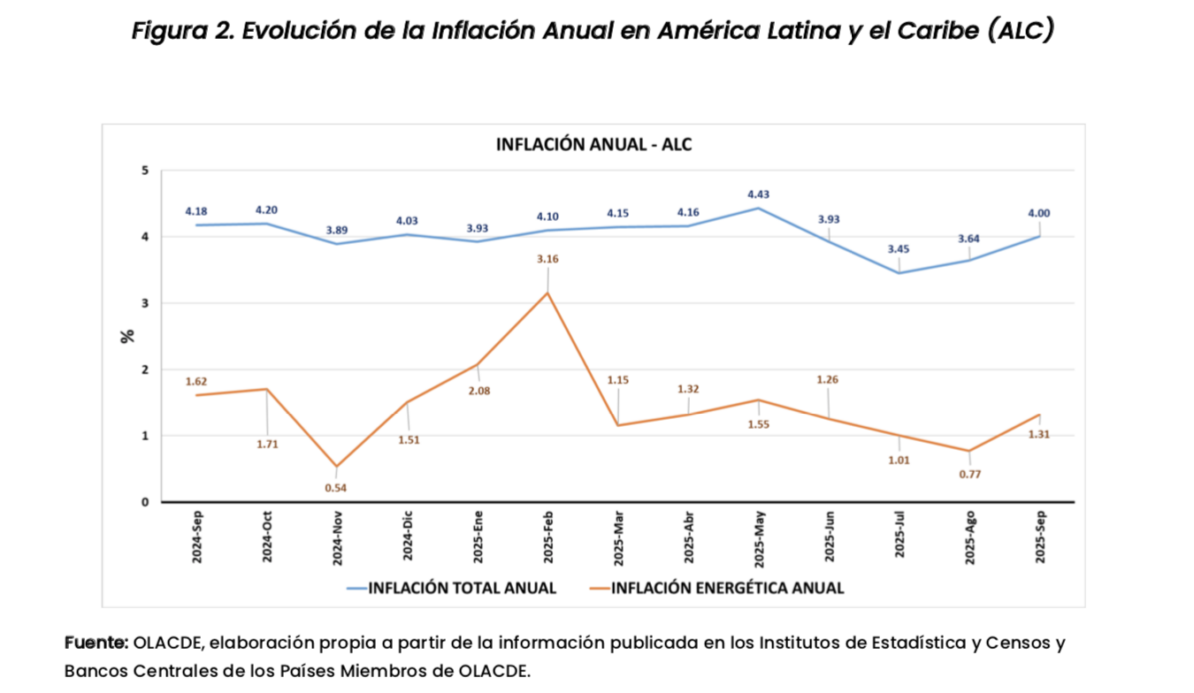
Annual energy inflation changed course, and after falling for three consecutive months, it rose this month, reflecting growth in the price index of the energy basket. Even so, in September 2025 it stood at 1.31%, a figure slightly lower than that recorded in September 2024 (1.62%).
Meanwhile, annual total inflation also grew, rising from 3.64% in August to 4% in September, showing an increase in the overall price indices. See Figure 2.
Year-over-year energy inflation in OECD countries grew considerably, from 0.82% in August to 3.14% in September 2025. In LAC it also grew, but to a lesser extent, rising from 0.77% in August to 1.31% in September 2025.
After six consecutive months in which year-over-year energy inflation in the OECD remained below that recorded in LAC, for the second month in a row OECD figures now exceed LAC figures. In September 2025, the gap widened further, with OECD at 3.14% and LAC at 1.31%, compared to 0.82% for the OECD and 0.77% for LAC in August 2025 — reflecting a higher growth rate in the energy basket price indices in the OECD this month.
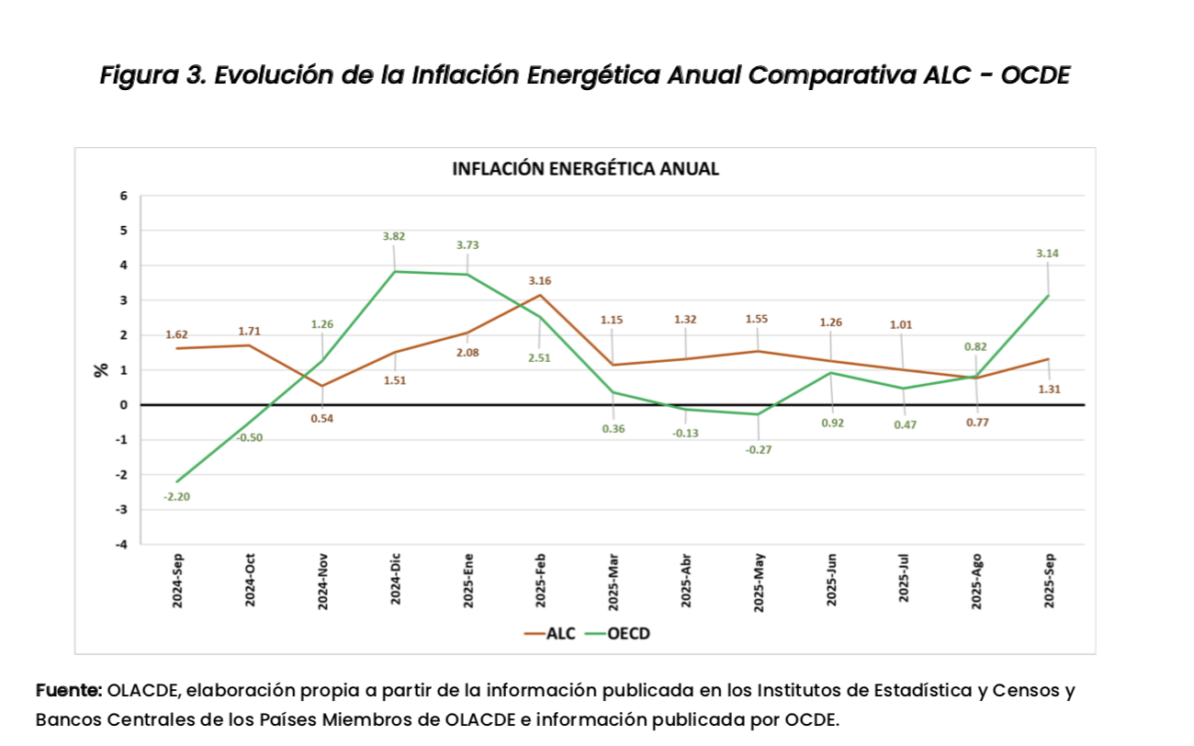
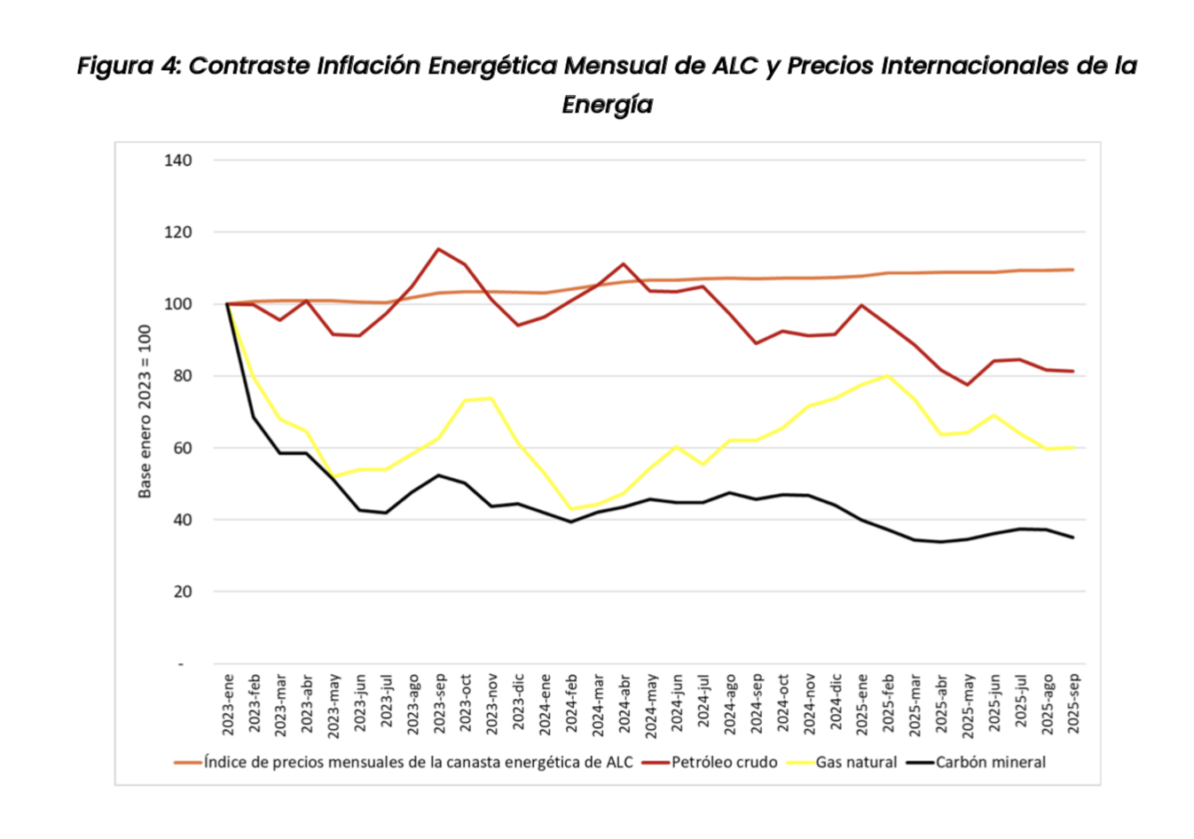
Figure 4 shows that the international oil price index posted a slight decline of -0.4%, while the natural gas price index grew by a similar magnitude, 0.5%; this, with high probability, explains a change in LAC’s energy inflation from 0% in August to 0.21% in September.
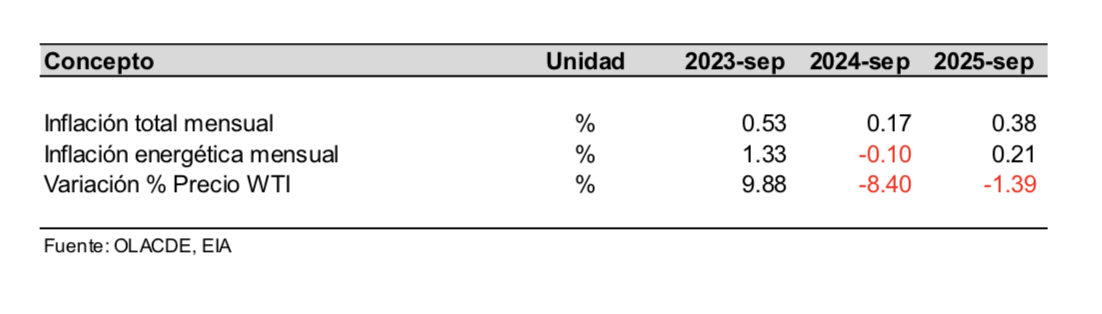
The attached table shows the monthly growth of the WTI price, which for September 2025 was negative at -1.39%, much lower than the -5.16% recorded in August 2025, and this slowdown would explain the evolution of the price indices.