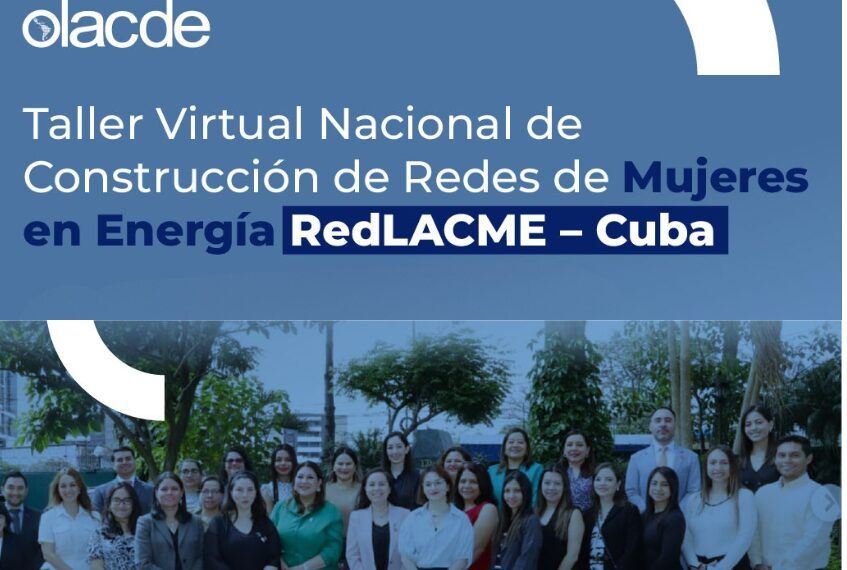
The Latin American and Caribbean Energy Organization (OLACDE), in coordination with the Latin American and Caribbean Network of Women in Energy (RedLACME), held the National Virtual Workshop for Building Women in Energy Networks in Cuba, with the participation of 35 professionals from Cuba’s energy sector.
The event highlighted the importance of strengthening networks that drive women’s participation and leadership in Latin America and the Caribbean’s energy sector, acknowledging the structural challenges that remain. Women currently hold only 22% of board seats and 29% of management positions in the sector, figures that highlight the need to promote more inclusive career paths and to connect pioneering women with new generations.
During the workshop, participants shared experiences from women-in-energy associations from Chile, Argentina, Uruguay, and the Dominican Republic, which presented initiatives focused on employability, specialized training, female leadership, the creation of working committees, and the coordination of regional networks. These experiences showed how collaboration makes it possible to develop concrete projects, strengthen capacities, and generate synergies that promote gender equity in the energy industry.
Tatiana Castillo, OLACDE Legal Advisor, and Valentina Licanqueo, OLACDE Consultant, opened the session, highlighting Cuba’s commitment to the gender agenda and the importance of learning from international experiences. Throughout the event, key challenges were addressed, including energy poverty, low female representation in technical and decision-making roles, and the need for energy statistics with a gender lens. The importance of building a more inclusive energy ecosystem attentive to gender equality was also emphasized.
Representatives of regional organizations shared their experiences and lessons learned. Pía Suárez presented experiences of coordination among associations to strengthen women’s employability; Anahí Soto described the work of AMES Argentina on the energy transition with a gender focus; Luisa Rivas recounted the creation of the Uruguayan Association of Women in Energy (AUME); and Paola Pimentel highlighted the establishment of formal structures with training, leadership, and data-generation committees to strengthen women’s participation in the sector.
The workshop reaffirmed OLACDE’s commitment to promoting female leadership, regional integration, and an equitable energy transition, further establishing RedLACME as a key platform for showcasing, connecting, and empowering women’s talent in Latin America and the Caribbean’s energy sector.