
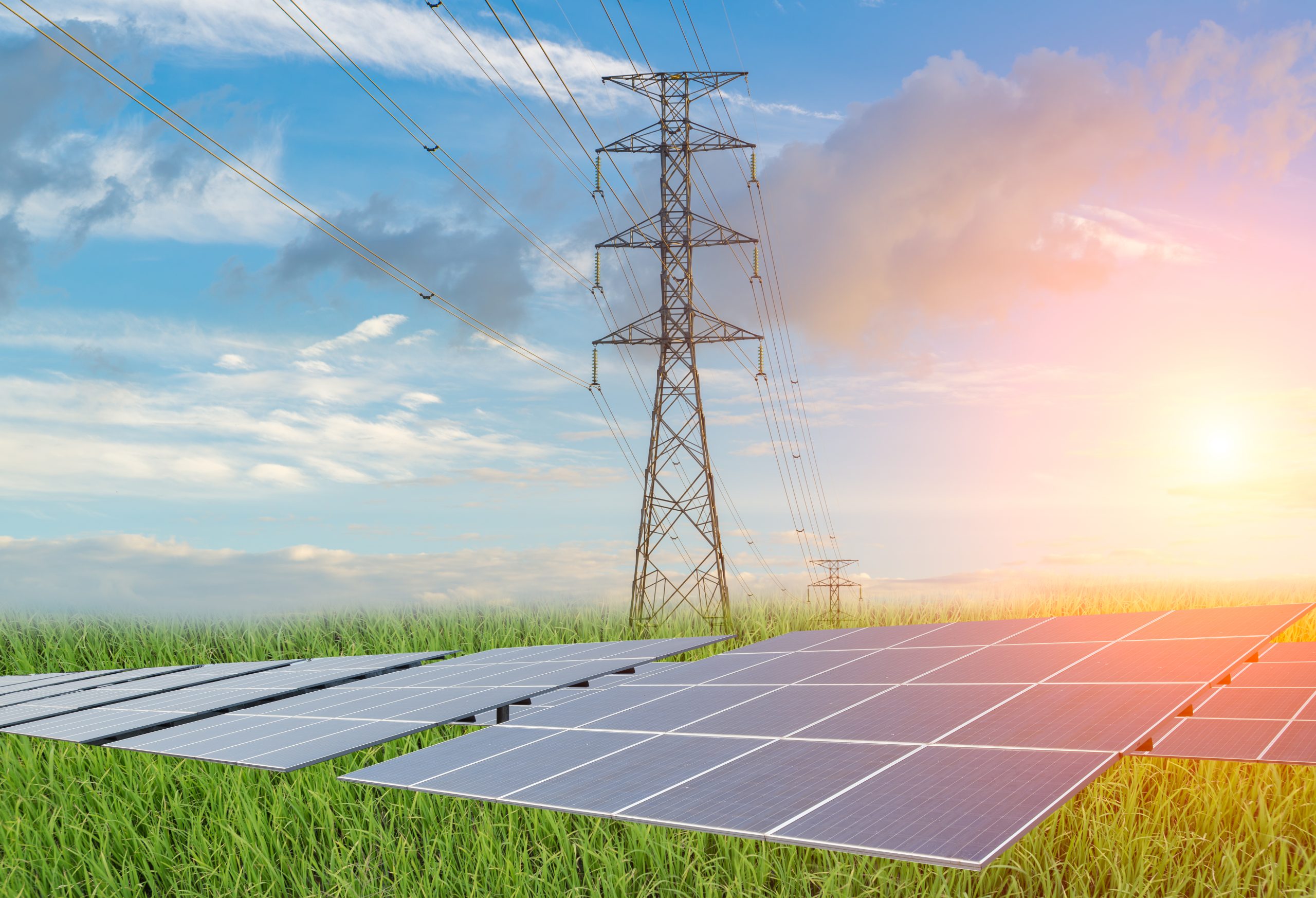
Editorial: The future is not promised. It is connected.

Before dawn, on the slopes of the Ecuadorian Andes, a woman walks through the mist to gather the firewood that will light her household stove. Thousands of kilometres away, in a control centre in southern Brazil, a technical team monitors in real time as an artificial intelligence algorithm optimises the output of a wind farm. Two different scenes, two distant realities, yet connected by the same invisible thread: energy.

For decades, we have been told that Latin America and the Caribbean is a region of “enormous energy potential”. Yet potential that does not translate into infrastructure, jobs and well-being is little more than an appealing adjective. The real challenge is not simply to determine where tomorrow’s electricity will come from, but to decide what kind of society we can build with it.

The global energy map is no longer drawn by climate targets alone. Energy now shapes corporate competitiveness, national security, urban resilience and the ability to attract investment. Meeting this new reality requires moving beyond fragmented responses.

Against this backdrop, the Dominican Republic is opening its doors to host OLACDE’s 11th Energy Week, co-organised with the Ministry of Energy and Mines. Bringing this conversation to Santo Domingo allows us to consider the region’s energy future from the very heart of the Caribbean, while recognising the particular weight of its challenges and opportunities. The objective is not to accumulate speeches, but to bring together, around the same table, the authorities, businesses and institutions responsible for the sector’s most consequential decisions.

That transformation must begin by moving beyond solutions designed behind a desk. The energy transition cannot be conceived for new generations without being built with them. That is why the academic event Connecting Minds, Energising the Future and the 2nd Youth Meeting will connect university research with high-level decision-making.

At the political and technical heart of this effort is OLACDE’s 56th Meeting of Ministers, where the region’s highest energy authorities will confront an uncomfortable truth: regional integration is not built with transmission lines or gas pipelines alone. It also requires the technical and political commitment of 27 Member Countries, clear rules and common criteria capable of turning national ambitions into shared financing and infrastructure.

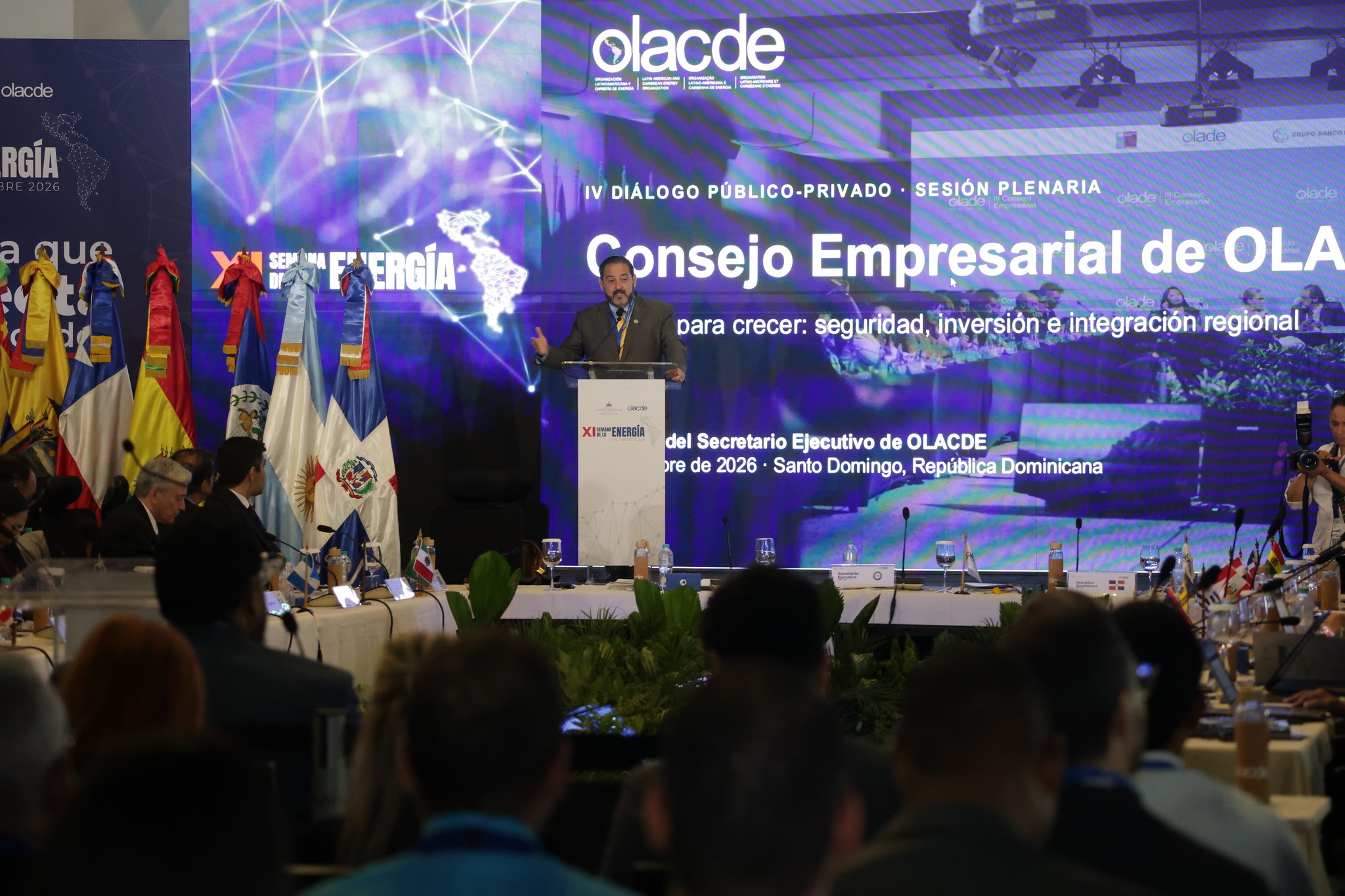
But governments cannot move forward alone. In a strategic high-level forum, the 4th Public-Private Dialogue of OLACDE’s Business Council will bring regulatory certainty face to face with the financing required to turn ambitious goals for energy storage, smart grids and hydrocarbons into viable, bankable projects. Meanwhile, the 2026 OLACDE Energy Excellence Awards will serve as a reminder that the transition is not an abstract promise for tomorrow, but a series of tangible solutions already transforming lives across the region.

From grid optimisation to community development, the Caribbean will bring together political resolve, technical precision and financial certainty. The challenge for Latin America and the Caribbean is no longer to proclaim its potential, but to connect that potential with the realities of its people. That is the commitment of this Energy Week.
Share this news

Editorial: The future is not promised. It is connected.

Newsletter summary

Editorial: The future is not promised. It is connected.

Knowledge and Training

We promote advanced technical training programs that facilitate the exchange of experiences, as well as the development of the human and institutional capacities needed to support the energy transformations in our region.

Our academic offering includes executive programs, postgraduate diplomas, master’s degrees, and innovative initiatives focused on topics such as energy transition, conventional energy, renewable energy, e-mobility, and regional integration.

OLACDE creates a regional network focused on energy knowledge that connects governments, young professionals, academics, and sector experts to drive collaborative solutions through technical cooperation and talent development to address future energy and climate challenges.

Technical cooperation and financing

We strengthen South-South and triangular cooperation ties as drivers to accelerate energy transitions in Latin America and the Caribbean. OLACDE brings together efforts among governments, multilateral organizations, academic institutions, and the private sector to mobilize financing, technical capacities, and innovative solutions tailored to our regional reality.

We promote strategic initiatives aimed at directing resources toward projects focused on decarbonization, conventional energy, renewable energy, and energy justice, with the objective of establishing a more efficient, inclusive, and sustainable regional cooperation architecture.

Regional Energy Community

We are building a regional energy community with a global outlook that seeks to position Latin America and the Caribbean as a key player on the international stage. OLACDE strengthens its representation in major multilateral forums related to energy, trade, and climate by fostering strategic alliances and promoting international cooperation.

Through events such as Energy Week, together with new spaces for international dialogue, we promote a collective voice that helps attract financial investment and create new opportunities for sustainable development across our region.

Energy Transition and Strategic Projects

We drive an energy transition based on principles of sustainability, energy security, and social inclusion. OLACDE supports countries in adopting new technologies related to energy efficiency, energy storage, green hydrogen, electromobility, and grid digitalization to accelerate the sector’s decarbonization process.

Our approach also includes promoting strategic projects that strengthen energy resilience at the regional level, contributing to emission reductions while consolidating a cleaner and more competitive energy infrastructure. Initiatives such as OEMLAC position our region as a leading reference in climate innovation and sustainable energy transition.

Energy information and data

We develop regional platforms dedicated to energy information, technical analysis, and strategic data systems that strengthen both public and private decision-making in the sector. OLACDE promotes the digital transformation of the sector through the use of artificial intelligence, georeferencing, and advanced tools for regional energy analysis.

The integration of systems such as SieLAC, together with new regional platforms, allows for the consolidation of reliable and up-to-date technical information, facilitating modern, interoperable, and evidence-based energy planning.

Regional Energy Integration

We promote cooperation in the regional energy sector, focused on collaboration, infrastructure development, and regulatory harmonization, with the objective of strengthening energy security in Latin America and the Caribbean. OLACDE coordinates projects related to electrical interconnection, gas integration, and regional energy planning, seeking to create efficient and sustainable partnerships.

Through cooperation with the governments of our 27 member countries, regional blocs, multilateral institutions, and both public and private stakeholders, we drive strategic initiatives that promote regulatory harmonization and new energy exchange mechanisms, in order to enhance national capacities and accelerate an integrated energy transition at the regional level.