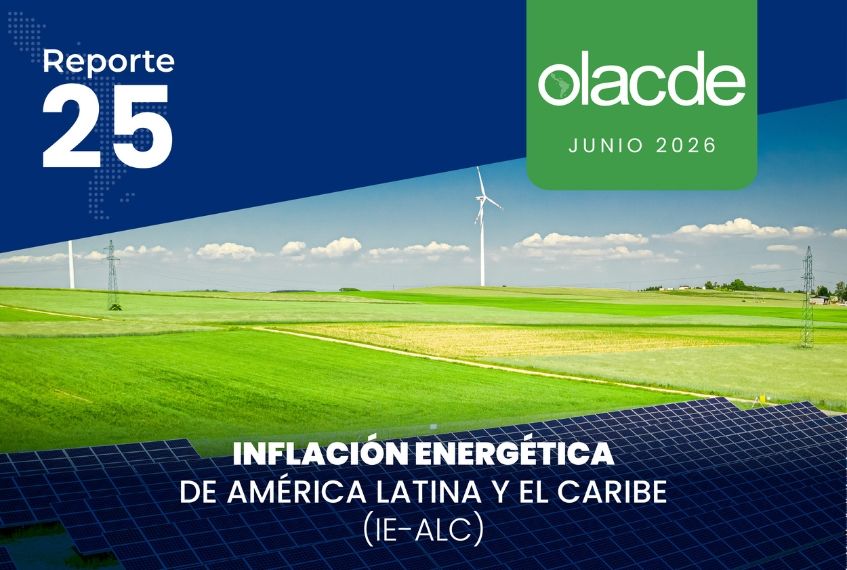
The armed conflict in the Middle East and the resulting disruption of global trade through the Strait of Hormuz have triggered a turning point for the economy of Latin America and the Caribbean (LAC). According to our latest report, the region’s monthly energy inflation rose sharply in March 2026, reaching 1.42%. This figure represents a jump from the 0.19% recorded in February and marks the highest level in the past 12 months, triggered by escalating tensions along a route through which 20% of the world’s oil passes, pushing international crude prices up to USD 116 per barrel.
Our analysis reveals that, despite having a highly renewable electricity generation matrix, the region remains dependent on oil and its derivatives. This vulnerability translated into an average regional price increase of 21% for diesel and 15% for gasoline, with domestic price bands ranging between USD 0.7 and 2.07 per liter of gasoline and between USD 0.8 and 1.65 for diesel.
The impact of this energy shock acted as a transmission mechanism into the broader economy, driving up logistics costs, transportation, and food prices. As a result, the region’s total monthly inflation (across the entire economy) doubled, accelerating from 0.38% in February to 0.75% in March, also marking its highest ceiling in the past year.
The report highlights an asymmetric impact, in which net oil-importing countries have faced severe fiscal pressure, while exporting nations are seeing extraordinary short-term revenue, though they remain equally exposed to market volatility.
Meanwhile, some countries allowed a greater pass-through of the international oil price increase to consumers, while others turned to subsidies, tax cuts, stabilization funds, or partial containment schemes. As a result, the transmission of the energy shock into overall inflation was not complete, thanks to the diversity of buffering policies applied.
The magnitude of March’s shock shows that intense geopolitical shocks are capable of breaking through local containment mechanisms, demonstrating that, although the correspondence is not “one to one” due to state interventions, the transmission of upward price trends has become nearly unavoidable.
With this regional monitoring effort, OLACDE reaffirms its fundamental role as the technical source for understanding the economic dynamics and the challenges of integration, security, and energy development in Latin America and the Caribbean.
Read the LAC Energy Inflation Report for March 2026 here: https://www.olacde.org/publicaciones/junio-2026reporte-n-25-inflacion-energetica-de-america-latina-y-el-caribe-ie-alc/