As part of the Regional Gas Integration Project for MERCOSUR and Chile, OLACDE and CAF presented findings in Buenos Aires on the potential for natural gas vehicles (NGVs) to replace imported diesel in freight transport and for liquefied petroleum gas (LPG) to expand regional trade. Estimates suggest that replacing diesel with compressed natural gas (CNG) in 20% of heavy-duty traffic along five selected corridors could generate annual foreign exchange savings of approximately USD 420 million, while the region could become a net LPG exporter by 2030.
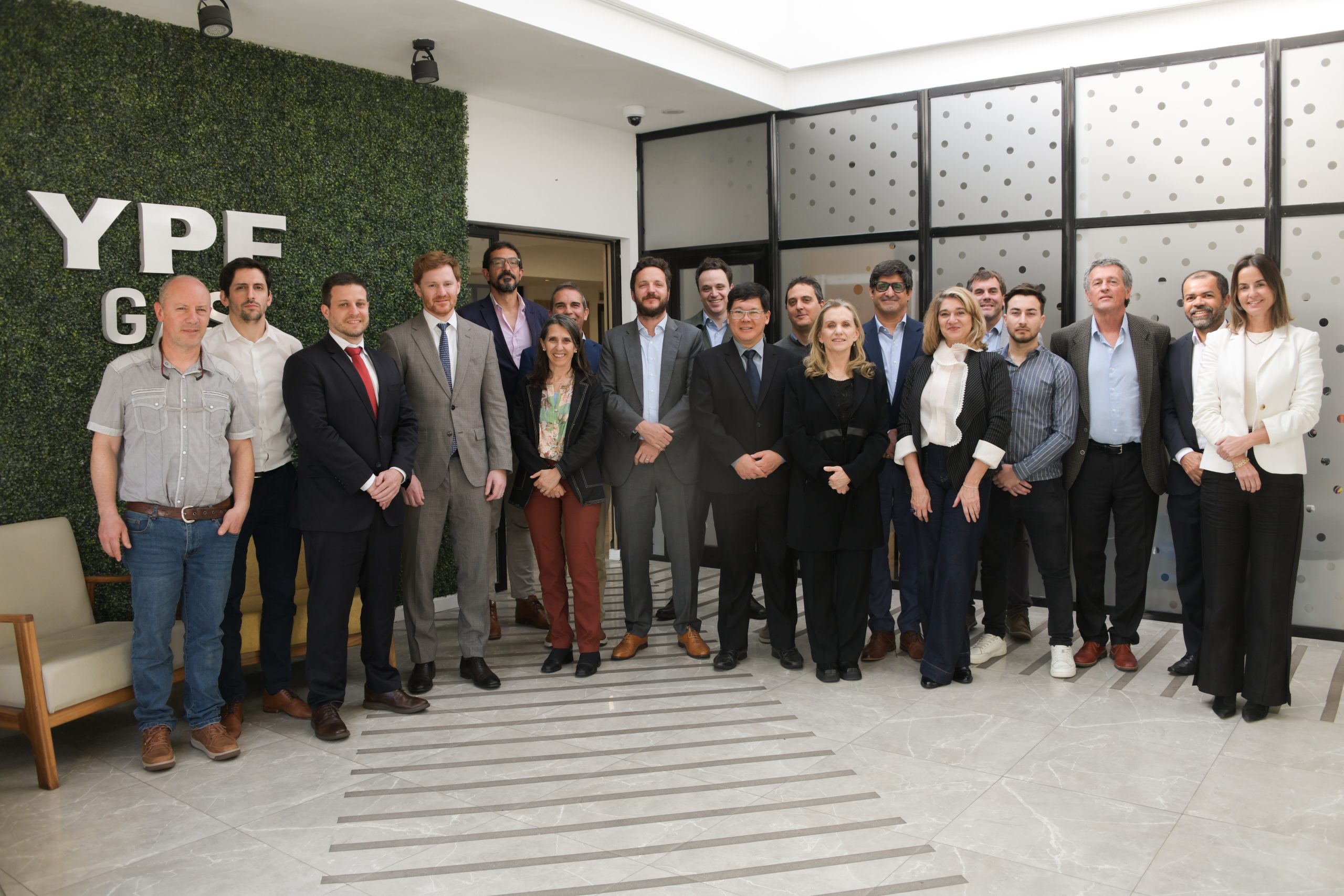
Held at the YPF Gas plant in La Matanza, the event brought together Argentine energy officials, vehicle manufacturers, transport companies and gas industry representatives. The discussions examined the technical findings against the economic, infrastructure and regulatory conditions needed to advance these alternatives across the region.
During the opening session, Guido Maiulini, Head of Strategic Advisory at OLACDE, emphasized: “Regional gas integration must extend beyond traditional pipeline trade and explore new opportunities, such as natural gas vehicles for freight transport and liquefied petroleum gas. These sectors have enormous potential to replace imports, stimulate natural gas demand, boost economic activity and employment, and contribute to our countries’ development. Exploring these alternatives further, as we are doing with CAF through this project, broadens the prospects for energy integration in the Southern Cone, enriches dialogue among countries and opens new avenues for developing a shared regional agenda.”
Juan Ríos, Principal Executive in the Directorate of Energy, Gas and Strategic Mining at CAF—Development Bank of Latin America and the Caribbean—stated: “Expanding the use of natural gas in freight transport requires refueling infrastructure, appropriate financing conditions and regulatory coordination among countries. At CAF, we seek to strengthen coordination between public and private stakeholders, reduce risks and mobilize investment to turn these opportunities into tangible, economically viable projects with shared benefits.”
Juan Giménez, Director of YPF Gas, said: “The development of Vaca Muerta and improvements in the industry’s productivity and competitiveness are creating new opportunities for Argentina and the region. Production growth presents us with the challenge of expanding markets, strengthening regional trade and promoting new applications that unlock the potential of our energy resources.”
One of the event’s main themes was the potential for natural gas vehicles (NGVs) to replace imported diesel in freight transport. The study presented by OLACDE indicates that, in 2025, countries in the region imported approximately 30 million cubic meters of diesel, valued at nearly USD 18 billion. Against this backdrop of import dependence, gas resources—primarily from Vaca Muerta and Brazil’s pre-salt fields—offer opportunities to reduce logistics costs and make greater use of regional natural gas production.
Among its key findings, the analysis estimates that replacing diesel with CNG in 20% of heavy-duty traffic along five selected corridors could generate annual foreign exchange savings of approximately USD 420 million and additional natural gas demand of 2.4 million cubic meters per day. Sustained throughout the year, this demand could help improve the utilization of regional gas integration infrastructure.
The study examined five transport corridors: Rio de Janeiro–São Paulo, Buenos Aires–Porto Alegre, Porto Alegre–São Paulo, Buenos Aires–Santiago, and the sand transport route between Entre Ríos and Vaca Muerta. The findings show that CNG can offer economic advantages over diesel, although its competitiveness depends on fuel prices, vehicle utilization and supply conditions in each market.
A key conclusion is that expanding NGV adoption requires coordinated investment in vehicles and refueling infrastructure, improved financing conditions, and progress toward technical and regulatory harmonization among countries. Developing corridors with identified demand and high-capacity refueling stations could reduce investment risks and facilitate the gradual adoption of natural gas trucks in regional freight transport.
The presentation was followed by the panel “Challenges in Expanding Natural Gas Use,” featuring Diego Figueroa, Natural Gas Commercial Lead at YPF; Lucas Woinilowicz, Business Development and Sustainable Transport Manager at Scania; Brian Montero, CTO of Transporte Ibarra; and María Fernanda Martínez Linares, Head of the NGV Unit at ENReGE. Bringing together perspectives from vehicle manufacturing, transport, gas supply and regulation, the discussion addressed available technologies, infrastructure needs, fleet financing and the conditions required to accelerate the adoption of natural gas trucks along regional corridors.
Liquefied petroleum gas (LPG) was the event’s second major focus, with findings indicating that the Southern Cone could shift from a net importer to a net exporter by 2030, driven primarily by production growth in Vaca Muerta and, to a lesser extent, by the development of Brazil’s pre-salt fields.
According to the projections, Argentina’s LPG production could rise from 2.95 million metric tons in 2025 to approximately 8 million metric tons in 2030. At the regional level, the balance could shift from a deficit of 1.6 million metric tons to a surplus of 7 million metric tons annually, creating new opportunities to replace imports and expand trade among countries.
The analysis identified opportunities to reduce supply costs, particularly in Paraguay, southern Chile, Brazil and, potentially, Peru. Realizing this potential will require investment in gas separation and processing infrastructure, improvements in distribution logistics, and competitive commercial terms to connect growing regional supply with consumer markets.
These prospects were discussed during the panel “LPG: Opportunities,” which brought together Leandro Maldonado, Business Development Manager at YPF Gas, and officials from the participating countries. The discussion focused on opportunities to expand the regional market, supply alternatives, logistics challenges and the commercial arrangements needed to facilitate new LPG trade flows among Southern Cone countries.
Watch the full event recording:
https://youtube.com/live/VoQoF05m5o0?feature=share