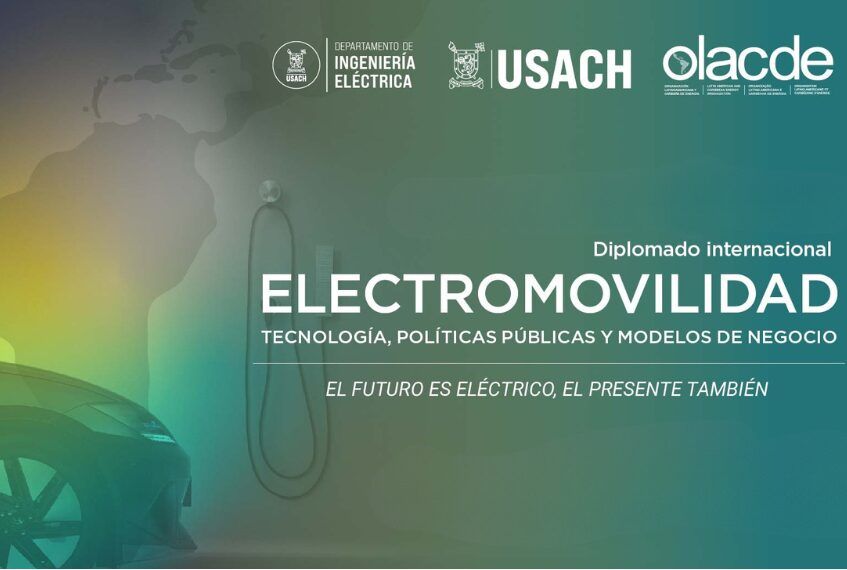
The Latin American and Caribbean Energy Organization (OLACDE), together with the Department of Electrical Engineering (DIE) of the University of Santiago de Chile (Usach), held the closing ceremony of the first International Diploma Program in Electromobility, a pioneering initiative aimed at strengthening regional capacities in an area that is key to the energy transition.
The program, delivered in virtual format, brought together more than 30 graduates from 15 countries across Latin America and the Caribbean, who took part in a training process focused on analyzing the region’s main challenges, trends, and projections in electromobility.
The closing session included three keynote presentations. The first was given by Elaine Santos, founder of the Lithium Observatory at the University of São Paulo, who addressed the strategic role of critical minerals, such as lithium and cobalt, in the development of electromobility and its associated value chains.
Next, Silvia Rojas, executive director of the Costa Rican Electric Mobility Association (ASOMOVE), presented an analysis of the current state of electric mobility in Latin America, with particular emphasis on Costa Rica’s experience and progress.
The third presentation was given by Paola Tapia, director of Chile’s Metropolitan Public Transport Authority (DTPM), who shared the experience of Santiago’s public transport ecosystem, highlighting progress in the electrification of urban transport.
For her part, OLACDE’s Director of Integration, Access, and Energy Security noted: “High-level academic training is, without a doubt, a catalyst for the transformation of our region, and this vision of educational excellence translates into high-impact learning experiences such as this international diploma program in electromobility.”
Finally, Andrés Rebolledo, OLACDE’s Executive Secretary, highlighted the importance of this program as a space for collaboration between academia, the public sector, and the private sector, which strengthens capacity building to drive electromobility forward. He also emphasized that this effort contributes to the decarbonization of transport and to building a more sustainable and inclusive energy future.