OLACDE and the University of Havana Drive Energy Training in Central America and the Caribbean

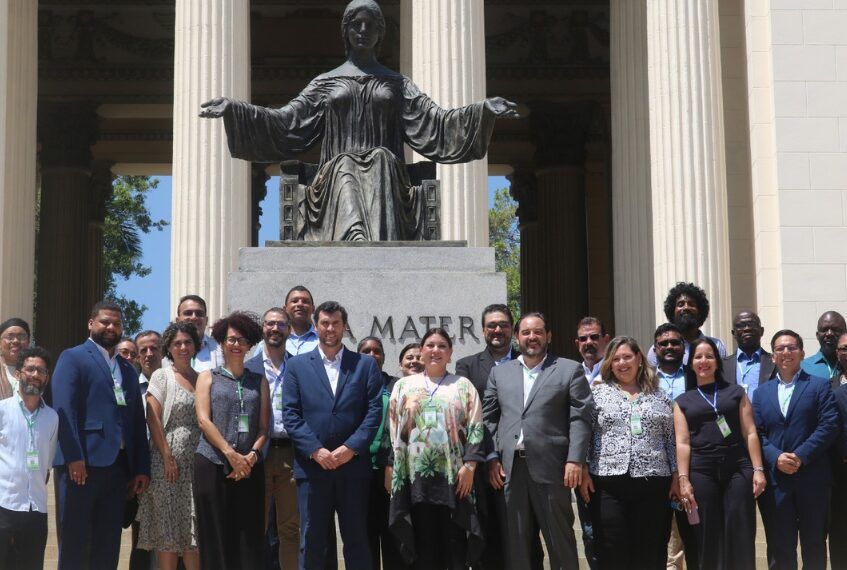
Leaders, experts and representatives from Central American and Caribbean countries are taking part this week in the course “Energy Transitions in Central America and the Caribbean,” organized by the Latin American and Caribbean Energy Organization (OLACDE), Cuba’s Ministry of Energy and Mines, and the University of Havana. The event, held in the Cuban capital, aims to strengthen technical and human capacities for the planning, implementation and oversight of renewable energy projects, particularly photovoltaic generation.

The opening day featured presentations on the Regional Energy Outlook for Central America, Mexico and the Caribbean; a comparative law study on the policy and regulatory framework for solar energy in the Caribbean; and an analysis of Caribbean and Central American countries’ efforts to incorporate renewable energy into their electricity mixes.

Opening the event, OLACDE’s Executive Secretary, Andrés Rebolledo Smitmans, emphasized that “the energy transition is not a destination, but a collective process that requires political vision, technical planning, regional collaboration and, above all, people committed to transformation”. He added that the program “is designed to train trainers in order to amplify its impact”.

The rector of the University of Havana, Miriam Nicado García, noted that the institution is working together with the Ministry of Energy and Mines on a sustainability and energy transition strategy that involves all national stakeholders.

For his part, Cuba’s Deputy Minister of Energy and Mines, Argelio Abad Vigoa, stressed that “there is no time to lose. Under the Paris Agreements, we must reduce emissions and increase energy resilience”. He noted that countries like Cuba are already making progress on major solar park projects, grid modernization and energy efficiency, but warned that the path ahead requires greater solidarity and collective action.

As part of the event, OLACDE and the University of Havana signed a memorandum of understanding to develop joint academic training programs, specialist exchanges and internships, as well as to design and carry out technological innovation projects in areas such as renewable energy, energy efficiency, hydrocarbons, electricity, nuclear energy and energy planning.

The program includes an intensive workshop with theoretical and hands-on activities on solar radiation, photovoltaic module design and certification, technical measurements, solar park operation and maintenance, panel recycling, and the preparation of specifications for renewable energy projects. Participants will also carry out hands-on work at the University of Havana’s Photovoltaic Laboratory and visit solar installations in Matanzas to apply what they have learned in the field.

The event, which runs through August 8, brings together government representatives, technicians and experts from both subregions to discuss the challenges of the energy transition and build roadmaps tailored to the realities of Central America and the Caribbean.

Share this news

OLACDE and the University of Havana Drive Energy Training in Central America and the Caribbean

Newsletter summary

Leaders, experts and representatives from Central American and Caribbean countries are taking part this week in the course “Energy Transitions in Central America and the Caribbean,” organized by the Latin American and Caribbean Energy Organization (OLACDE), Cuba’s Ministry of Energy and Mines, and the University of Havana. The event, held in the Cuban capital, aims […]

Capacity building & knowledge

We advance high-level technical training programs that foster experience-sharing and develop the human and institutional capacities required to drive energy transformations across our region.

Our academic programs offer executive courses, postgraduate diplomas, master’s degrees, and innovative initiatives focused on key areas such as the energy transition, conventional and renewable energy, electromobility, and regional integration.

OLACDE builds a regional network of energy expertise, connecting governments, young professionals, academics, and industry experts to foster collaborative solutions through technical cooperation and talent development to address future energy and climate challenges.

Technical cooperation & climate finance

We strengthen South-South and triangular cooperation as key drivers to accelerate energy transitions across Latin America and the Caribbean. OLACDE unites efforts among governments, multilateral organizations, academic institutions, and the private sector to mobilize financing, technical expertise, and innovative solutions tailored to our regional context.

We advance strategic initiatives aimed at directing resources toward decarbonization, conventional energy, renewables, and energy justice projects—building a more efficient, inclusive, and sustainable regional cooperation architecture.

Regional energy community

We are building a regional energy community with a global outlook, positioning Latin America and the Caribbean as a pivotal player on the international stage. OLACDE amplifies regional representation in key multilateral energy, trade, and climate forums by fostering strategic alliances and international cooperation.

Through flagship events such as Energy Week and new spaces for high-level dialogue, we champion a collective voice that attracts investment, drives technical partnerships, and unlocks sustainable development opportunities across our region

Energy transition & strategic projects

We foster a regional energy transition built on sustainability, energy security, and social inclusion. OLACDE supports Member Countries in adopting emerging technologies—such as energy efficiency, storage solutions, green hydrogen, electromobility, and grid digitalization—to accelerate the sector’s decarbonization.

Our approach promotes strategic projects that strengthen energy resilience across Latin America and the Caribbean, reducing emissions while building a cleaner, more competitive energy infrastructure. Key regional initiatives, including OEMLAC, position our region as a benchmark for climate innovation and sustainable energy development.

Energy information and data

We develop regional platforms dedicated to energy intelligence, technical analysis, and strategic data systems that empower both public and private decision-making across the sector. OLACDE drives digital transformation in energy by leveraging artificial intelligence, georeferencing, and advanced analytical tools to map regional energy trends.

The integration of systems such as SieLAC, along with new regional digital platforms, consolidates reliable, up-to-date technical data—enabling modern, interoperable, and evidence-based energy planning.

Regional energy integration

We foster cooperation across the regional energy sector by prioritizing infrastructure development, cross-border collaboration, and regulatory alignment to enhance energy security in Latin America and the Caribbean. OLACDE coordinates strategic projects in power grid interconnections, natural gas integration, and joint energy planning to build resilient, sustainable partnerships.

Working alongside the governments of our 27 Member States, regional blocs, multilateral institutions, and key public and private stakeholders, we drive initiatives that introduce innovative energy exchange mechanisms, strengthen national capacities, and accelerate a unified regional energy transition.