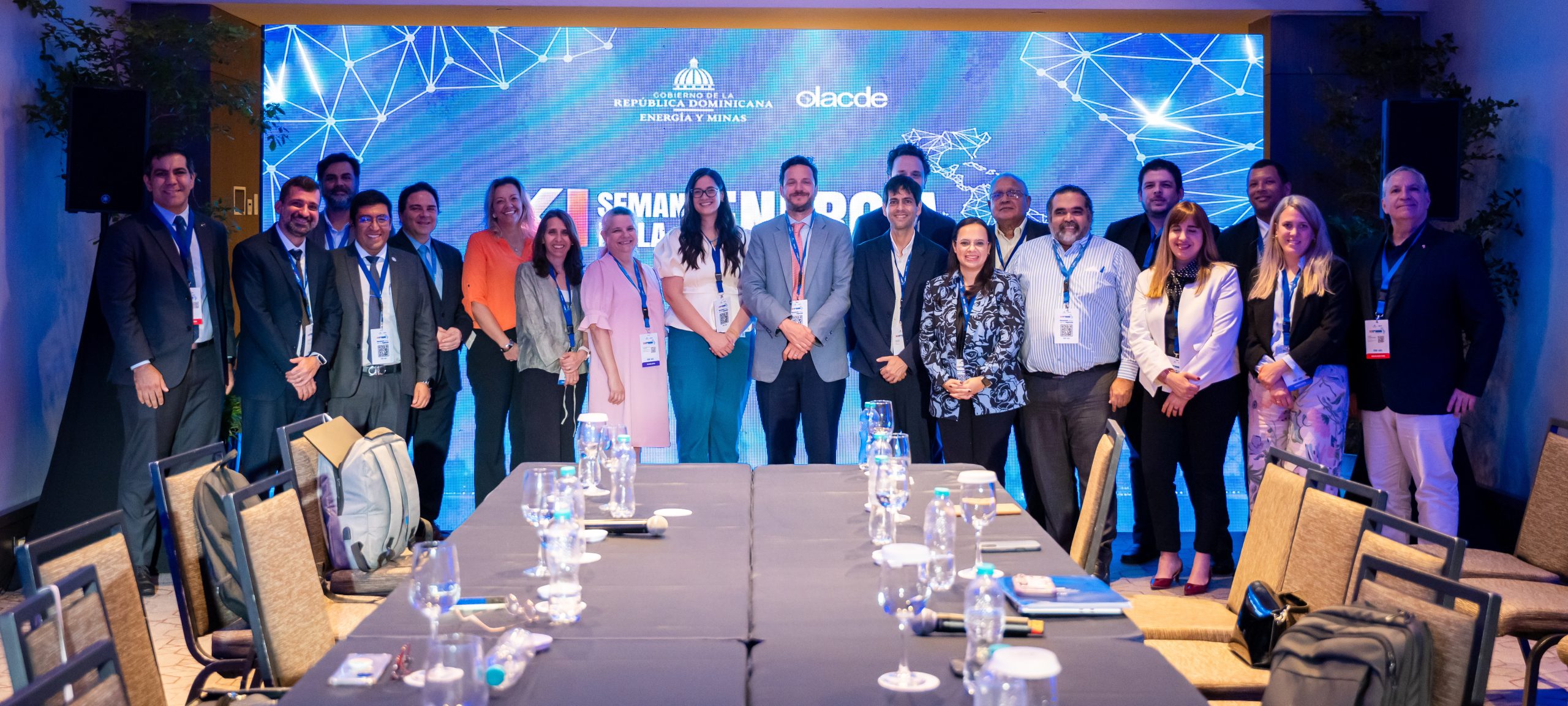
OLACDE’s Regional Energy Planning Council held its fifth meeting during the 11th Energy Week. Country representatives agreed to move forward with the development of regional scenarios to anticipate changes in energy demand, technology, climate, and infrastructure, and to improve coordination of long-term energy decisions.
Santo Domingo, October 2026. Energy planning officials from Latin America and the Caribbean gathered in Santo Domingo for the fifth meeting of the Regional Energy Planning Council, established to strengthen countries’ capacities and incorporate a regional perspective into national energy planning processes.
One of the main achievements was the agreement to further develop regional energy scenarios, based on a proposal presented by Brazil’s Energy Research Office (EPE). This initiative will enable a coordinated assessment of uncertainties related to energy security, regional integration, infrastructure development, emerging technologies, value chains, and evolving energy demand.
The process will build on priorities defined by the countries themselves and seek to leverage existing studies, models, and data available across the region. The development of regional energy scenarios will be complemented by two other areas of work already being advanced by the Council: energy modeling and planning methodologies. IRENA, ECLAC, the IAEA, and other institutions expressed their willingness to contribute their expertise and technical capacities in these areas.
Guido Maiulini, Head of Strategic Advisory at OLACDE, highlighted that this phase will help translate the Council’s accumulated work into practical tools for countries and foster a shared understanding of the region’s main long-term energy challenges. He also emphasized the importance of bringing together existing regional capacities and maintaining a gradual process developed in close collaboration with national teams.
La reunión dejó definidos los próximos pasos para poner en marcha este trabajo, entre ellos la coordinación de los puntos focales nacionales, la preparación de las primeras instancias técnicas y una nueva reunión presencial del Consejo durante 2027.