New findings from the Regional Electricity Interconnection Plan were presented during the 11th Energy Week. Of the 16 potential interconnections evaluated, 12 are included in the optimal portfolio under the baseline scenario, while all 16 prove beneficial in at least one of the scenarios analyzed. The study projects annual net benefits ranging from USD 1 billion to USD 5 billion, depending on the scenario.
Santo Domingo, October 2026. The session “Electricity Interconnection for a More Integrated Region: Progress and Outlook of the Regional Plan Towards 2040” brought together representatives from governments, development banks, companies, and international organizations to discuss the Plan’s findings and the conditions needed to turn the identified opportunities into concrete projects.
Led by OLACDE in collaboration with CELAC and the European Commission, through EUROCLIMA and with implementation by GIZ, the Plan identifies strategic corridors and assesses their performance under different demand, price, and climate scenarios, with the aim of providing evidence to inform infrastructure, regulatory, and investment decisions through 2040.
In his opening remarks, Guido Maiulini, Head of Strategic Advisory at OLACDE, highlighted the growing importance of electricity integration amid increasing electrification. “Integration is not merely a political objective: it enables more cost-effective energy supply, greater energy security, and reduced emissions,” he stated, also emphasizing the importance of maintaining regional cooperation and long-term planning.
Representing the European Commission, Myriam Ferrán stated that “interconnections create the links needed for electricity to flow across the continent.” She also emphasized that their development requires a coordinated approach to generation, transmission, and interconnections, alongside the regulatory, financial, and business conditions necessary to bring projects to fruition.
The findings were presented by Rodrigo Moreno, Director of the ENLACE Energy Center, who explained that the study assessed 16 potential interconnections under six scenarios, including variations in fuel prices, increased electrification, and climate phenomena such as El Niño and La Niña. “Of the 16 interconnections, 12 projects are included in the optimal portfolio under the baseline scenario,” he noted. When the underlying assumptions are adjusted, all 16 prove beneficial in at least one scenario.
The analysis projects annual net benefits ranging from USD 1 billion to USD 5 billion, with benefit–cost ratios ranging from 3.7 to 18.5, depending on the scenario. These benefits stem from both more efficient operation of energy systems and improved planning of investments in power generation and energy storage.
Moreno also highlighted that some of the most valuable interconnections are those linking entire subregions. The Panama–Colombia interconnection connects Central America with the Andean region, while the Peru–Chile interconnection links the Andean power system with the Southern Cone.
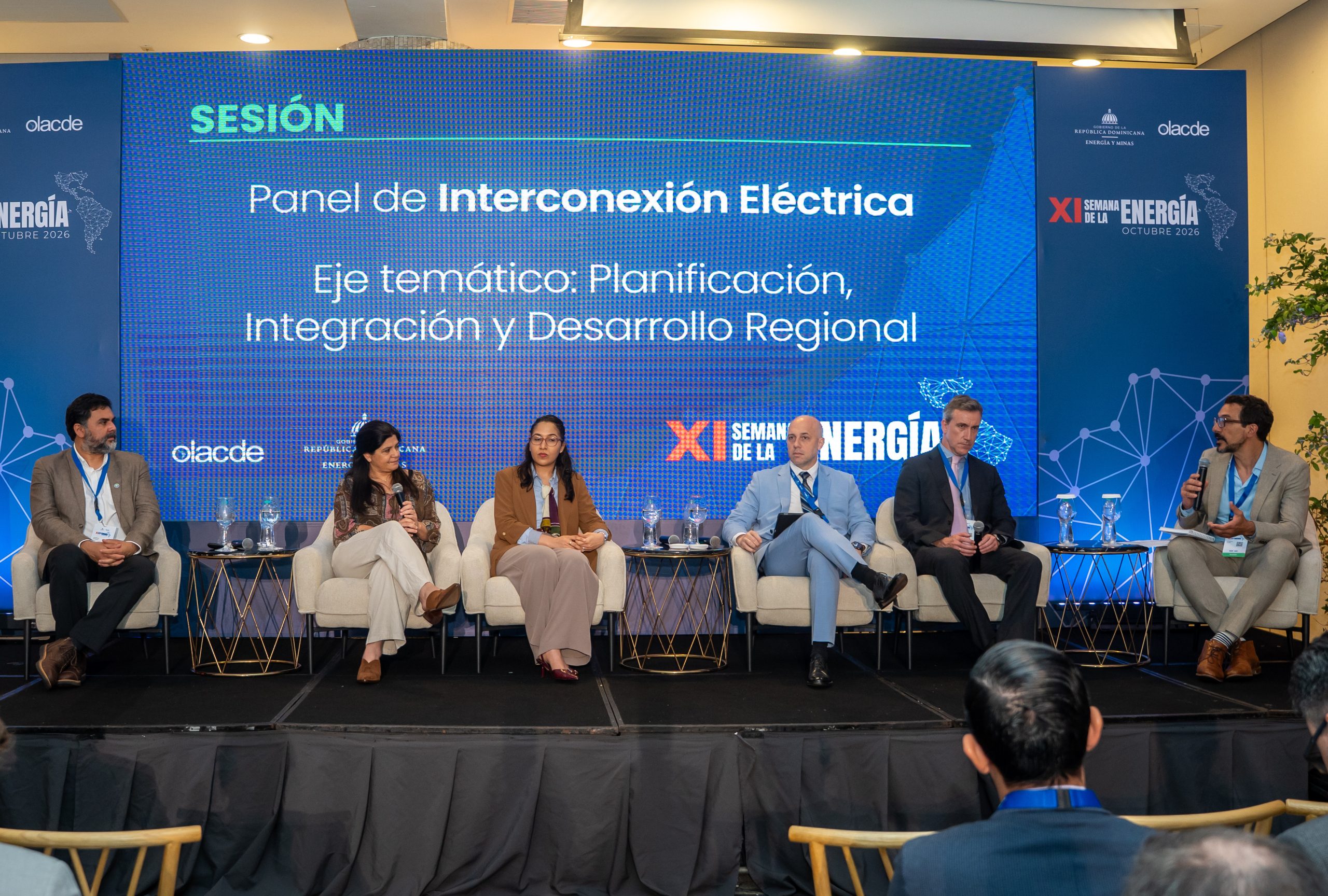
Moderated by Esteban Kiper from OLACDE, the discussion addressed the conditions necessary to move from technical findings to project implementation.
Arianna Spinelli, National Director of Energy of Uruguay, stated that “energy integration is a means, not an end in itself,” emphasizing that Uruguay’s experience demonstrates the value of long-term planning in reducing energy supply costs, while noting that there is still room to make better use of existing interconnections.
For her part, Lisnely Valdés Bosquez, Director of Electricity at Panama’s National Energy Secretariat, highlighted the strategic importance of the Panama–Colombia interconnection in linking Central America with the Andean region and strengthening resilience to climate-related events. She noted that its development requires continued progress in governance and regulatory harmonization.
Representing ISA Energía Chile, Álvaro González stated that “technical planning and regulatory planning must move forward simultaneously,” identifying trust, governance, and adaptability as three essential conditions for the development of electricity interconnections.
Finally, Blas Rozada, from FONPLATA, emphasized the importance of implementation: “Projects must be technically sound, institutionally manageable, economically viable, and financially sustainable.” He also highlighted the need to combine public and private funding with an appropriate allocation of risks.
In his closing remarks, Maiulini emphasized that deepening regional electricity integration means “building the long term from the present”: sustaining agreements, making better use of existing regional institutions, and advancing progressive regulatory convergence to mobilize investment and reduce energy costs for industries and households.