The Region Expects to Double Gas Supply Over the Next Fifteen Years, Driven by Argentina and Brazil

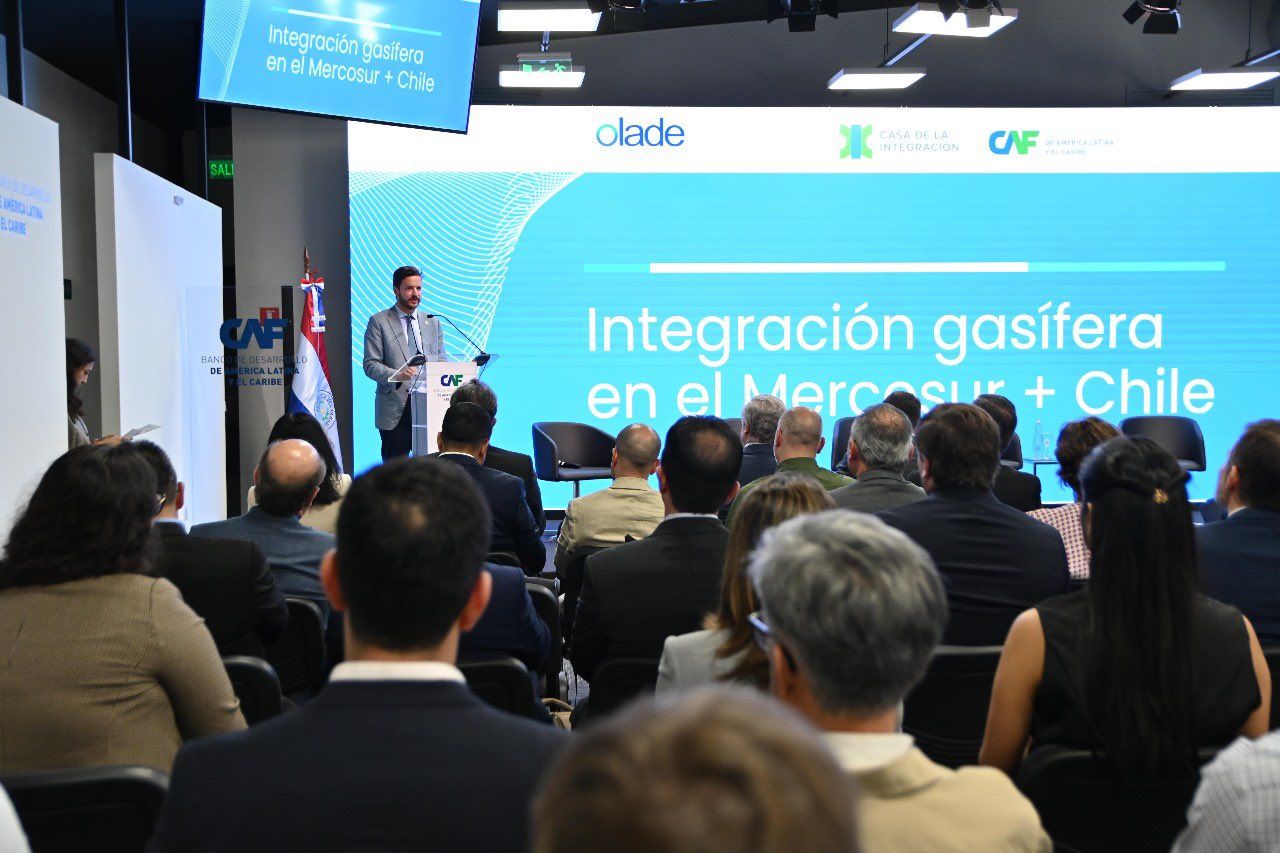
CAF – development bank of Latin America and the Caribbean – and the Latin American and Caribbean Energy Organization (OLACDE) held a technical meeting in Buenos Aires focused on the future of natural gas in the Mercosur countries and Chile. This event coincided with the closing of the second phase of the Regional Gas Integration Project, which focused on medium- and long-term natural gas supply and demand projections, and was preceded by working sessions aimed at advancing the process of dialogue and consensus among the six countries, at both the public and private levels.

The event brought together representatives from governments, energy sector companies and international organizations, with the aim of strengthening a space for technical dialogue on the importance of natural gas for regional energy security and its complementary role in the transition toward more sustainable energy sources.

The opening session was led by Jorge Srur, CAF’s Regional Manager for the Southern Cone; Andrés Rebolledo, Executive Secretary of OLACDE; Ernesto López Anadón, President of the Argentine Institute of Oil and Gas (IAPG); and Federico Veller, Undersecretary of Liquid Fuels at Argentina’s Secretariat of Energy.

In the context of the event, Andrés Rebolledo, Executive Secretary of OLACDE, provided a comprehensive analysis of the role of natural gas in the region’s energy agenda, highlighting its strategic relevance for the integration and economic development of the Southern Cone. Rebolledo noted that 75% of the gas consumed in South America comes from local production and that this resource is expected to continue representing around 20% of the energy matrix by 2050, even under carbon-neutrality scenarios. In this context, he called for promoting a gas industry with a smaller carbon footprint, based on traceability, technological innovation and cooperation between the public and private sectors.

For his part, Jorge Srur, CAF’s Regional Manager for the Southern Cone, reaffirmed the organization’s commitment to a just and feasible energy transition, highlighting joint achievements such as the Methane Observatory and the financing of strategic projects, such as the Gasoducto Norte pipeline in Argentina.

Ernesto López Anadón, President of the IAPG, mentioned that regional gas integration originated in the private sector and that, thanks to resources such as Vaca Muerta, there are now tangible conditions to move toward structural integration.

In turn, Federico Veller, Undersecretary of Liquid Fuels at Argentina’s Secretariat of Energy, emphasized recent regulatory advances, record gas exports and the national energy outlook spanning more than 60 years, underscoring that the success of integration will depend on robust contracts, legal certainty and a shared regional vision.

During the meeting, participants discussed economic issues, energy demand projections, obstacles for the private sector and opportunities for interinstitutional cooperation in the context of the energy transition.

Among the findings of the study presented, an increase in total natural gas demand in the Southern Cone is estimated between 2025 and 2040. According to the different scenarios analyzed, growth rates in electric gas demand increase even under different renewable penetration scenarios. In the case of liquefaction and urea production, incremental projects were identified that add to those already announced for coming years, some of which depend on possible new pipeline routes. Regarding Uruguay, projections show low demand, mainly due to industrial processes that have little flexibility to adapt to new technologies.

Regarding gas supply, regional projections show consolidated growth of more than double the current total production by 2040, given the successful development of Argentine and Brazilian formations.

Additionally, the study highlights continued growth in renewable generation, which reinforces its competitiveness and underscores the need to expand electrical interconnections as crucial tools for optimizing the efficient use of energy resources.

Watch the full event at the following link: https://www.youtube.com/watch?v=jJb4M-a5i3E
 

Share this news

The Region Expects to Double Gas Supply Over the Next Fifteen Years, Driven by Argentina and Brazil

Newsletter summary

CAF – development bank of Latin America and the Caribbean – and the Latin American and Caribbean Energy Organization (OLACDE) held a technical meeting in Buenos Aires focused on the future of natural gas in the Mercosur countries and Chile. This event coincided with the closing of the second phase of the Regional Gas Integration […]

Knowledge and Training

We promote advanced technical training programs that facilitate the exchange of experiences, as well as the development of the human and institutional capacities needed to support the energy transformations in our region.

Our academic offering includes executive programs, postgraduate diplomas, master’s degrees, and innovative initiatives focused on topics such as energy transition, conventional energy, renewable energy, e-mobility, and regional integration.

OLACDE creates a regional network focused on energy knowledge that connects governments, young professionals, academics, and sector experts to drive collaborative solutions through technical cooperation and talent development to address future energy and climate challenges.

Technical cooperation and financing

We strengthen South-South and triangular cooperation ties as drivers to accelerate energy transitions in Latin America and the Caribbean. OLACDE brings together efforts among governments, multilateral organizations, academic institutions, and the private sector to mobilize financing, technical capacities, and innovative solutions tailored to our regional reality.

We promote strategic initiatives aimed at directing resources toward projects focused on decarbonization, conventional energy, renewable energy, and energy justice, with the objective of establishing a more efficient, inclusive, and sustainable regional cooperation architecture.

Regional Energy Community

We are building a regional energy community with a global outlook that seeks to position Latin America and the Caribbean as a key player on the international stage. OLACDE strengthens its representation in major multilateral forums related to energy, trade, and climate by fostering strategic alliances and promoting international cooperation.

Through events such as Energy Week, together with new spaces for international dialogue, we promote a collective voice that helps attract financial investment and create new opportunities for sustainable development across our region.

Energy Transition and Strategic Projects

We drive an energy transition based on principles of sustainability, energy security, and social inclusion. OLACDE supports countries in adopting new technologies related to energy efficiency, energy storage, green hydrogen, electromobility, and grid digitalization to accelerate the sector’s decarbonization process.

Our approach also includes promoting strategic projects that strengthen energy resilience at the regional level, contributing to emission reductions while consolidating a cleaner and more competitive energy infrastructure. Initiatives such as OEMLAC position our region as a leading reference in climate innovation and sustainable energy transition.

Energy information and data

We develop regional platforms dedicated to energy information, technical analysis, and strategic data systems that strengthen both public and private decision-making in the sector. OLACDE promotes the digital transformation of the sector through the use of artificial intelligence, georeferencing, and advanced tools for regional energy analysis.

The integration of systems such as SieLAC, together with new regional platforms, allows for the consolidation of reliable and up-to-date technical information, facilitating modern, interoperable, and evidence-based energy planning.

Regional Energy Integration

We promote cooperation in the regional energy sector, focused on collaboration, infrastructure development, and regulatory harmonization, with the objective of strengthening energy security in Latin America and the Caribbean. OLACDE coordinates projects related to electrical interconnection, gas integration, and regional energy planning, seeking to create efficient and sustainable partnerships.

Through cooperation with the governments of our 27 member countries, regional blocs, multilateral institutions, and both public and private stakeholders, we drive strategic initiatives that promote regulatory harmonization and new energy exchange mechanisms, in order to enhance national capacities and accelerate an integrated energy transition at the regional level.