The Caribbean accelerates its energy transition with new laws, investments, and regional cooperation

The Caribbean is moving decisively forward in its energy transformation. Governments in the region are reforming regulatory frameworks, promoting tax incentives, and encouraging investment in clean energy to reduce their dependence on fossil fuels and build a low-carbon energy matrix.

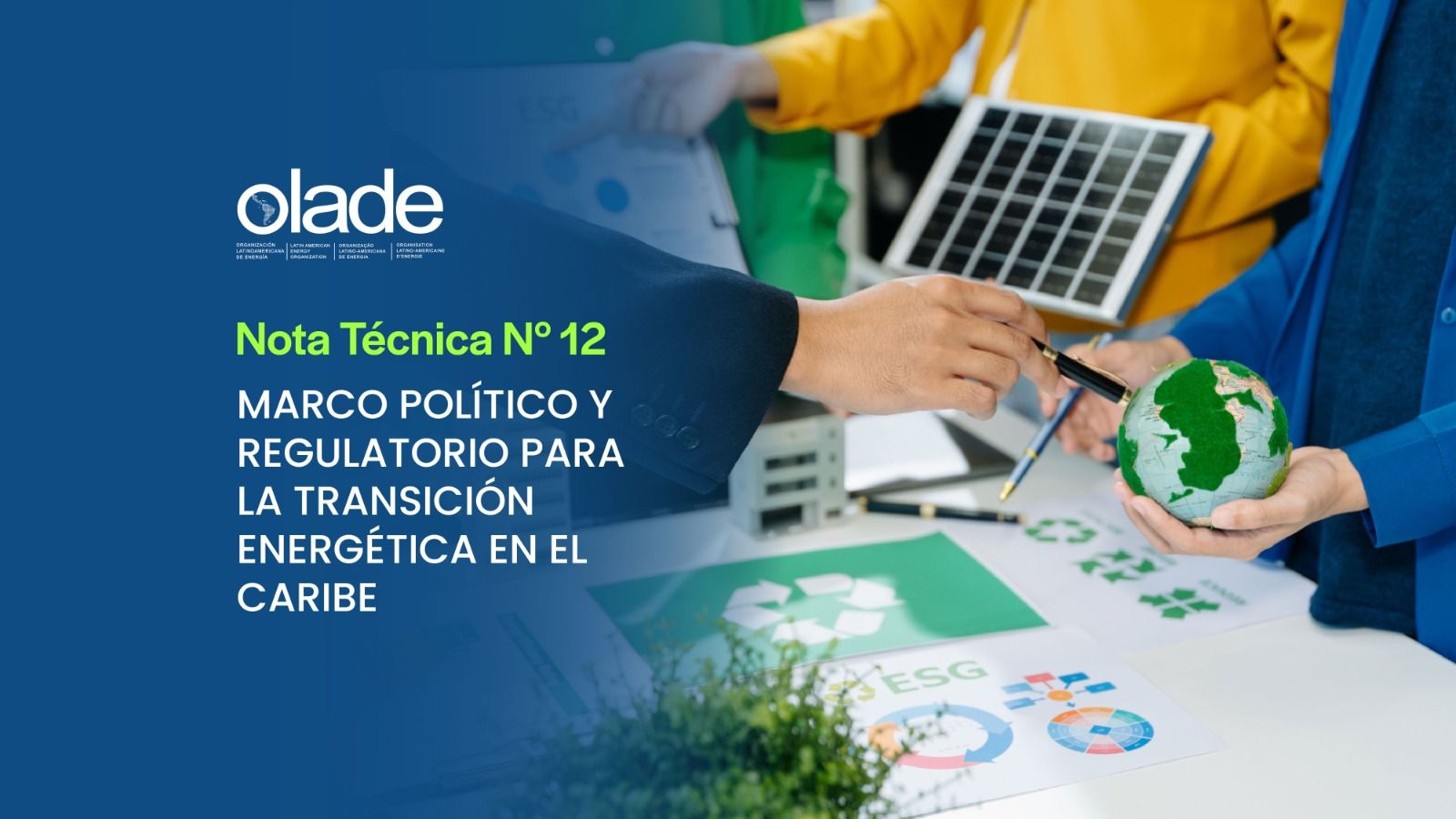
According to Technical Note No. 12 from the Latin American and Caribbean Energy Organization (OLACDE), “Policy and Regulatory Framework for the Energy Transition in the Caribbean,” Caribbean countries have begun translating climate commitments into concrete legal and financial instruments. These policies include the expansion of renewable energy, the development of resilient electrical infrastructure, and the promotion of sustainable mobility, with particular emphasis on consumer protection and attracting private investment.

Some notable examples include the following:

In the Dominican Republic, Law 103-13 eliminated tax barriers to the import of hybrid and electric vehicles, boosting electric mobility and reducing the national oil bill. In Jamaica, the implementation of the strategic framework for electric mobility reduced import taxes on these vehicles from 30% to 10%, spurring their widespread adoption.

Trinidad and Tobago, for its part, incorporated explicit commitments to the Paris Agreement into its legislation, and today offers tax incentives for renewable energy projects and compressed natural gas (CNG) transport. In addition, green financing mechanisms, climate bonds, and tax exemptions are being deployed to attract private capital, alongside innovation and technology transfer hubs that connect universities, industry, and governments.

Despite the progress achieved, the Technical Note warns that the share of renewables in the regional electricity matrix reached only 12% in 2022, still far from the 28% projected under CARICOM’s Subregional Energy Policy. OLACDE therefore recommends accelerating the implementation of more effective regulations, removing administrative barriers, and setting measurable targets to close the gap between what is planned and what is actually achieved.

The note highlights that, at the regional level, the Caribbean Community (CARICOM) is working to harmonize national standards and regulatory frameworks, while also promoting electricity interconnections that integrate renewable sources and strengthen energy security. The Regional Energy Policy, adopted in 2013, sets clear targets for diversifying the energy matrix, reducing dependence on hydrocarbons, and promoting energy efficiency and sustainable transport.

The report concludes that consolidating a just and sustainable energy transition requires the design and adoption of robust legal instruments that establish economic incentives, foster public-private partnerships, and promote greater international cooperation.

Download the technical note at the following link: https://www.OLACDE.org/publicaciones/nota-tecnica-n-12-marco-politico-y-regulatorio-para-la-transicion-energetica-en-el-caribe/
Share this news

The Caribbean accelerates its energy transition with new laws, investments, and regional cooperation

Newsletter summary

The Caribbean is moving decisively forward in its energy transformation. Governments in the region are reforming regulatory frameworks, promoting tax incentives, and encouraging investment in clean energy to reduce their dependence on fossil fuels and build a low-carbon energy matrix. According to Technical Note No. 12 from the Latin American and Caribbean Energy Organization (OLACDE), […]

Knowledge and Training

We promote advanced technical training programs that facilitate the exchange of experiences, as well as the development of the human and institutional capacities needed to support the energy transformations in our region.

Our academic offering includes executive programs, postgraduate diplomas, master’s degrees, and innovative initiatives focused on topics such as energy transition, conventional energy, renewable energy, e-mobility, and regional integration.

OLACDE creates a regional network focused on energy knowledge that connects governments, young professionals, academics, and sector experts to drive collaborative solutions through technical cooperation and talent development to address future energy and climate challenges.

Technical cooperation and financing

We strengthen South-South and triangular cooperation ties as drivers to accelerate energy transitions in Latin America and the Caribbean. OLACDE brings together efforts among governments, multilateral organizations, academic institutions, and the private sector to mobilize financing, technical capacities, and innovative solutions tailored to our regional reality.

We promote strategic initiatives aimed at directing resources toward projects focused on decarbonization, conventional energy, renewable energy, and energy justice, with the objective of establishing a more efficient, inclusive, and sustainable regional cooperation architecture.

Regional Energy Community

We are building a regional energy community with a global outlook that seeks to position Latin America and the Caribbean as a key player on the international stage. OLACDE strengthens its representation in major multilateral forums related to energy, trade, and climate by fostering strategic alliances and promoting international cooperation.

Through events such as Energy Week, together with new spaces for international dialogue, we promote a collective voice that helps attract financial investment and create new opportunities for sustainable development across our region.

Energy Transition and Strategic Projects

We drive an energy transition based on principles of sustainability, energy security, and social inclusion. OLACDE supports countries in adopting new technologies related to energy efficiency, energy storage, green hydrogen, electromobility, and grid digitalization to accelerate the sector’s decarbonization process.

Our approach also includes promoting strategic projects that strengthen energy resilience at the regional level, contributing to emission reductions while consolidating a cleaner and more competitive energy infrastructure. Initiatives such as OEMLAC position our region as a leading reference in climate innovation and sustainable energy transition.

Energy information and data

We develop regional platforms dedicated to energy information, technical analysis, and strategic data systems that strengthen both public and private decision-making in the sector. OLACDE promotes the digital transformation of the sector through the use of artificial intelligence, georeferencing, and advanced tools for regional energy analysis.

The integration of systems such as SieLAC, together with new regional platforms, allows for the consolidation of reliable and up-to-date technical information, facilitating modern, interoperable, and evidence-based energy planning.

Regional Energy Integration

We promote cooperation in the regional energy sector, focused on collaboration, infrastructure development, and regulatory harmonization, with the objective of strengthening energy security in Latin America and the Caribbean. OLACDE coordinates projects related to electrical interconnection, gas integration, and regional energy planning, seeking to create efficient and sustainable partnerships.

Through cooperation with the governments of our 27 member countries, regional blocs, multilateral institutions, and both public and private stakeholders, we drive strategic initiatives that promote regulatory harmonization and new energy exchange mechanisms, in order to enhance national capacities and accelerate an integrated energy transition at the regional level.