

The path towards energy efficiency in Latin America: challenges and opportunities for 2021
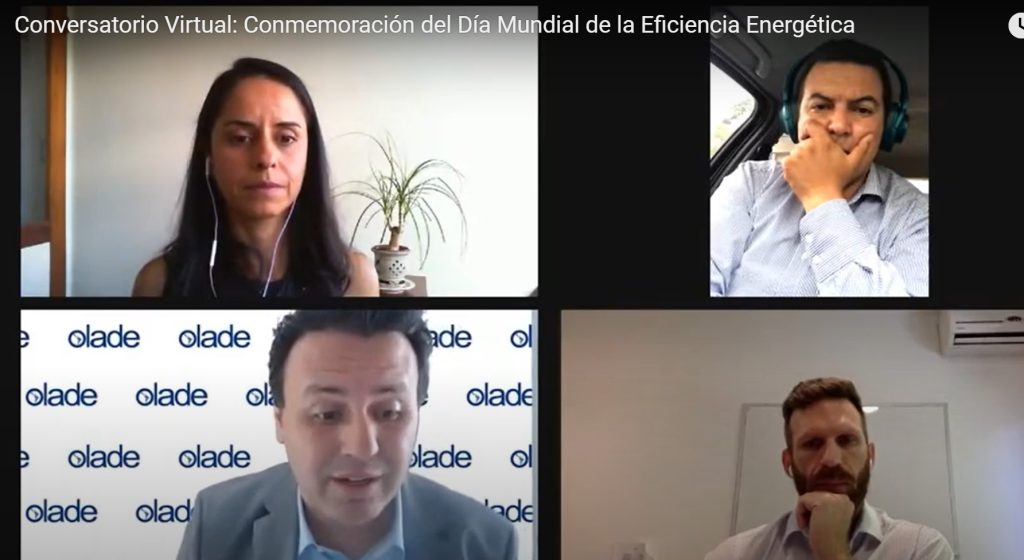
In commemoration of the World Energy Efficiency Day (EE), celebrated on March 5, The Latin American and Caribbean Energy Organization (OLACDE), through the Executive Secretary, Alfonso Blanco, participated in the Dialogue “The path towards energy efficiency in Latin America: challenges and opportunities for 2021”, event organized by the Spanish Agency for International Development Cooperation (AECID) and the French Agency for Development (AFD), together with the program funded by the European Union EUROCLIMA+.
March 8 International Women’s Day
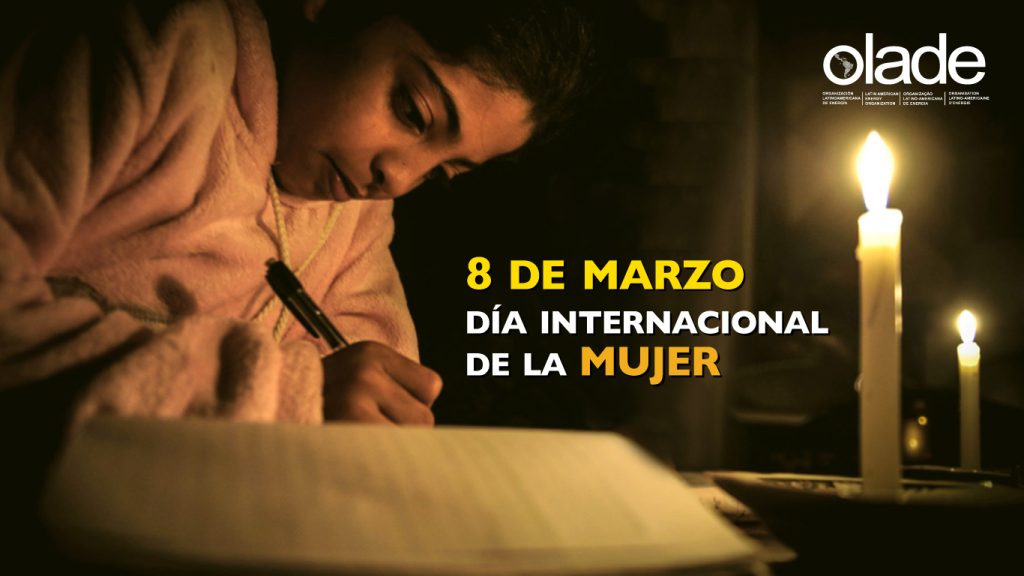
Women in Latin America and the Caribbean do not have the same opportunities as men, including in the energy sector. This is a reality on which we must think about.
The Study Plan ¨Energy Storage Systems¨, which had 455 participants from 15 OLACDE Member Countries, was completed
As part of the project ¨Improving, Increasing and Facilitating Access to Education and Training in Renewable Energy in Latin America – ETRELA¨, in December of 2020, January and February of 2021, The Latin American and Caribbean Energy Organization (OLACDE) implemented the Study Plan N ° 5 – Innovation – Energy Storage Systems, free access training that had great interest in the region, having a total of 455 participants from 15 OLACDE Member Countries (Argentina, Bolivia, Brazil, Colombia, Costa Rica, Ecuador, El Salvador, Guatemala, Honduras, Mexico, Nicaragua, Peru, Dominican Republic, Uruguay and Venezuela).
OLACDE supports Honduras in the development of an Energy Policy to 2050
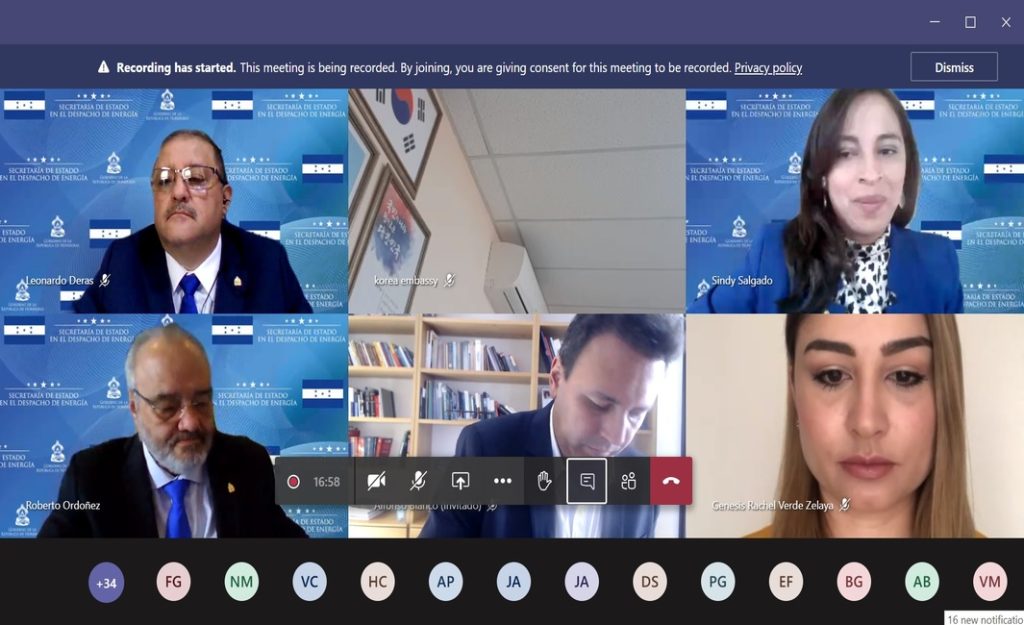
Honduras, through the Secretary of State for Energy, on the morning of January 20, 2021, in a first coordination session, formed the Energy Consultative Committee, in which The Latin American and Caribbean Energy Organization (OLACDE) participates, together with authorities of public and private institutions, international cooperation, academia and actors related to the energy sector. The objective of this Committee is to support the construction of a National Energy Policy for Honduras that encourages the development of renewable energy resources and their efficient use.
Officials of the National Energy Secretariat of Panama participated in a workshop on “Energy Efficiency Guidelines”
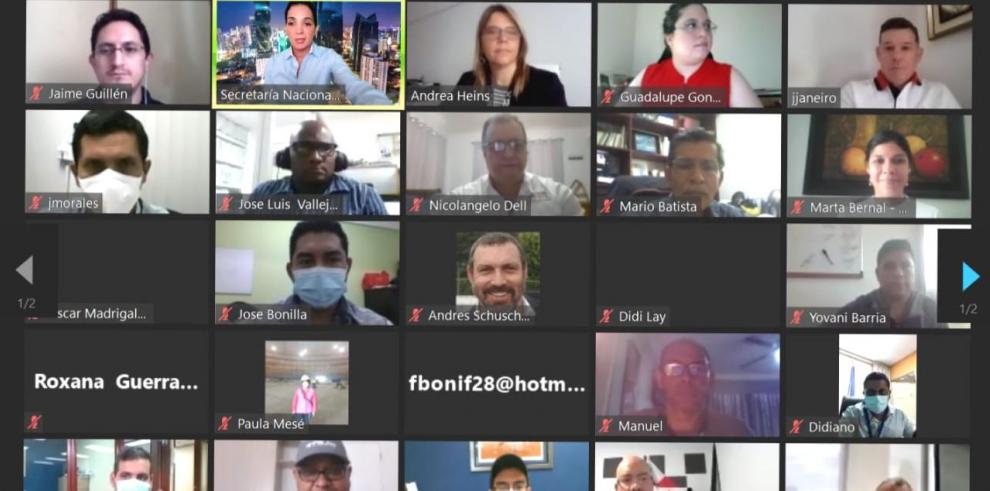
Energy administrators and members of the Energy Committee of the public sector of the Republic of Panama, on Thursday, January 14, participated in a workshop on “Energy Efficiency Guidelines”, an activity that is part of the proposal to strengthen the Energy Administrators Program in Public Institutions, developed by The Latin American and Caribbean Energy Organization (OLACDE) with the financial support of the Austrian Development Agency (ADA), as part of the Energy Efficiency Program for Latin America and the Caribbean – PALCEE-.
Enerlac Journal, Volume IV, Number 2, December 2020 is available
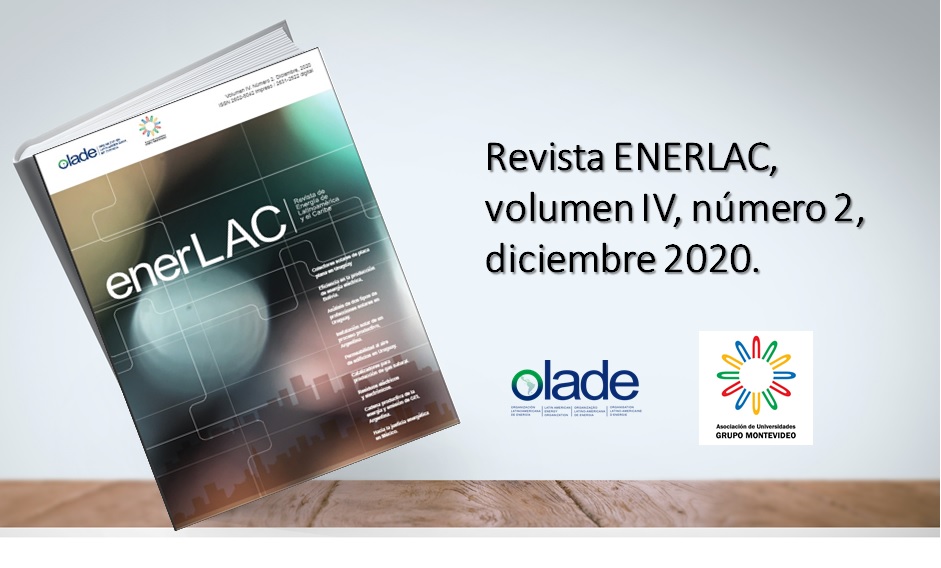
The Enerlac journal, Volume IV, Number 2, December 2020 is available, an academic work carried out by The Latin American and Caribbean Energy Organization (OLACDE) that has the support of the Energy Academic Committee of the Universities Association Montevideo Group.
The results of the Energy Barometer of Latin America and the Caribbean 2020 are presented
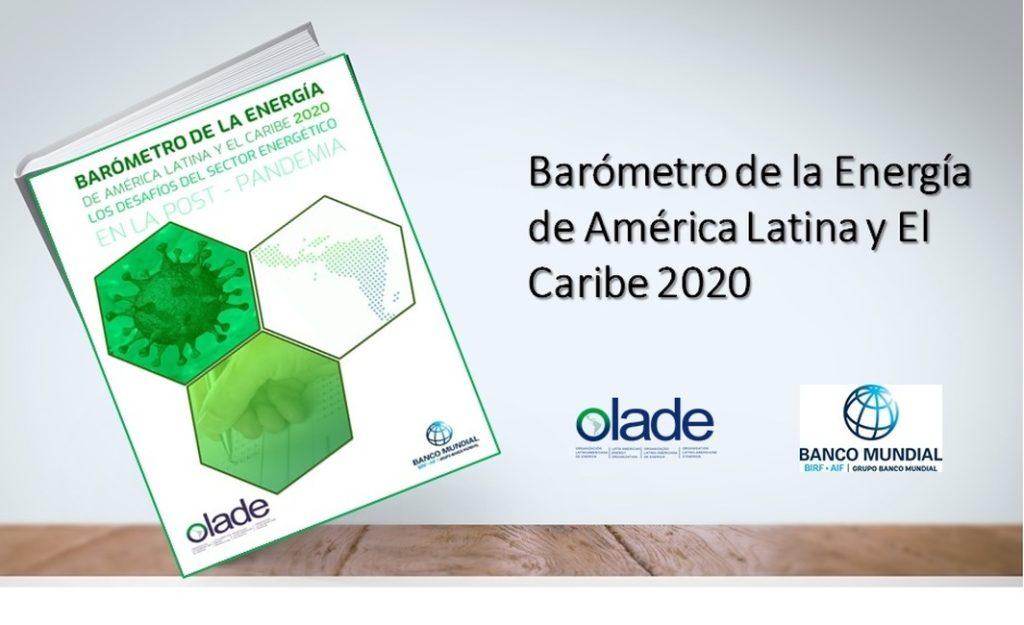
In 2018, The Latin American and Caribbean Energy Organization (OLACDE) created the Energy Barometer of Latin America and the Caribbean, with the purpose of gathering the visions and perceptions of the various actors on issues of global and regional relevance to contribute to a greater knowledge about the state of opinion of the situation in the energy sector.
Energy Outlook of Latin America and the Caribbean 2020: The most relevant information on the energy sector of the OLACDE Member Countries
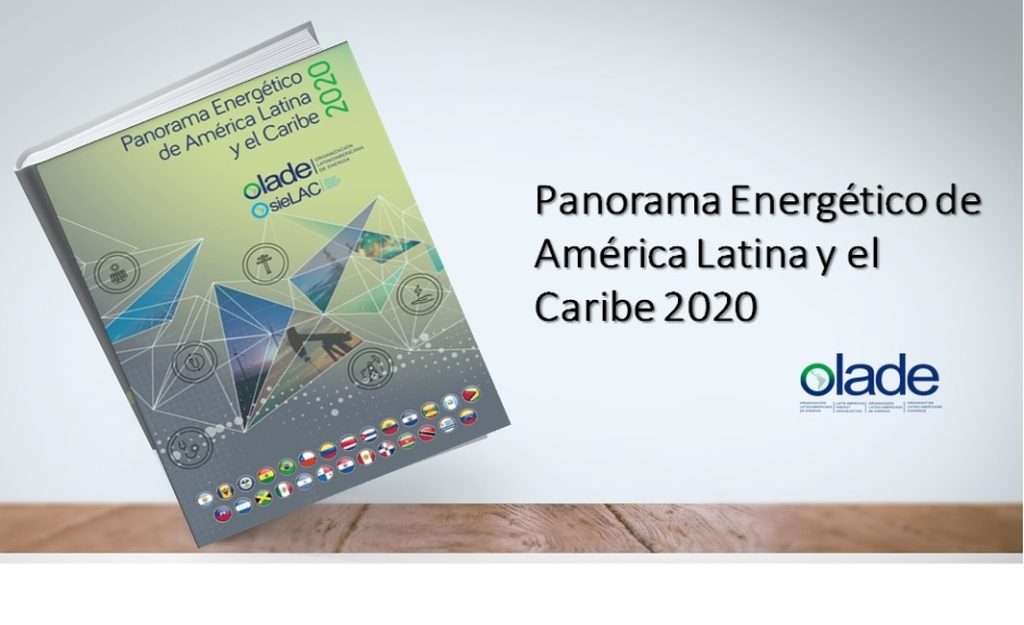
The Latin American and Caribbean Energy Organization (OLACDE), makes available the Spanish version of the Energy Outlook of Latin America and the Caribbean 2020. The document presents the most relevant information on the energy sector of the Member Countries of the Organization, as well as aggregated data at a subregional and regional level for Latin America and the Caribbean (LAC) for the period 2000 – 2019, regarding energy supply and demand, installed capacity, electricity generation, indicators and socio-economic and environmental information.
Economic reactivation, job creation and promoting an inclusive and sustainable energy transition were the central themes of the L Meeting of Ministers of OLACDE
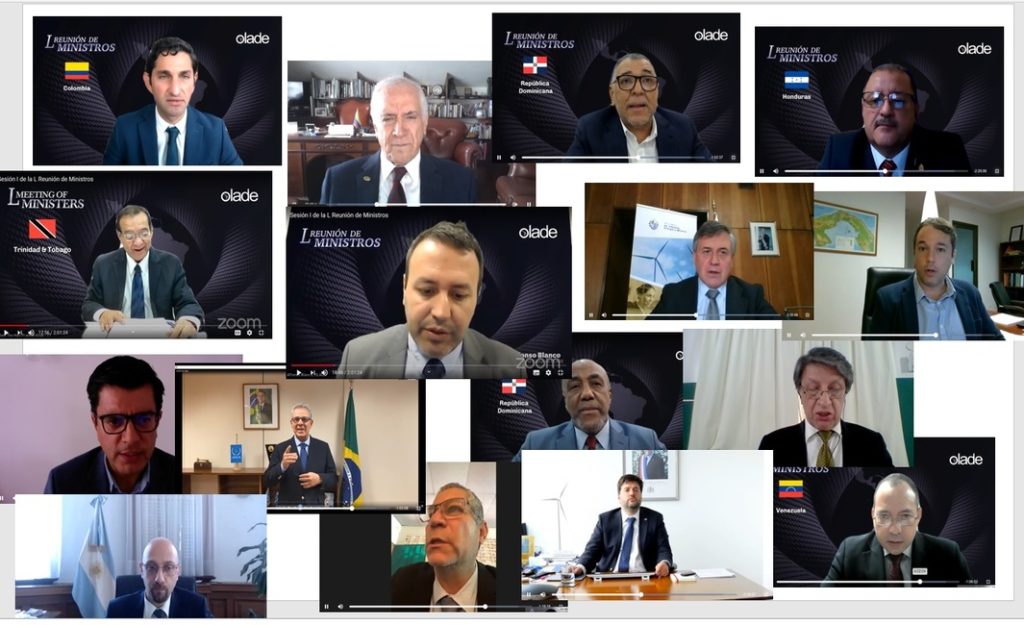
Representatives and delegations of the Member Countries of The Latin American and Caribbean Energy Organization (OLACDE) in the L Meeting of Ministers, which was held in virtual modality, on Thursday, November 19, 2020, within the framework of the V Energy Week, discussed the following as central themes: economic reactivation, job creation and promoting an inclusive and sustainable energy transition.
V Energy Week space that establishes the necessary dialogue to build and strengthen proposals and capacities to face the Covid-19 crisis
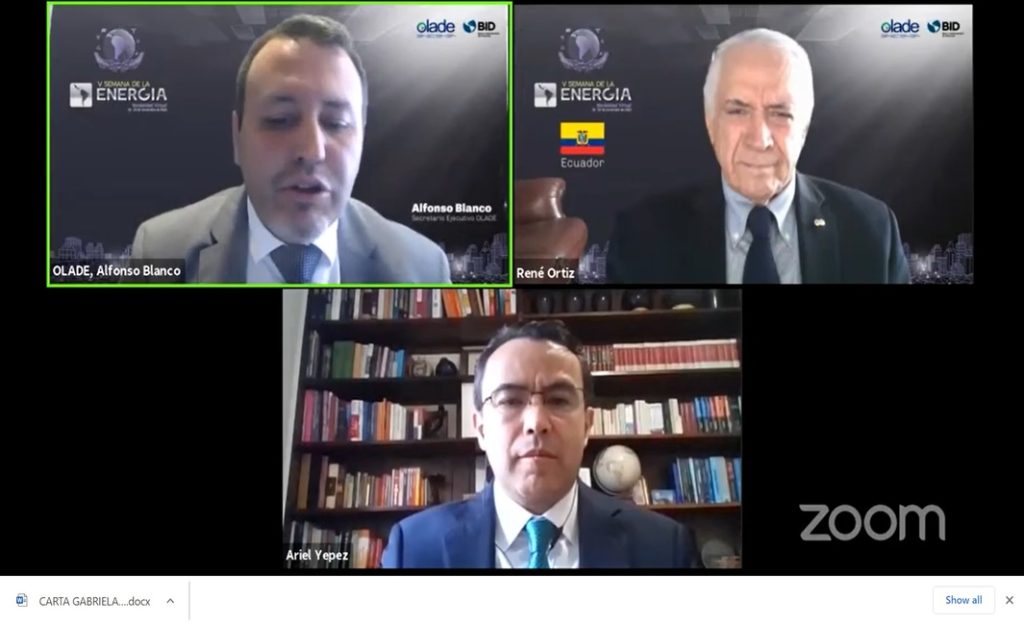
The inaugural session of the V edition of the Energy Week was attended by the Minister of Energy and Non-Renewable Natural Resources of Ecuador, René Ortiz; the Executive Secretary of The Latin American and Caribbean Energy Organization (OLACDE), Alfonso Blanco Bonilla and the Head of the Energy Division of the Inter-American Development Bank (IDB), Ariel Yépez; who agreed that despite the situation of the Covid-19 pandemic, the energy sector has managed to face this situation of high uncertainty and has prevailed throughout this time of crisis, ensuring energy supply, maintaining quality levels of service to users and supporting government actions for the health system to face the crisis throughout the region.
