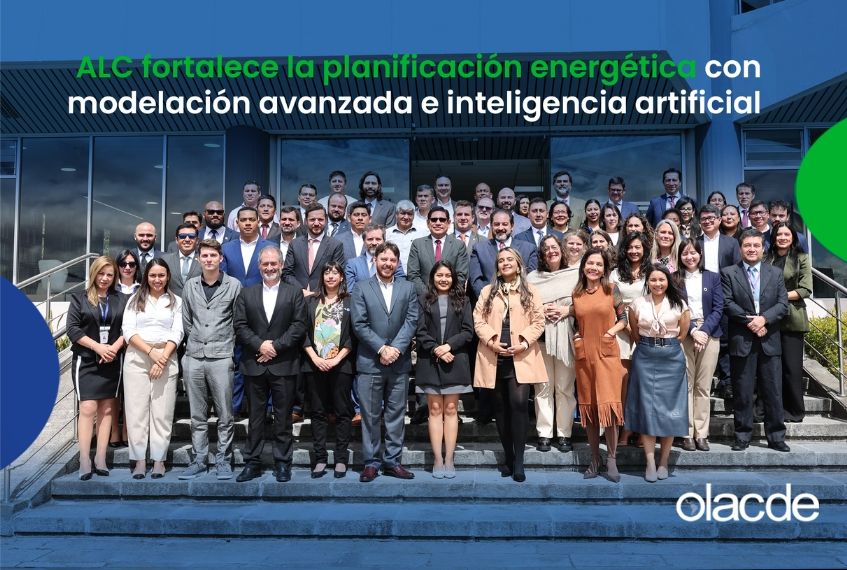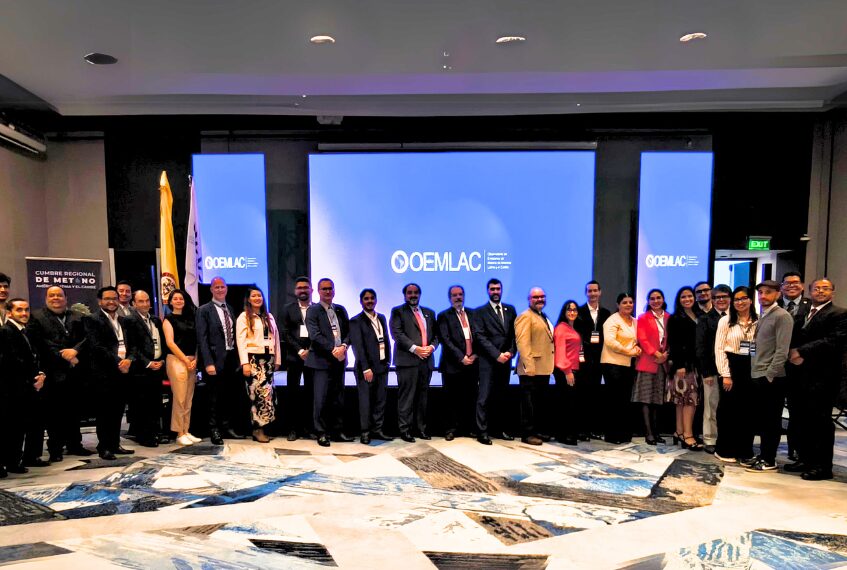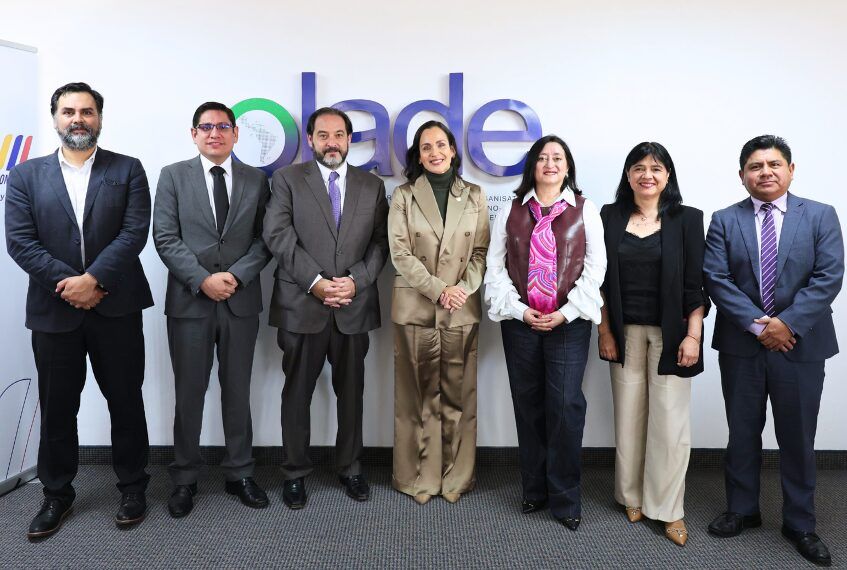
OLACDE’s headquarters, in Quito, hosted the seminar “Energy Transition: The Chilean Experience and Its Contribution to the Regional Debate,” an event that brought together authorities, experts, and representatives from the energy sector across Latin America and the Caribbean to exchange experiences on the processes of transformation toward a cleaner and more sustainable energy matrix.
The event, jointly organized by the Chilean Embassy in Ecuador and OLACDE, aimed to strengthen regional dialogue on energy transition, highlighting Chile’s progress and the challenges shared by countries in the region in developing secure, efficient, low-emission energy systems.
The session was opened by OLACDE’s Executive Secretary, Andrés Rebolledo; the Chilean Ambassador to Ecuador, Carola Muñoz; and Ecuador’s Minister of Environment and Energy, Inés Manzano, who highlighted the importance of technical and political cooperation in accelerating decarbonization across Latin America and the Caribbean
During the event, OLACDE’s Executive Secretary, Andrés Rebolledo, underscored the organization’s integrating and cooperative mission, noting that since its founding, one of its core pillars has been promoting South-South cooperation and the exchange of experiences among member countries.
“Activities like this one fully reflect our vision, because they allow us to get to know one another, learn from our experiences, and strengthen regional ties,” he added.
For her part, Ambassador Carola Muñoz noted that “our presence here is meant to share experiences with honesty and transparency, offering a candid look at the progress made, but also at the challenges Chile has faced in its energy transformation process.”
Ecuador’s Minister of Energy and Environment, Inés Manzano, in turn stressed that “the energy transition is a decisive issue for Ecuador. We are moving forward on geothermal, nuclear energy, and natural gas, prioritizing water and biodiversity as pillars of sustainable development. Energy is a right and must be accessible to everyone.”
The seminar included high-level presentations, among them one by Marta Cabeza, Chile’s Superintendent of Electricity and Fuels, who highlighted the progress and challenges of Chile’s energy transition toward carbon neutrality by 2050, underscoring the status of state policy that has guided this process since the publication of the first National Energy Policy in 2015. The Superintendent emphasized that Chile “knows where it is going and works with clarity on how to get there,” relying on robust public policy instruments that provide regulatory certainty and chart a clear path toward a just and participatory transition, bringing together efforts from the public, private, and academic sectors.
For his part, the Undersecretary of Electricity Generation and Transmission, Javier Iza, presented the progress and challenges of Ecuador’s Energy Transition, highlighting the country’s commitment to decarbonizing its energy matrix and diversifying technologies to strengthen national energy security and sovereignty. He noted that the goal is to reach more than 80% of electricity generation from renewable sources by 2032, integrating hydroelectric, solar, wind, geothermal, and bioenergy projects. He also highlighted the development of a modern regulatory framework that promotes private sector participation, energy efficiency, and the progressive incorporation of storage and distributed generation, essential pillars for ensuring a secure, sustainable, and resilient electricity system in the face of future climate and demand challenges.
Finally, Dr. Rodrigo Moreno, of the University of Chile, presented the Participatory Long-Term Energy Planning Methodology (PELP), highlighting the Chilean model as a regional example of governance and inclusive planning. He explained that this process, carried out by law every five years, combines technical evidence, citizen participation, and forward-looking vision to guide the transition toward a secure, resilient, and low-carbon energy system, projecting more than 96% renewable generation by 2050. Moreno stressed that the integration of science, institutions, and civil society has been essential to the legitimacy and success of the Chilean model.
During the session, participants emphasized the need to strengthen regional cooperation, promote investment in renewable energy, strengthen regulation and technological innovation, and move toward regional electricity integration that allows for the sharing of resources and capabilities.
The meeting concluded with a joint call to continue consolidating the role of Latin America and the Caribbean as a global benchmark in clean energy. According to OLACDE studies, the region is among those with the highest share of renewable energy in its electricity matrix, reaching close to 70% renewable generation in 2024, compared with 30% worldwide.
Watch the full seminar at the following link: https://www.youtube.com/live/1lgko4Xd1yU