Broad Regional Participation in the 2026 OLACDE Energy Excellence Award: 155 Projects Submitted from 21 Countries

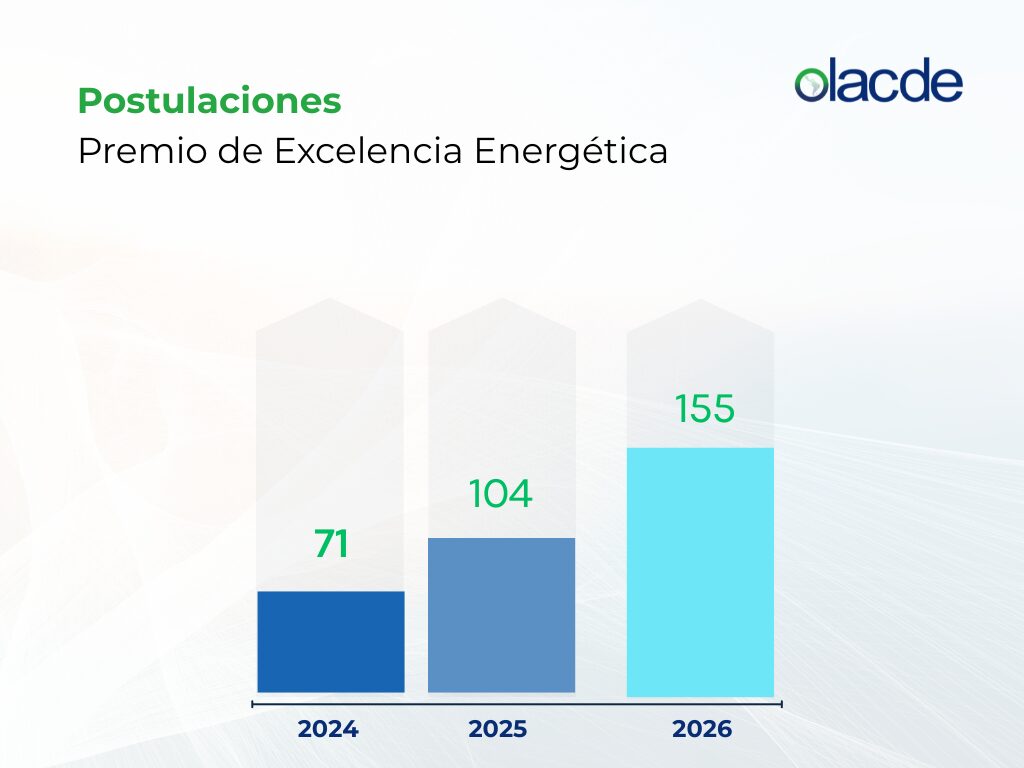
The 2026 OLACDE Energy Excellence Award marks a new milestone, reaching the largest call for entries since its creation, with 155 projects and a record number of participating countries. This growth reflects Latin America and the Caribbean’s ever-increasing commitment to developing innovative solutions that contribute to a sustainable energy transition.

This year’s call recorded the highest number of submissions since the Award’s creation, cementing its position as one of the leading regional initiatives to recognize, showcase, and promote projects that contribute to sustainable energy development. The growing interest from companies, public institutions, international organizations, universities, research centers, and civil society organizations reflects the region’s commitment to an increasingly innovative, inclusive, and resilient energy transition.


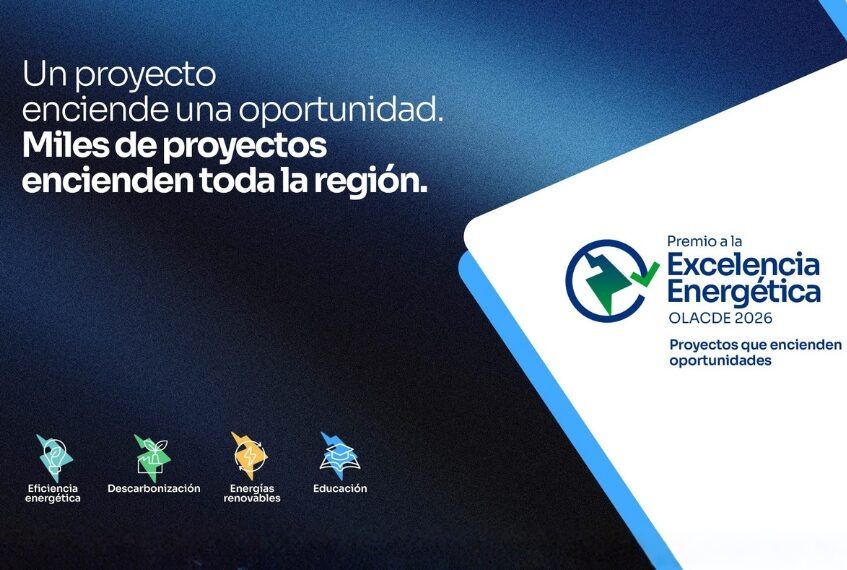
The projects were submitted in the Award’s four categories: Decarbonization, Renewable Energy, Energy Efficiency, and Education.

The projects will be evaluated by a jury made up of leading energy sector specialists, and the winners will be announced during the XI Energy Week 2026, the sector’s leading regional event. In this context, the Award reaffirms its role as a platform for recognizing the talent, innovation, and commitment of those who work every day toward a more sustainable energy future for Latin America and the Caribbean.

Review the projects submitted by category at the following link: https://www.olacde.org/wp-content/uploads/2026/08/PROYECTOS-POSTULADOS-PREMIOS-EXCELENCIA-ENERGETICA.pdf
Share this news

Broad Regional Participation in the 2026 OLACDE Energy Excellence Award: 155 Projects Submitted from 21 Countries

Newsletter summary

The 2026 OLACDE Energy Excellence Award marks a new milestone, reaching the largest call for entries since its creation, with 155 projects and a record number of participating countries. This growth reflects Latin America and the Caribbean’s ever-increasing commitment to developing innovative solutions that contribute to a sustainable energy transition. This year’s call recorded the […]

Capacity building & knowledge

We advance high-level technical training programs that foster experience-sharing and develop the human and institutional capacities required to drive energy transformations across our region.

Our academic programs offer executive courses, postgraduate diplomas, master’s degrees, and innovative initiatives focused on key areas such as the energy transition, conventional and renewable energy, electromobility, and regional integration.

OLACDE builds a regional network of energy expertise, connecting governments, young professionals, academics, and industry experts to foster collaborative solutions through technical cooperation and talent development to address future energy and climate challenges.

Technical cooperation & climate finance

We strengthen South-South and triangular cooperation as key drivers to accelerate energy transitions across Latin America and the Caribbean. OLACDE unites efforts among governments, multilateral organizations, academic institutions, and the private sector to mobilize financing, technical expertise, and innovative solutions tailored to our regional context.

We advance strategic initiatives aimed at directing resources toward decarbonization, conventional energy, renewables, and energy justice projects—building a more efficient, inclusive, and sustainable regional cooperation architecture.

Regional energy community

We are building a regional energy community with a global outlook, positioning Latin America and the Caribbean as a pivotal player on the international stage. OLACDE amplifies regional representation in key multilateral energy, trade, and climate forums by fostering strategic alliances and international cooperation.

Through flagship events such as Energy Week and new spaces for high-level dialogue, we champion a collective voice that attracts investment, drives technical partnerships, and unlocks sustainable development opportunities across our region

Energy transition & strategic projects

We foster a regional energy transition built on sustainability, energy security, and social inclusion. OLACDE supports Member Countries in adopting emerging technologies—such as energy efficiency, storage solutions, green hydrogen, electromobility, and grid digitalization—to accelerate the sector’s decarbonization.

Our approach promotes strategic projects that strengthen energy resilience across Latin America and the Caribbean, reducing emissions while building a cleaner, more competitive energy infrastructure. Key regional initiatives, including OEMLAC, position our region as a benchmark for climate innovation and sustainable energy development.

Energy information and data

We develop regional platforms dedicated to energy intelligence, technical analysis, and strategic data systems that empower both public and private decision-making across the sector. OLACDE drives digital transformation in energy by leveraging artificial intelligence, georeferencing, and advanced analytical tools to map regional energy trends.

The integration of systems such as SieLAC, along with new regional digital platforms, consolidates reliable, up-to-date technical data—enabling modern, interoperable, and evidence-based energy planning.

Regional energy integration

We foster cooperation across the regional energy sector by prioritizing infrastructure development, cross-border collaboration, and regulatory alignment to enhance energy security in Latin America and the Caribbean. OLACDE coordinates strategic projects in power grid interconnections, natural gas integration, and joint energy planning to build resilient, sustainable partnerships.

Working alongside the governments of our 27 Member States, regional blocs, multilateral institutions, and key public and private stakeholders, we drive initiatives that introduce innovative energy exchange mechanisms, strengthen national capacities, and accelerate a unified regional energy transition.