OLACDE Launches Specialized Course on Critical Minerals and Their Role in the Energy Transition

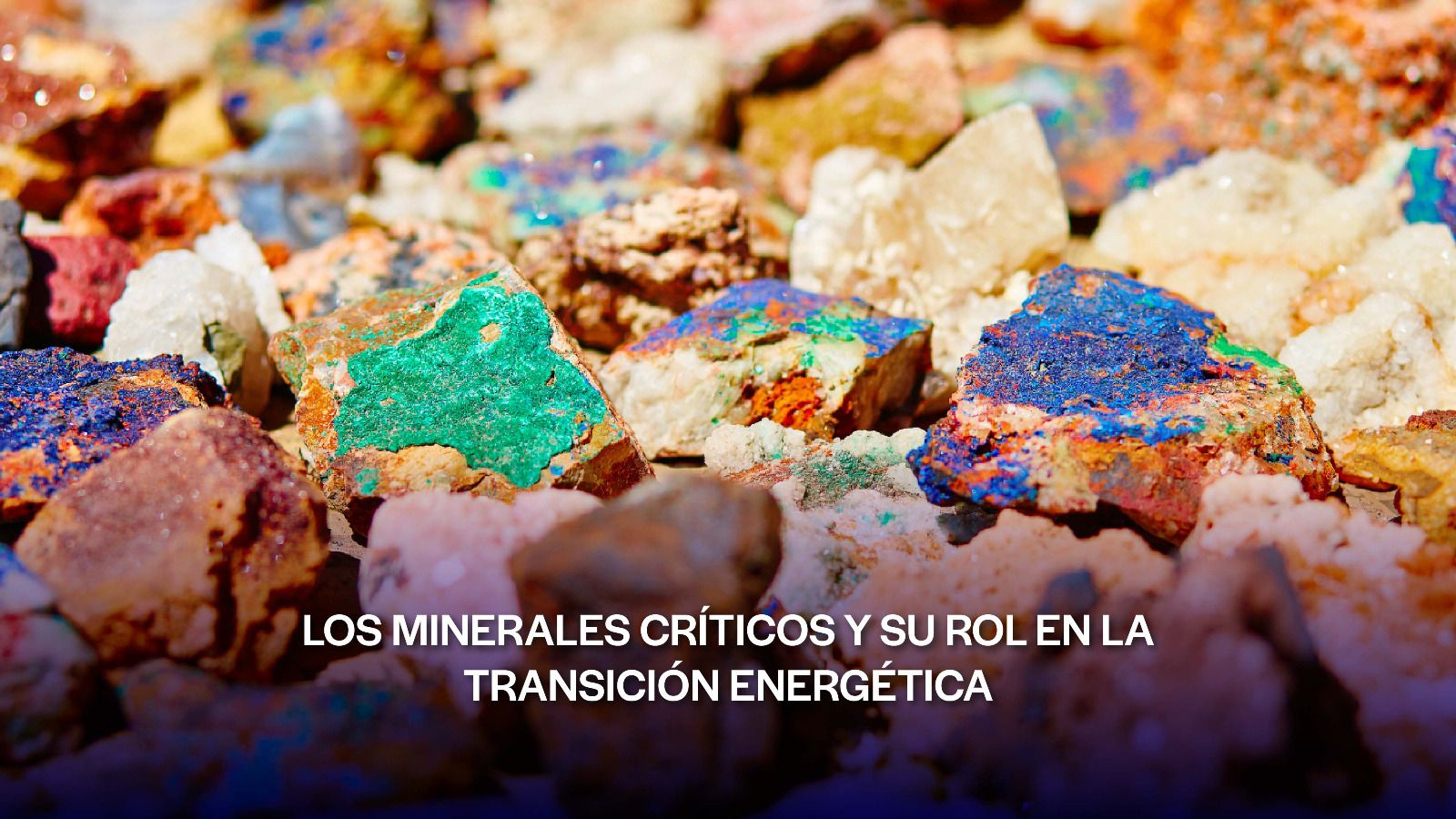
The Latin American and Caribbean Energy Organization (OLACDE) launched the free virtual course “Critical Minerals and Their Role in the Energy Transition,” a training initiative designed to strengthen technical capacities in light of the growing prominence of these resources in global decarbonization, renewable energy, and electromobility.

The course is taught by Gastón Siroit, OLACDE Technical Advisor, together with international experts, and takes place on June 10, 12, 24, and 26, and July 1, 2025.

During the opening session, Gloria Alvarenga, OLACDE’s Director of Integration, Access and Energy Security, emphasized that “it is essential to ensure substantial growth in the production of critical minerals in order to meet the goals of the Paris Agreement,” underscoring the urgency of training technical talent capable of responding to the accelerating demand for resources such as lithium, copper, and nickel.

For his part, OLACDE’s Executive Secretary, Andrés Rebolledo, noted that “Latin America and the Caribbean account for 25% of global critical mineral production. We are part of the global solution to the energy transition.” He added that the region has the cleanest electricity mix in the world, with less than 4% of global energy emissions compared to 60–70% in other regions, and 34% growth in solar energy in 2024 alone. He also highlighted that countries such as Uruguay already exceed 50% wind power generation.

The opening module was led by Gastón Siroit, who stated that the course aims to “pool knowledge, build community, and strengthen capacities through shared experience,” promoting technical training with a strategic focus. He then introduced the first guest speaker, Martín Gozalvez, Director of the Geological Institute of Argentina’s Geological and Mining Survey (SEGEMAR), who gave a keynote lecture on the geological and economic role of critical minerals in the region’s new energy paradigm.

Among Gozalvez’s key contributions were the following data points:

  • The natural concentration of nickel in the Earth’s crust is 44 ppm, but it can exceed 5,000 ppm in a deposit.
  • In the case of silver, geological enrichment can be 2,000 times higher than the natural average.
  • A deposit is only economically viable if it meets conditions of concentration, technical feasibility, and market value.
  • More than 90% of exploration efforts are unsuccessful, with the mining risk stage being the most uncertain and costly part of the process.
  • Deposits are not random: their formation follows specific tectonic, geochemical, and geological processes.

“Understanding how deposits are formed is key to gauging the strategic value of our natural resources,” Gozalvez concluded, reaffirming the importance of geological knowledge as the foundation for a fair and sovereign energy transition.
Share this news

OLACDE Launches Specialized Course on Critical Minerals and Their Role in the Energy Transition

Newsletter summary

The Latin American and Caribbean Energy Organization (OLACDE) launched the free virtual course “Critical Minerals and Their Role in the Energy Transition,” a training initiative designed to strengthen technical capacities in light of the growing prominence of these resources in global decarbonization, renewable energy, and electromobility. The course is taught by Gastón Siroit, OLACDE Technical […]

Capacity building & knowledge

We advance high-level technical training programs that foster experience-sharing and develop the human and institutional capacities required to drive energy transformations across our region.

Our academic programs offer executive courses, postgraduate diplomas, master’s degrees, and innovative initiatives focused on key areas such as the energy transition, conventional and renewable energy, electromobility, and regional integration.

OLACDE builds a regional network of energy expertise, connecting governments, young professionals, academics, and industry experts to foster collaborative solutions through technical cooperation and talent development to address future energy and climate challenges.

Technical cooperation & climate finance

We strengthen South-South and triangular cooperation as key drivers to accelerate energy transitions across Latin America and the Caribbean. OLACDE unites efforts among governments, multilateral organizations, academic institutions, and the private sector to mobilize financing, technical expertise, and innovative solutions tailored to our regional context.

We advance strategic initiatives aimed at directing resources toward decarbonization, conventional energy, renewables, and energy justice projects—building a more efficient, inclusive, and sustainable regional cooperation architecture.

Regional energy community

We are building a regional energy community with a global outlook, positioning Latin America and the Caribbean as a pivotal player on the international stage. OLACDE amplifies regional representation in key multilateral energy, trade, and climate forums by fostering strategic alliances and international cooperation.

Through flagship events such as Energy Week and new spaces for high-level dialogue, we champion a collective voice that attracts investment, drives technical partnerships, and unlocks sustainable development opportunities across our region

Energy transition & strategic projects

We foster a regional energy transition built on sustainability, energy security, and social inclusion. OLACDE supports Member Countries in adopting emerging technologies—such as energy efficiency, storage solutions, green hydrogen, electromobility, and grid digitalization—to accelerate the sector’s decarbonization.

Our approach promotes strategic projects that strengthen energy resilience across Latin America and the Caribbean, reducing emissions while building a cleaner, more competitive energy infrastructure. Key regional initiatives, including OEMLAC, position our region as a benchmark for climate innovation and sustainable energy development.

Energy information and data

We develop regional platforms dedicated to energy intelligence, technical analysis, and strategic data systems that empower both public and private decision-making across the sector. OLACDE drives digital transformation in energy by leveraging artificial intelligence, georeferencing, and advanced analytical tools to map regional energy trends.

The integration of systems such as SieLAC, along with new regional digital platforms, consolidates reliable, up-to-date technical data—enabling modern, interoperable, and evidence-based energy planning.

Regional energy integration

We foster cooperation across the regional energy sector by prioritizing infrastructure development, cross-border collaboration, and regulatory alignment to enhance energy security in Latin America and the Caribbean. OLACDE coordinates strategic projects in power grid interconnections, natural gas integration, and joint energy planning to build resilient, sustainable partnerships.

Working alongside the governments of our 27 Member States, regional blocs, multilateral institutions, and key public and private stakeholders, we drive initiatives that introduce innovative energy exchange mechanisms, strengthen national capacities, and accelerate a unified regional energy transition.