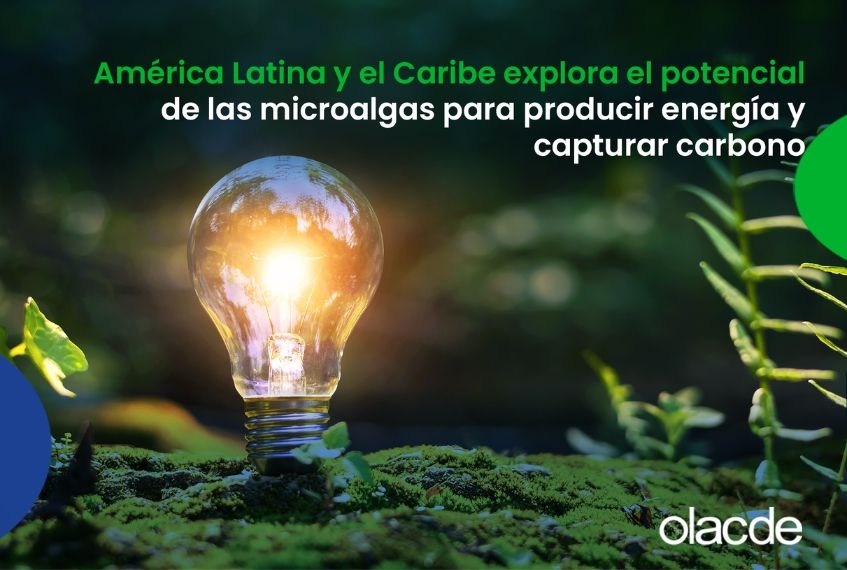
Latin America and the Caribbean explores the potential of microalgae for producing energy and capturing carbon

Latin America and the Caribbean is seeking to diversify the technologies that will support its energy transition. As the region advances in the deployment of renewable energy, a new area of research is emerging in laboratories: microalgae, organisms capable not only of generating energy but also of capturing carbon dioxide and treating wastewater within the same system.

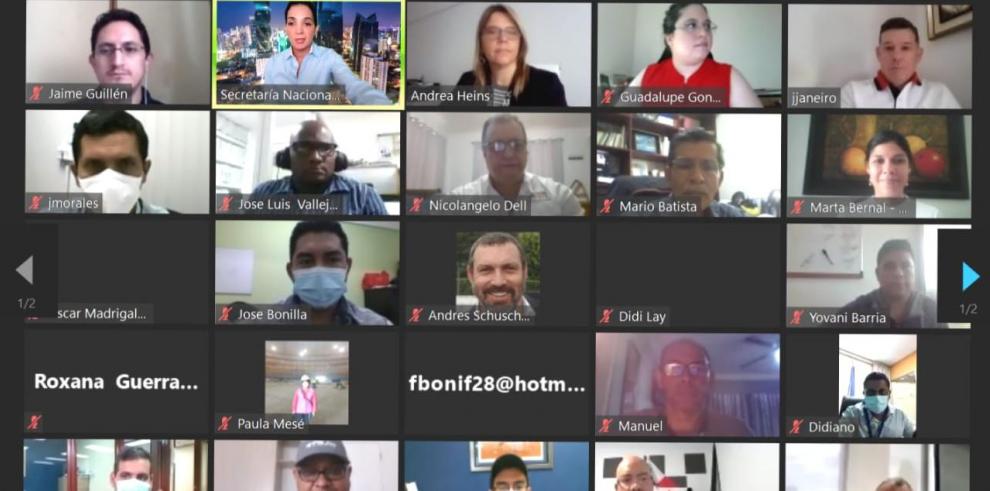
This topic was central to the opening of the course “Applications of Microalgae in Bioelectrochemical Systems,” organized by the Latin American and Caribbean Energy Organization (OLACDE) in collaboration with the Escuela Superior Politécnica de Chimborazo and its Alternative Energy and Environment Group (ESPOCH), which brings together researchers, academics, and professionals to examine applications that could simultaneously contribute to decarbonization, energy security, and the circular economy.

During the opening session, Andrés Rebolledo, OLACDE’s Executive Secretary, stressed that the energy transition must go beyond deploying new energy sources and include solutions that address current environmental and productive challenges. The course is part of a strategy to strengthen capacities within OLACDE’s 27 member countries and aims to bring research closer to concrete industrial and environmental applications.

The first session addressed the growing international interest in microalgae. These are used as photosynthetic biocathodes capable of producing the oxygen needed for bioelectrochemical systems without requiring mechanical aeration, which reduces energy consumption. They are also able to remove nutrients, organic matter, and heavy metals present in wastewater, while simultaneously capturing carbon dioxide and generating biomass useful for biofuels, biofertilizers, and other valuable products.

For Celso Recalde, director of the Alternative Energy and Environment Group at the Escuela Superior Politécnica de Chimborazo (ESPOCH), the challenge is no longer purely scientific but one of institutional coordination. The expert noted that research carried out in Ecuador is already generating cooperation with European universities, and highlighted that the region’s microorganism biodiversity is enabling the development of solutions with applications in energy, water treatment, and desalination, drawing interest from beyond Latin America and the Caribbean.

The training is being carried out under the ETRELA project, funded by the International Climate Initiative (IKI) of the Government of Germany, and combines scientific fundamentals with practical case studies on bioelectricity, carbon capture, and comprehensive biomass utilization. Its goal is to build technical capacity to accelerate the incorporation of emerging technologies into the region’s energy transition.

The growing interest in this innovative field reflects a broader trend: today, the energy transition is not measured solely by the expansion of renewable energy; it also assesses the ability to develop technologies that effectively combine energy production with climate change mitigation and the efficient use of natural resources. In this context, microalgae are emerging as a promising option capable of addressing multiple challenges at once.
Share this news

Latin America and the Caribbean explores the potential of microalgae for producing energy and capturing carbon

Newsletter summary

Latin America and the Caribbean is seeking to diversify the technologies that will support its energy transition. As the region advances in the deployment of renewable energy, a new area of research is emerging in laboratories: microalgae, organisms capable not only of generating energy but also of capturing carbon dioxide and treating wastewater within the […]

Knowledge and Training

We promote advanced technical training programs that facilitate the exchange of experiences, as well as the development of the human and institutional capacities needed to support the energy transformations in our region.

Our academic offering includes executive programs, postgraduate diplomas, master’s degrees, and innovative initiatives focused on topics such as energy transition, conventional energy, renewable energy, e-mobility, and regional integration.

OLACDE creates a regional network focused on energy knowledge that connects governments, young professionals, academics, and sector experts to drive collaborative solutions through technical cooperation and talent development to address future energy and climate challenges.

Technical cooperation and financing

We strengthen South-South and triangular cooperation ties as drivers to accelerate energy transitions in Latin America and the Caribbean. OLACDE brings together efforts among governments, multilateral organizations, academic institutions, and the private sector to mobilize financing, technical capacities, and innovative solutions tailored to our regional reality.

We promote strategic initiatives aimed at directing resources toward projects focused on decarbonization, conventional energy, renewable energy, and energy justice, with the objective of establishing a more efficient, inclusive, and sustainable regional cooperation architecture.

Regional Energy Community

We are building a regional energy community with a global outlook that seeks to position Latin America and the Caribbean as a key player on the international stage. OLACDE strengthens its representation in major multilateral forums related to energy, trade, and climate by fostering strategic alliances and promoting international cooperation.

Through events such as Energy Week, together with new spaces for international dialogue, we promote a collective voice that helps attract financial investment and create new opportunities for sustainable development across our region.

Energy Transition and Strategic Projects

We drive an energy transition based on principles of sustainability, energy security, and social inclusion. OLACDE supports countries in adopting new technologies related to energy efficiency, energy storage, green hydrogen, electromobility, and grid digitalization to accelerate the sector’s decarbonization process.

Our approach also includes promoting strategic projects that strengthen energy resilience at the regional level, contributing to emission reductions while consolidating a cleaner and more competitive energy infrastructure. Initiatives such as OEMLAC position our region as a leading reference in climate innovation and sustainable energy transition.

Energy information and data

We develop regional platforms dedicated to energy information, technical analysis, and strategic data systems that strengthen both public and private decision-making in the sector. OLACDE promotes the digital transformation of the sector through the use of artificial intelligence, georeferencing, and advanced tools for regional energy analysis.

The integration of systems such as SieLAC, together with new regional platforms, allows for the consolidation of reliable and up-to-date technical information, facilitating modern, interoperable, and evidence-based energy planning.

Regional Energy Integration

We promote cooperation in the regional energy sector, focused on collaboration, infrastructure development, and regulatory harmonization, with the objective of strengthening energy security in Latin America and the Caribbean. OLACDE coordinates projects related to electrical interconnection, gas integration, and regional energy planning, seeking to create efficient and sustainable partnerships.

Through cooperation with the governments of our 27 member countries, regional blocs, multilateral institutions, and both public and private stakeholders, we drive strategic initiatives that promote regulatory harmonization and new energy exchange mechanisms, in order to enhance national capacities and accelerate an integrated energy transition at the regional level.