OLACDE incorporates one more Energy Information System to its Member Countries: siePanama

The Republic of Panama now has an Energy Information System (siePanama), which is a free and open access platform with a technological base that enables decision making in the short, medium and long term, on the country’s statistical information.

This tool is an instrument to promote energy planning by consolidating sector information based on standardized concepts and methodologies.

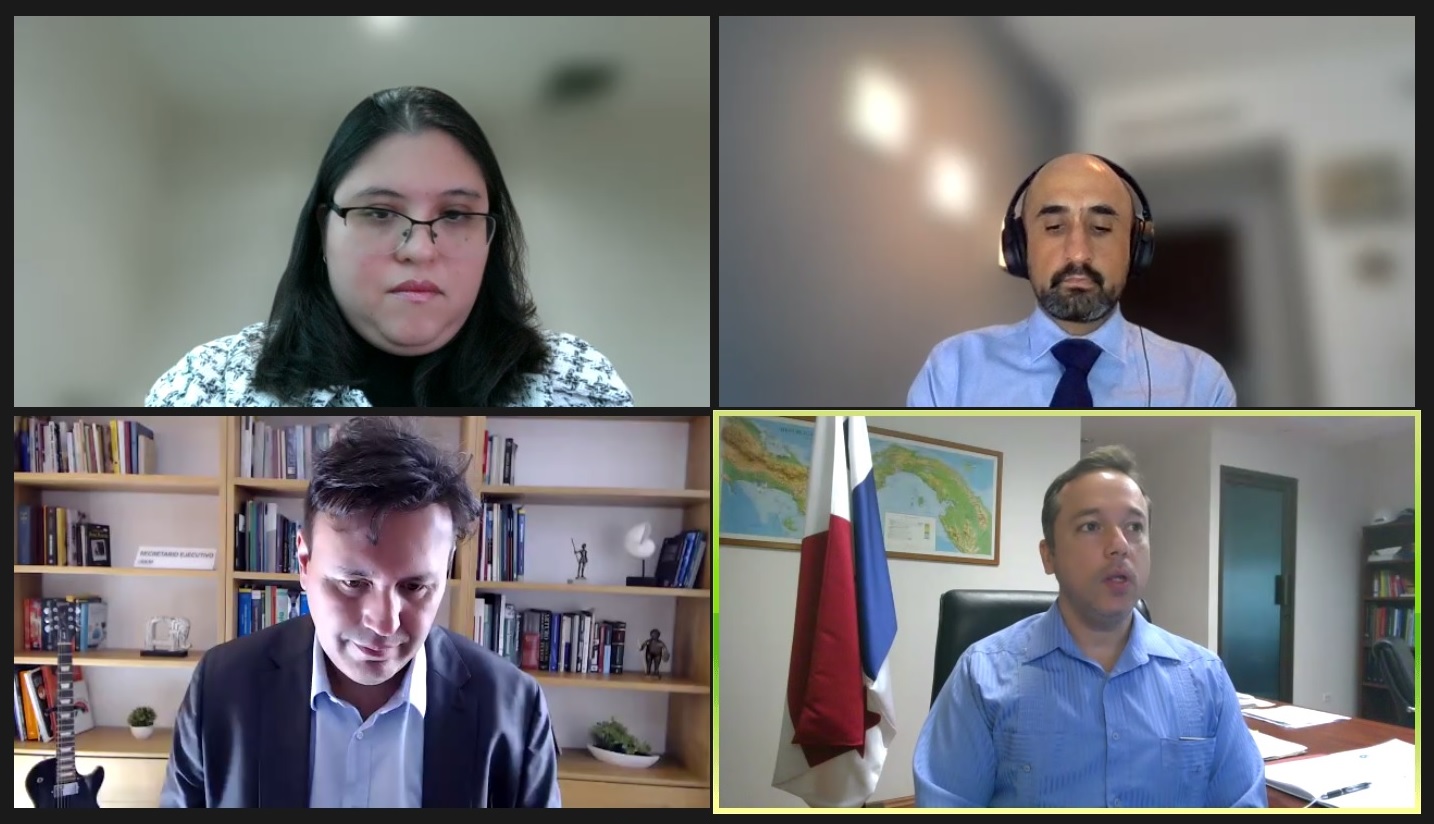
The siePanama tool was officially launched on October 28, 2021, by the Energy Secretariat of Panama, as part of the Program for Strengthening the Management and Dissemination of Energy Information for Sustainable Development in Latin America and the Caribbean, which is financially supported by the Inter-American Development Bank (IDB) and executed by The Latin American and Caribbean Energy Organization (OLACDE).

At the virtual launch, Panama’s National Secretary of Energy, Jorge Rivera Staff, highlighted the importance of this new platform “we have developed for citizens and local stakeholders, bearing in mind the importance of having updated and validated figures, in order to offer a complete vision of the national energy sector.”

Furthermore, the National Secretary of Panama added that the “SiePanama will allow the analysis and understanding of the energy reality, the comprehensive planning of the short, medium and long term, in order to ensure the supply of energy in the national territory for the well-being of the population.”

For his part, the Executive Secretary of OLACDE, Alfonso Blanco, indicated that it is important to highlight the role that transparency has at the level of government management. “How information is a crucial element for government administrations to be accountable and to present information on the results and progress of the sector to the different actors of society.”

In this same context, he emphasized that through the siePanama information system, the different actors of society are provided with accurate, reliable and official information from the countries. Inputs that allow the different decision makers to have information presented in a modern way.

He added that “not only the energy sector specialist can read this information, but any actor in our society has the possibility of effectively interpreting the information from the energy sector.”

The executive secretary emphasized the progress made in Panama’s energy sector: “I would like to highlight the progress made by Panama in the development of its energy sectors, which is truly remarkable and an example for our entire region.”  

Regarding the management of OLACDE’s information systems, he explained that “previously OLACDE’s information systems were closed and only 130 people in all of Latin America and the Caribbean had access to the information systems, now we have more than 5 thousand active users who are not only government actors but also from the private sector and academia.”

On behalf of the IDB, Arturo Alarcón, specialist of the Energy Division, mentioned that a key aspect for the IDB is the digital economy and part of what digitization means is to have quality, accessible and standardized information.

The National Director of Electricity of Panama, Guadalupe González, made a detailed presentation on the methodological harmonization of energy statistics, the automation process and capacity building. She highlighted that the new Energy Information System (siePanama) represents a milestone as it is the result of 50 years of work on the publication of Panama’s Energy Balance Sheets, information that is also available at http://siepanama.energia.gob.pa.

In the following video you can learn more about the content of siePanama.


Communication and Institutional Relations

and Institutional Relations
gabriela.jarrin@OLACDE.org

Share this news

OLACDE incorporates one more Energy Information System to its Member Countries: siePanama

Newsletter summary

The Republic of Panama now has an Energy Information System (siePanama), which is a free and open access platform with a technological base that enables decision making in the short, medium and long term, on the country’s statistical information.

Capacity building & knowledge

We advance high-level technical training programs that foster experience-sharing and develop the human and institutional capacities required to drive energy transformations across our region.

Our academic programs offer executive courses, postgraduate diplomas, master’s degrees, and innovative initiatives focused on key areas such as the energy transition, conventional and renewable energy, electromobility, and regional integration.

OLACDE builds a regional network of energy expertise, connecting governments, young professionals, academics, and industry experts to foster collaborative solutions through technical cooperation and talent development to address future energy and climate challenges.

Technical cooperation & climate finance

We strengthen South-South and triangular cooperation as key drivers to accelerate energy transitions across Latin America and the Caribbean. OLACDE unites efforts among governments, multilateral organizations, academic institutions, and the private sector to mobilize financing, technical expertise, and innovative solutions tailored to our regional context.

We advance strategic initiatives aimed at directing resources toward decarbonization, conventional energy, renewables, and energy justice projects—building a more efficient, inclusive, and sustainable regional cooperation architecture.

Regional energy community

We are building a regional energy community with a global outlook, positioning Latin America and the Caribbean as a pivotal player on the international stage. OLACDE amplifies regional representation in key multilateral energy, trade, and climate forums by fostering strategic alliances and international cooperation.

Through flagship events such as Energy Week and new spaces for high-level dialogue, we champion a collective voice that attracts investment, drives technical partnerships, and unlocks sustainable development opportunities across our region

Energy transition & strategic projects

We foster a regional energy transition built on sustainability, energy security, and social inclusion. OLACDE supports Member Countries in adopting emerging technologies—such as energy efficiency, storage solutions, green hydrogen, electromobility, and grid digitalization—to accelerate the sector’s decarbonization.

Our approach promotes strategic projects that strengthen energy resilience across Latin America and the Caribbean, reducing emissions while building a cleaner, more competitive energy infrastructure. Key regional initiatives, including OEMLAC, position our region as a benchmark for climate innovation and sustainable energy development.

Energy information and data

We develop regional platforms dedicated to energy intelligence, technical analysis, and strategic data systems that empower both public and private decision-making across the sector. OLACDE drives digital transformation in energy by leveraging artificial intelligence, georeferencing, and advanced analytical tools to map regional energy trends.

The integration of systems such as SieLAC, along with new regional digital platforms, consolidates reliable, up-to-date technical data—enabling modern, interoperable, and evidence-based energy planning.

Regional energy integration

We foster cooperation across the regional energy sector by prioritizing infrastructure development, cross-border collaboration, and regulatory alignment to enhance energy security in Latin America and the Caribbean. OLACDE coordinates strategic projects in power grid interconnections, natural gas integration, and joint energy planning to build resilient, sustainable partnerships.

Working alongside the governments of our 27 Member States, regional blocs, multilateral institutions, and key public and private stakeholders, we drive initiatives that introduce innovative energy exchange mechanisms, strengthen national capacities, and accelerate a unified regional energy transition.