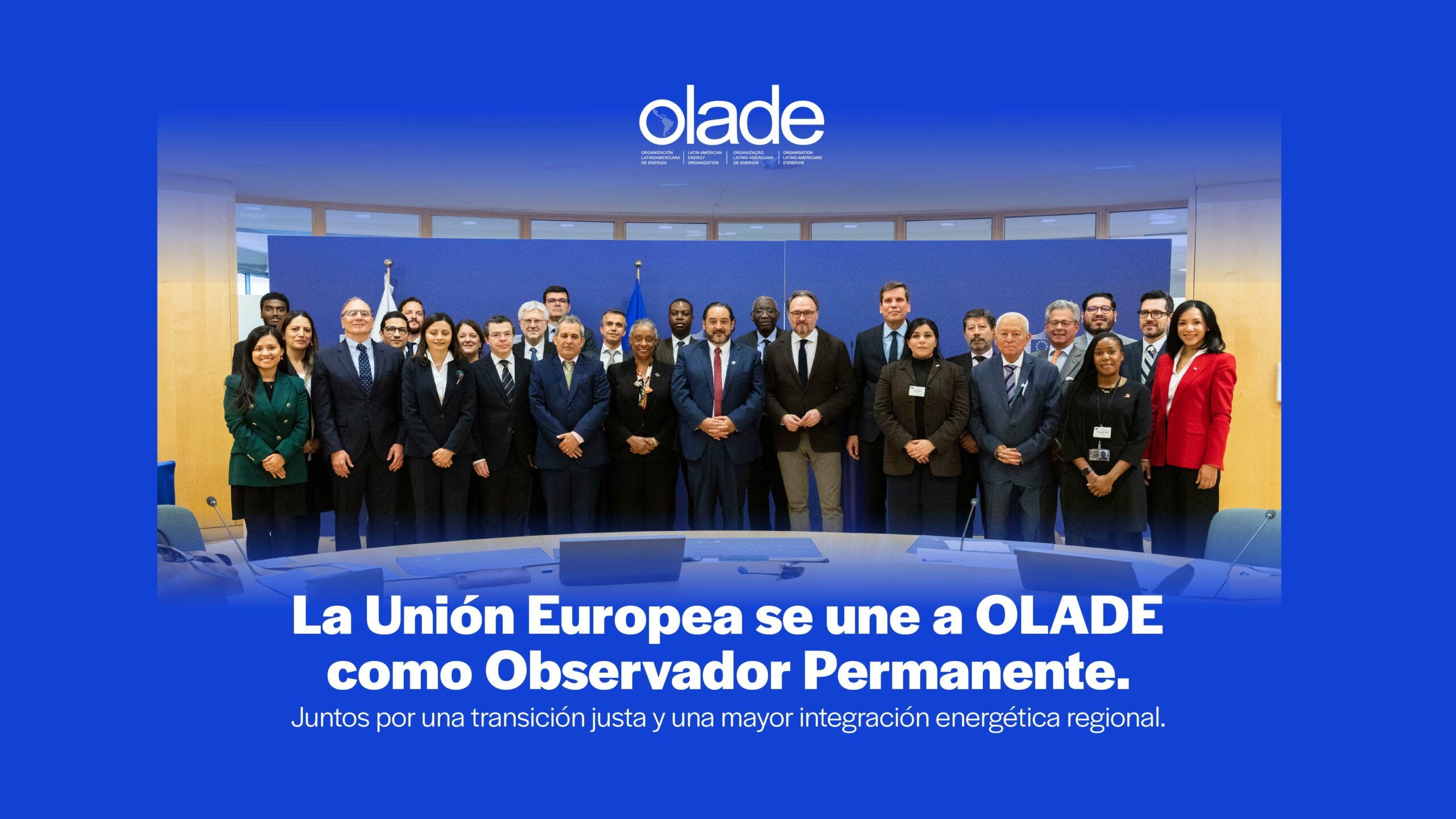
A Memorandum of Understanding was signed between the European Union (EU) and the Latin American and Caribbean Energy Organization (OLACDE), providing for the EU’s accession as a Permanent Observer to OLACDE.
This Agreement represents a highly significant step in strengthening international energy cooperation and reinforces dialogue and joint work between both regions to accelerate decarbonization, foster clean technologies, ensure global energy security, and promote shared sustainable development between Europe, Latin America, and the Caribbean.
The agreement was signed by OLACDE’s Executive Secretary, Andrés Rebolledo Smitmans, and the EU’s Commissioner for Energy, Dan Jørgensen.
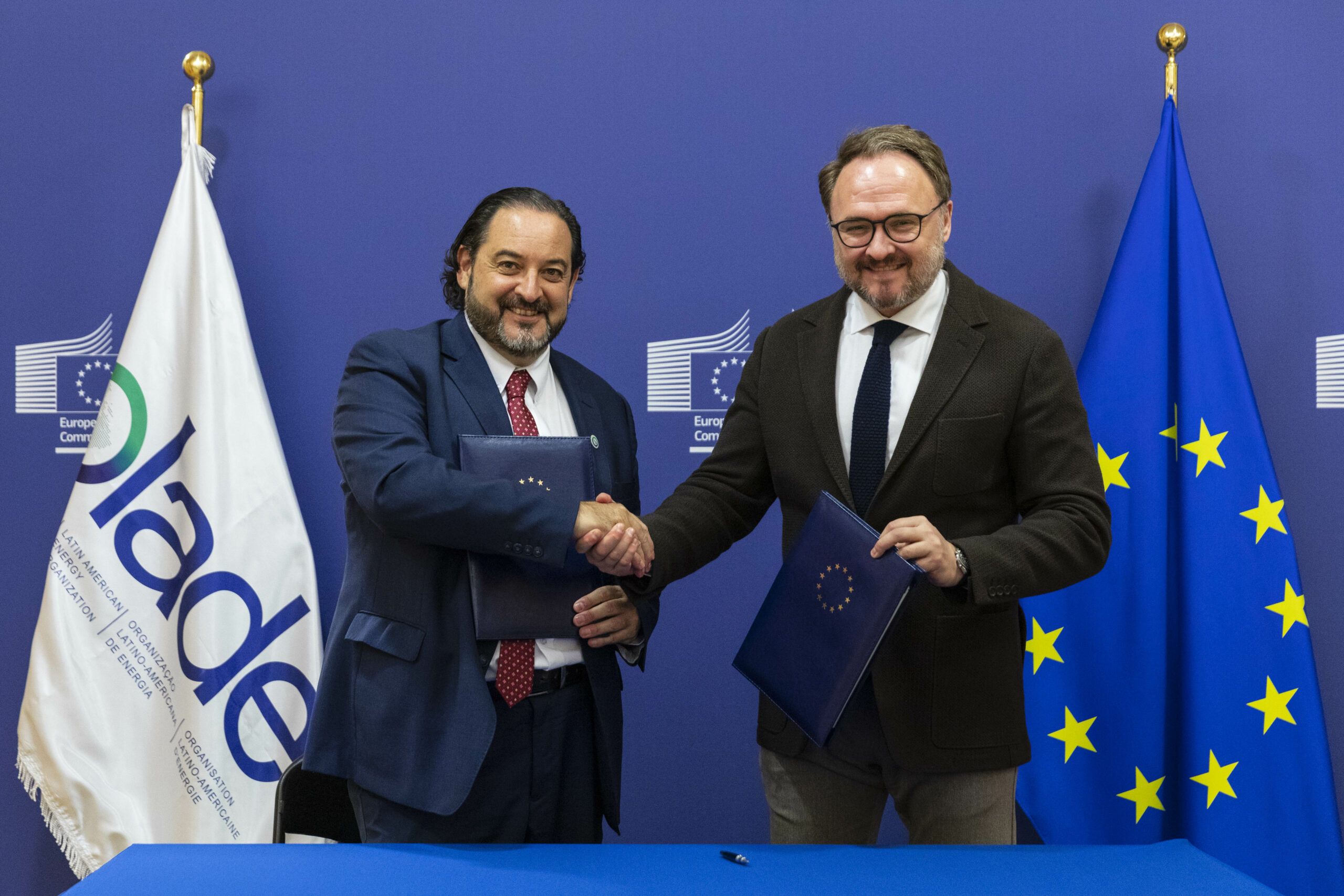
This strategic pact aims to foster cooperation and joint efforts to enhance regional collaboration and the exchange of specialized energy knowledge among Latin America, the Caribbean, and the European Union through the exchange of technical expertise and best practices in designing joint cooperation programs, projects, and other activities.
The EU’s observer status includes participation in OLACDE’s governance bodies and technical working groups, which will facilitate the joint development of technological innovation projects and sustainable public policies, taking into account the strategic role of energy and its impact on socioeconomic development, climate change, industrialization, and the improvement of the human development index in both regions.
The Agreement promotes energy cooperation to advance the sustainable development of Latin America and the Caribbean, furthering the energy transitions our region is currently undergoing toward a net-zero emissions future.
According to a study conducted by OLACDE, bilateral trade between the EU and Latin America-Caribbean in the energy sector has shown steady growth, rising from USD 10,887 million in 2020 to USD 35,707 million in 2023.
Latin America and the Caribbean has a surplus energy trade balance with the EU, with exports triple its imports from Europe, within a framework that favors technology transfer, investment in clean energy, and economic resilience in the face of the climate crisis.
LAC has made progress in transforming its energy sector but still faces challenges linked to climate change, such as extreme weather events, pressure on energy infrastructure, and the urgent need to diversify a primary energy mix that still relies heavily on hydrocarbons and hydroelectric power.
In this context, the EU plays an important role, as for the past decade foreign direct investment (FDI) in Latin America in renewable projects has surpassed that in hydrocarbons, and today European companies account for around 70% of FDI in renewable energy.
Finally, this alliance reinforces and supports OLACDE’s and its member countries’ ongoing efforts to advance the region’s energy integration process, as the EU has a track record and experience in this area that is valuable for designing best practices in this regard.
Andrés Rebolledo indicated that “the inclusion of the European Union as an observer is especially timely, as there are notable similarities between both regions in energy matters, with shared challenges around security, efficiency, and integration, as well as the inescapable transition toward renewable energy as a response to the environmental crisis and ecosystem degradation“.
For his part, Commissioner Dan Jørgensen said that “ The EU and Latin America and the Caribbean are strengthening their alliance to advance the green and digital transitions. The memorandum signed today integrates regional energy efforts and reinforces technical cooperation. Both regions are moving toward a clean and sustainable energy transition. The agreement supports shared goals: tripling renewable energy and doubling energy efficiency by 2030.“