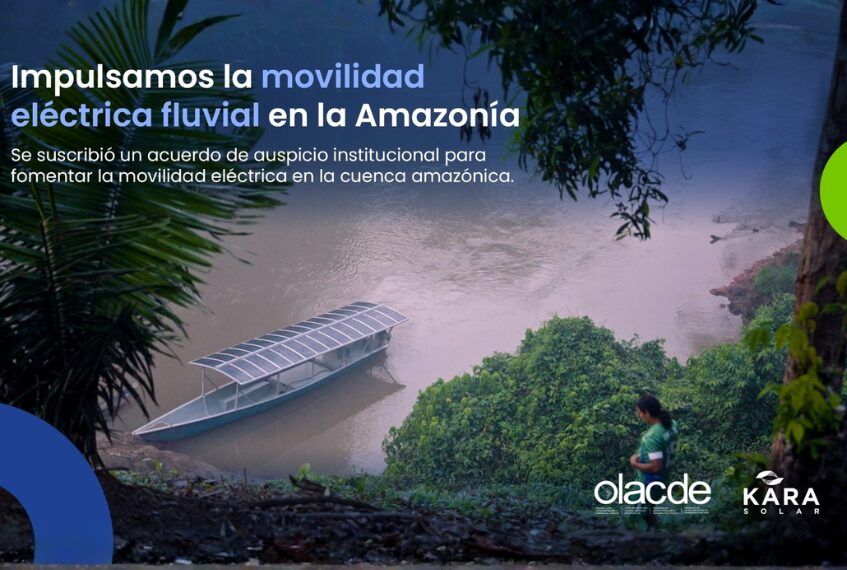
In a step toward decarbonizing transportation in critical ecosystems, the Latin American and Caribbean Energy Organization (OLACDE) and the Kara Solar Foundation signed an agreement to promote electric mobility in the Amazon basin. This alliance seeks to contribute to the transformation of river transport, replacing dependence on fossil fuels with clean technologies through the development of electric navigation infrastructure adapted to the needs of local communities.
The agreement, signed by OLACDE’s Executive Secretary, Andrés Rebolledo, and Kara Solar’s founder, Oliver Utne, establishes a cooperation framework for financing and technical support in building solar-electric boats. For OLACDE, this effort represents a concrete action within its mission to foster the integration and use of regional energy resources, positioning electric mobility not only as an urban solution, but as a vital tool for the sustainability of remote territories across Latin America and the Caribbean.
The agreement also includes a technical training and knowledge transfer agenda for this technology. OLACDE will incorporate its training processes and virtual platforms to strengthen the capacities of the communities involved. This comprehensive approach seeks to ensure that the transition to electric river transport is backed by the academic and technical support needed to guarantee its long-term operability in the complex Amazonian environment.
The project led by Kara Solar stands out for its community co-creation model, in which solar technology is placed at the service of sustainable territorial management. By joining this initiative, OLACDE institutionally validates an innovative solution that can be replicated in other river systems across the region, promoting a model of energy access that respects environmental balance and improves connectivity for Amazonian populations through low-emission solutions.
With the signing of this agreement, valid through December 2027, both organizations reaffirm their commitment to technological leadership and the energy transition. This instrument is a step forward in the regional mobility agenda, demonstrating that the energy transition in Latin America and the Caribbean is possible from the heart of the rainforest, uniting international technical cooperation with local innovation to protect one of the planet’s most important ecosystems.
For more information, contact:
Diana Soriano, Head of Communications.