
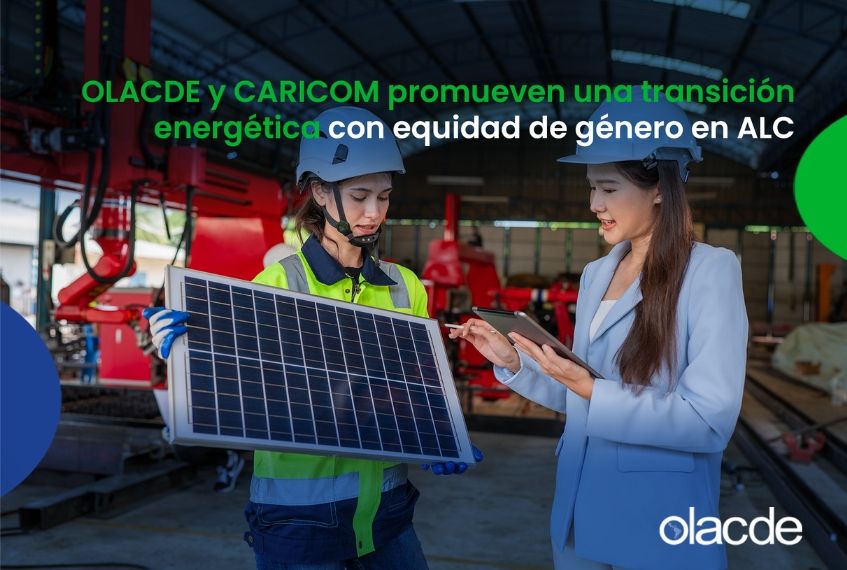
OLACDE and CARICOM Promote a Gender-Equitable Energy Transition in LAC

The energy transition is creating new opportunities in areas such as renewable energy, power grids, efficiency, storage, and emerging technologies. The challenge facing Latin America and the Caribbean is ensuring that existing gaps are not carried over into this new energy economy. This was one of the key messages conveyed by OLACDE during the webinar “Gender Mainstreaming in Energy: Closing the Gender Gap,” held on July 22 in collaboration with CARICOM.

Gloria Alvarenga, OLACDE’s Director of Integration, Access, and Energy Security, stressed that the design of public policies will determine who gains access to new jobs, who takes part in strategic decisions, and which sectors benefit from investment. Gender gaps in the region are concentrated mainly in four dimensions: access to modern energy, specialized technical employment, leadership spaces, and the availability of gender-disaggregated data—an essential element for directing budgets and investments toward genuine territorial needs.

The diagnosis presented shows that women remain underrepresented in key areas such as engineering, construction, operation, maintenance, digital technologies, and decision-making positions on boards and regulatory bodies. Alvarenga highlighted the regional paradox: even within the renewable energy sector, where employment is growing, women’s participation remains largely confined to administrative roles, logistical support, communications, or social management.

This scenario is heavily shaped by structural barriers such as unequal access to STEM education, a lack of mentorship, workplace bias, and an inequitable distribution of unpaid care work.

From diagnosis to action

OLACDE proposes a roadmap structured around five government priorities: generating accurate diagnostics and data; integrating equality objectives, budgets, and accountability into energy policies; expanding technical training and encouraging women’s participation in STEM fields; strengthening their institutional leadership; and implementing rigorous mechanisms for monitoring and evaluating public investment.

The goal is to ensure that gender equality is a cross-cutting principle from the design through the evaluation of energy policies. On the operational side, the organization is already carrying out concrete initiatives, including a program to introduce girls and young women to STEM disciplines. This initiative, previously implemented in Chile and Ecuador, aims to gradually expand into Central America and the countries of the Caribbean community.

OLACDE also produces annual technical notes on gender, promotes networks of women in the sector, and supports rural electrification and clean cooking projects, demonstrating how access to modern energy can free up time spent on unpaid domestic work and drive socioeconomic development.

The joint work between OLACDE and CARICOM strengthens a regional agenda focused on advancing equitable employment, innovation, and multilateral cooperation. Drawing on the region’s abundant renewable resources and technical strength, both institutions reaffirmed their commitment to working with governments, businesses, and civil society to ensure that the decarbonization process effectively helps close gender gaps in Latin America and the Caribbean.

Share this news

OLACDE and CARICOM Promote a Gender-Equitable Energy Transition in LAC

Newsletter summary

The energy transition is creating new opportunities in areas such as renewable energy, power grids, efficiency, storage, and emerging technologies. The challenge facing Latin America and the Caribbean is ensuring that existing gaps are not carried over into this new energy economy. This was one of the key messages conveyed by OLACDE during the webinar […]

Knowledge and Training

We promote advanced technical training programs that facilitate the exchange of experiences, as well as the development of the human and institutional capacities needed to support the energy transformations in our region.

Our academic offering includes executive programs, postgraduate diplomas, master’s degrees, and innovative initiatives focused on topics such as energy transition, conventional energy, renewable energy, e-mobility, and regional integration.

OLACDE creates a regional network focused on energy knowledge that connects governments, young professionals, academics, and sector experts to drive collaborative solutions through technical cooperation and talent development to address future energy and climate challenges.

Technical cooperation and financing

We strengthen South-South and triangular cooperation ties as drivers to accelerate energy transitions in Latin America and the Caribbean. OLACDE brings together efforts among governments, multilateral organizations, academic institutions, and the private sector to mobilize financing, technical capacities, and innovative solutions tailored to our regional reality.
We promote strategic initiatives aimed at directing resources toward projects focused on decarbonization, conventional energy, renewable energy, and energy justice, with the objective of establishing a more efficient, inclusive, and sustainable regional cooperation architecture.

Regional Energy Community

We are building a regional energy community with a global outlook that seeks to position Latin America and the Caribbean as a key player on the international stage. OLACDE strengthens its representation in major multilateral forums related to energy, trade, and climate by fostering strategic alliances and promoting international cooperation.

Through events such as Energy Week, together with new spaces for international dialogue, we promote a collective voice that helps attract financial investment and create new opportunities for sustainable development across our region.

Energy Transition and Strategic Projects

We drive an energy transition based on principles of sustainability, energy security, and social inclusion. OLACDE supports countries in adopting new technologies related to energy efficiency, energy storage, green hydrogen, electromobility, and grid digitalization to accelerate the sector’s decarbonization process.

Our approach also includes promoting strategic projects that strengthen energy resilience at the regional level, contributing to emission reductions while consolidating a cleaner and more competitive energy infrastructure. Initiatives such as OEMLAC position our region as a leading reference in climate innovation and sustainable energy transition.

Energy information and data

We develop regional platforms dedicated to energy information, technical analysis, and strategic data systems that strengthen both public and private decision-making in the sector. OLACDE promotes the digital transformation of the sector through the use of artificial intelligence, georeferencing, and advanced tools for regional energy analysis.

The integration of systems such as SieLAC, together with new regional platforms, allows for the consolidation of reliable and up-to-date technical information, facilitating modern, interoperable, and evidence-based energy planning.

Regional Energy Integration

We promote cooperation in the regional energy sector, focused on collaboration, infrastructure development, and regulatory harmonization, with the objective of strengthening energy security in Latin America and the Caribbean. OLACDE coordinates projects related to electrical interconnection, gas integration, and regional energy planning, seeking to create efficient and sustainable partnerships.
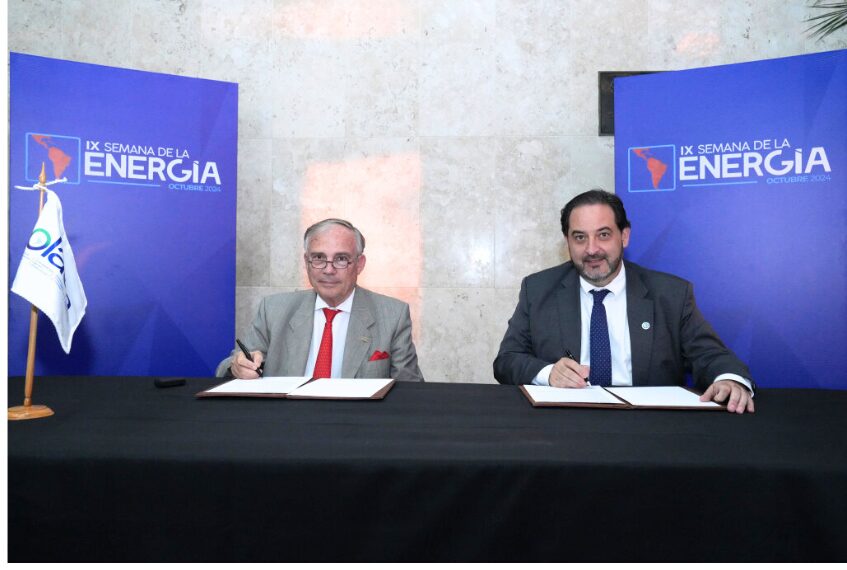
Through cooperation with the governments of our 27 member countries, regional blocs, multilateral institutions, and both public and private stakeholders, we drive strategic initiatives that promote regulatory harmonization and new energy exchange mechanisms, in order to enhance national capacities and accelerate an integrated energy transition at the regional level.