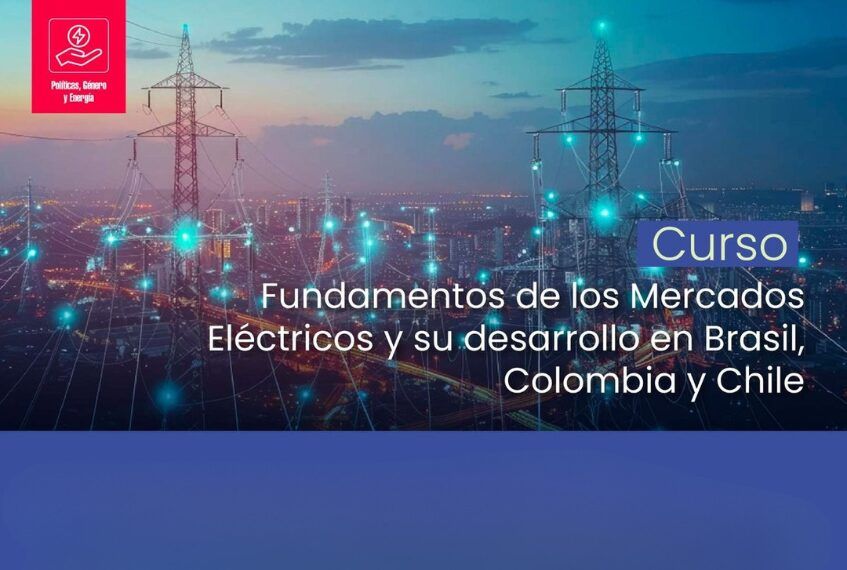
The Latin American and Caribbean Energy Organization (OLACDE) is running the course “Fundamentals of Electricity Markets and Their Development in Brazil, Colombia and Chile” from August 19 to September 2, a technical training program that seeks to strengthen understanding of how electricity markets work, from their economic foundations to their practical application in representative experiences from the region.
The course covers principles such as dispatch and price formation, market structures, operating models and auction design, as well as competition mechanisms and coordination with electrical grids.
At the opening session, OLACDE’s Executive Secretary, Andrés Rebolledo, highlighted the urgency of having updated regulatory frameworks amid accelerated technological transformation: “The transformation of power systems requires relevant regulations that encourage investment and support the adoption of new technologies in the region.”
For her part, Gloria Alvarenga, OLACDE’s Director of Integration, Access and Energy Security, underscored the importance of the electricity sector as the foundation of regional development: “The electricity sector is a strategic pillar for economic and social development. A deep understanding of it is essential to face the challenges of the energy transition in Latin America and the Caribbean.”
During the sessions, experts such as Sebastián Novoa and Gabriel Olmedo shared insights on the region’s different regulatory models, highlighting the need to understand common principles that can help move toward more competitive, efficient and sustainable systems.
Through this training initiative, OLACDE reaffirms its commitment to strengthening capacities, technical cooperation, and the design of energy policies that help build more resilient, inclusive, and sustainable electricity systems in Latin America and the Caribbean.