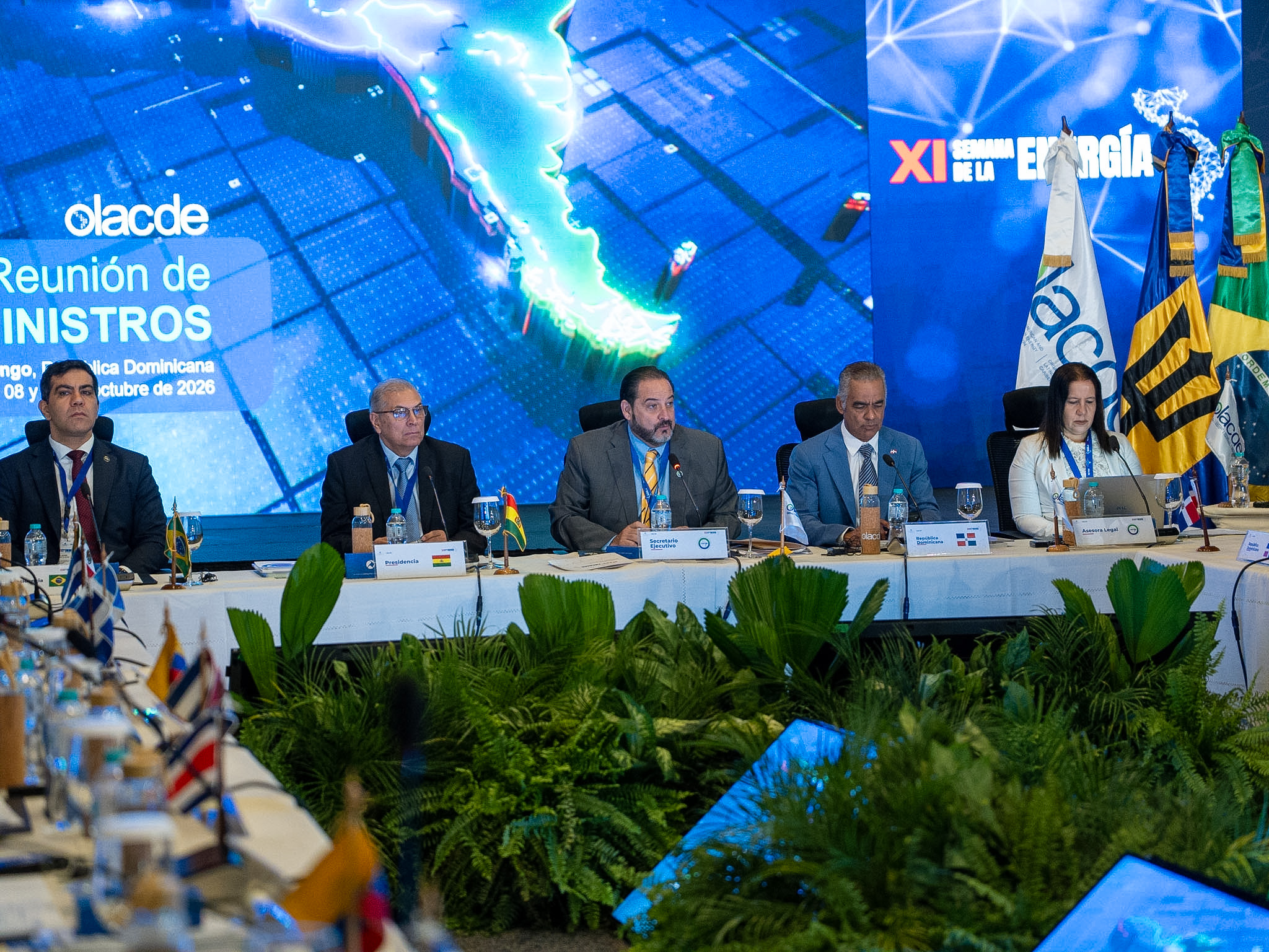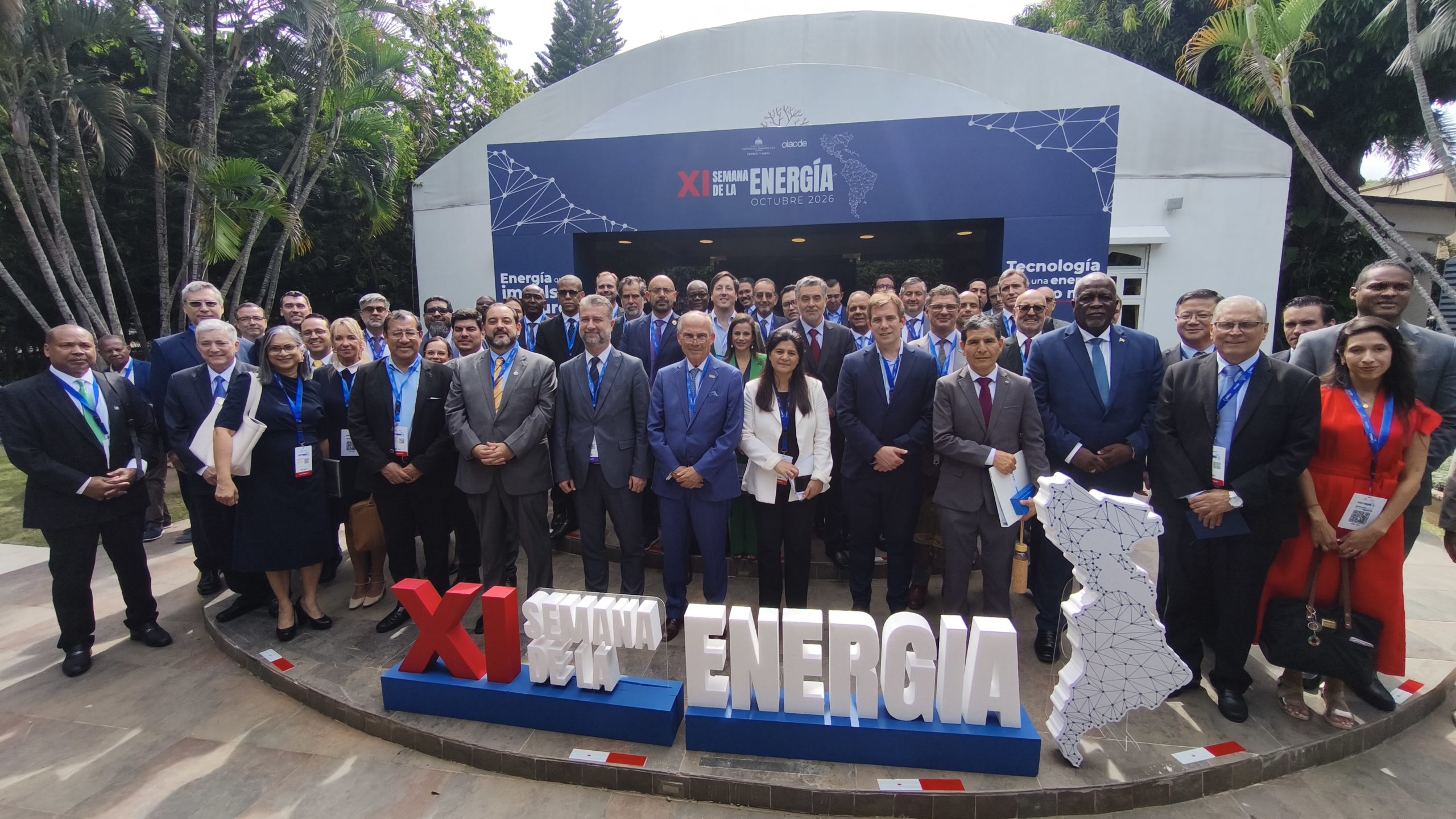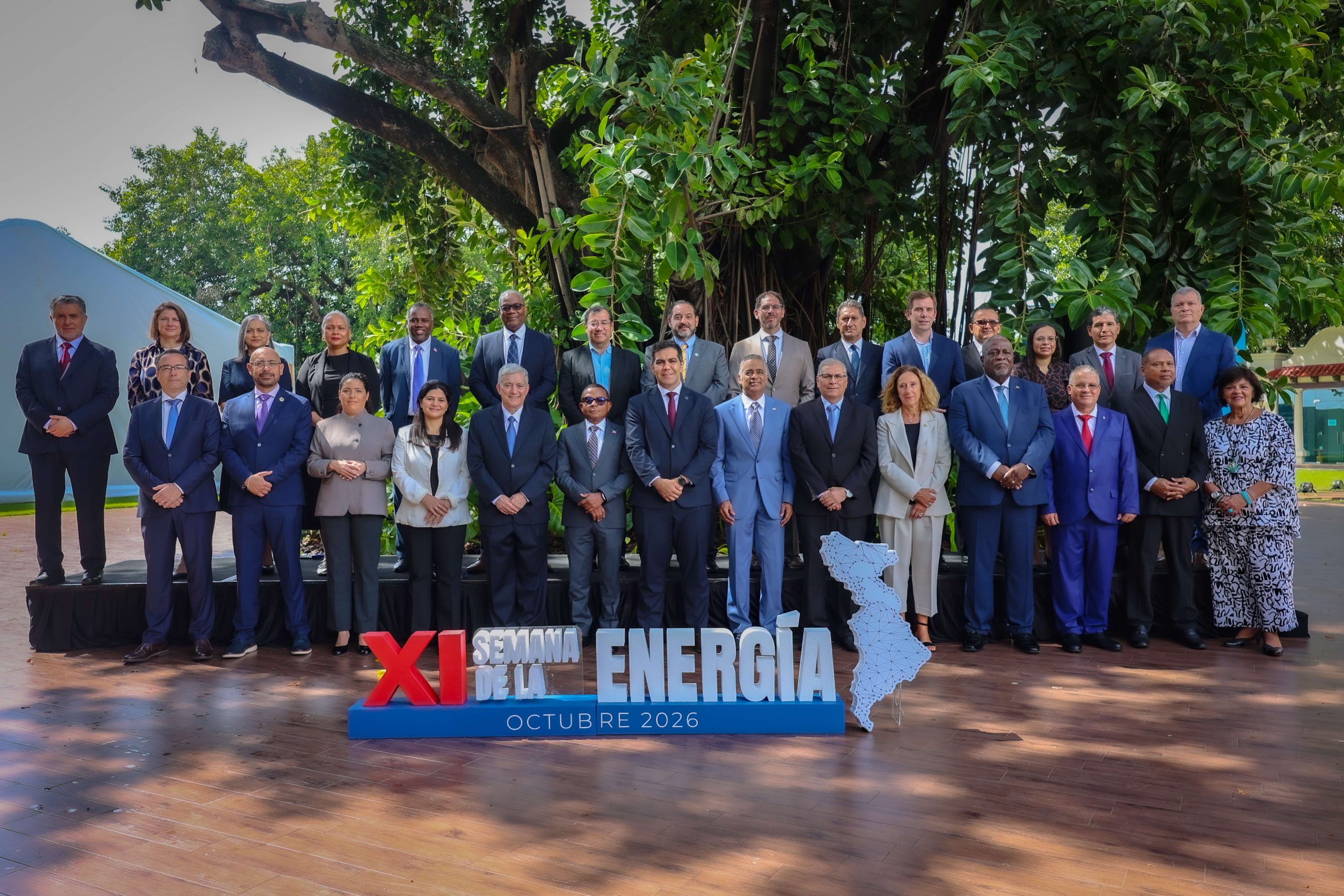
Regional integration, energy security and investment mobilization took center stage at the opening of the 56th Meeting of Energy Ministers of the Latin American and Caribbean Energy Organization (OLACDE), held on Thursday in Santo Domingo. Bringing together authorities from its 27 Member Countries, the meeting is the organization’s highest political decision-making body and sets the strategic direction for regional energy development.
OLACDE’s ministerial meeting provides the framework for Energy Week, now in its 11th edition in Santo Domingo, bringing together government authorities, international organizations, business leaders, civil society representatives and academia. At the opening of the ministerial session, OLACDE Executive Secretary Andrés Rebolledo Smitmans emphasized that the abundance and complementarity of Latin America and the Caribbean’s energy resources offer an opportunity to deepen regional integration and contribute to global decarbonization.
The Dominican Republic’s Minister of Energy and Mines, Joel Santos Echavarría, highlighted the importance of promoting domestic and foreign investment to strengthen energy systems and their contribution to economic growth and public well-being. He also stressed that sharing information and experience is essential to advancing energy integration at a time of particular strategic importance for the region’s countries.
Institutional handover and regional leadership
A key milestone was the handover of the ministerial meeting’s presidency from Belize to Bolivia for the 2026–2027 term. Representing the outgoing presidency, Leroy Almendarez, Chief Executive Officer of the Ministry of Public Utilities, Energy and Logistics, called for expanded access to concessional financing and technical assistance to help smaller economies turn energy projects into viable investments. He stressed that integration must translate into concrete action and that the success of the transition should be measured by its benefits for people: affordable and reliable electricity, reduced energy poverty and better conditions for small businesses.
Assuming the presidency on behalf of Bolivia, Vice Minister of Electricity and Renewable Energy Rudy Alberto Peredo Flores urged countries to harness their energy and mineral wealth to drive regional development.
Perspectives from multilateral development banks and international organizations
Perspectives from multilateral development banks and international organizations
The session also featured key remarks from representatives of multilateral development banks and international organizations:
- CAF: Gianna Gregori, Senior Country Executive at CAF—Development Bank of Latin America and the Caribbean, reaffirmed the institution’s readiness to mobilize resources, financial instruments and cooperation mechanisms to support countries from policy and project development through financing and implementation. She emphasized that the energy transition must combine sustainability, security and energy access with competitiveness and well-being, recognizing OLACDE as a strategic partner.
- World Bank: Marcela Silva, Regional Infrastructure Director for Latin America and the Caribbean, said the region must turn its energy wealth into greater security and resilience through investments in grids, storage and integration. She noted that annual clean energy investment should rise from USD 70 billion in 2025 to more than USD 200 billion in 2035, emphasizing that mobilizing private capital requires predictable rules, sustainable tariffs that protect vulnerable households and mechanisms to reduce investment risks.
- IDB: Ana María Ibáñez Londoño, Vice President for Sectors and Knowledge at the Inter-American Development Bank, called for faster project delivery, support for reforms and the removal of obstacles to integration agreements. She estimated that the region needs USD 50 billion in annual investment to meet its energy needs and noted that nearly 18 million people still lack access to electricity.
- European Commission: Myriam Ferran, Deputy Director-General of the Directorate-General for International Partnerships, reaffirmed the European Union’s readiness to support regional energy integration through technical assistance, financing and investment mobilization under Global Gateway and the Team Europe approach. She emphasized that harnessing the region’s renewable energy potential requires modern grids, storage, interconnections and predictable regulatory frameworks, delivering tangible benefits through affordable energy, quality jobs and more resilient communities.
- GECF: Philip Mshelbila, Secretary General of the Gas Exporting Countries Forum, highlighted the role of natural gas in energy security, industrial development and support for renewable power generation. He called for stronger integration through investment in infrastructure, interconnections and regulatory coordination, with solutions tailored to each country. He also stressed that reducing methane emissions and eliminating routine gas flaring must be part of efforts to lower emissions intensity.
- IRENA: Francesco La Camera, Director-General of the International Renewable Energy Agency, urged countries to prioritize resilient infrastructure, regional cooperation and project preparation to translate renewable energy potential into energy security, competitiveness and sustainable development. He highlighted the need to invest in grids, storage and interconnections, and to expand electrification across transport and industry.