The electricity generation report from the Latin American and Caribbean Energy Organization (OLACDE) highlights total generation of 161 TWh in August 2025, a volume similar to that recorded in July. This report highlights the relative variations in the regional energy mix and underscores the dynamics of renewable and non-renewable sources.
The generation matrix in August 2025 kept Hydropower as the predominant source, with a 43.6% share. However, a 4% reduction in hydroelectric generation was observed compared to July 2025, attributed to drought conditions in the Andean Zone and Central America.
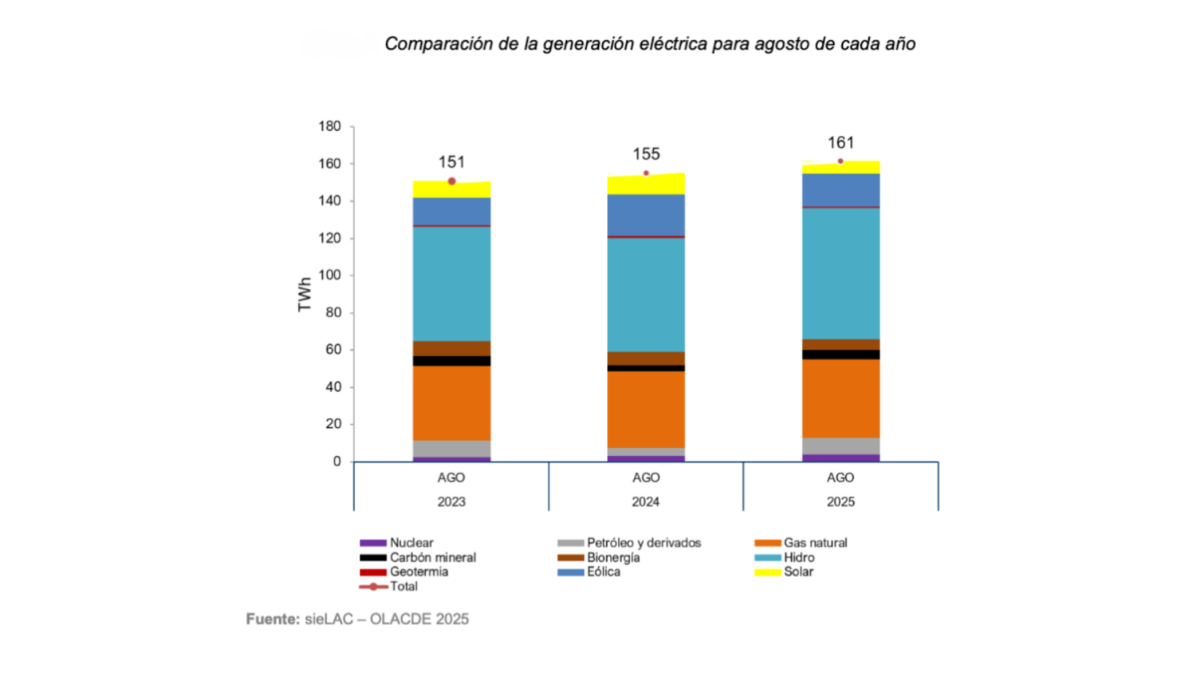
To offset this decline, fossil-based sources increased their contribution, with Natural Gas raising its share to 26.1% of the total. This increase reflects the role of natural gas as a firm energy source, essential to guaranteeing the security and stability of electricity supply in the region, a trend reinforced by the entry into operation of new energy complexes, such as the Energía del Pacífico (EDP) plant in El Salvador.
In the other renewables segment, Solar energy saw 5% month-on-month growth, driven by the addition of new photovoltaic installations. Wind generation also showed a slight increase, attributed to persistently strong winds in Southern Cone countries.
In year-on-year terms (August 2024 vs. August 2025), total LAC electricity generation rose by 3.9%. Hydropower stood out as the resource with the largest absolute growth over this period, increasing by 9.4 TWh.
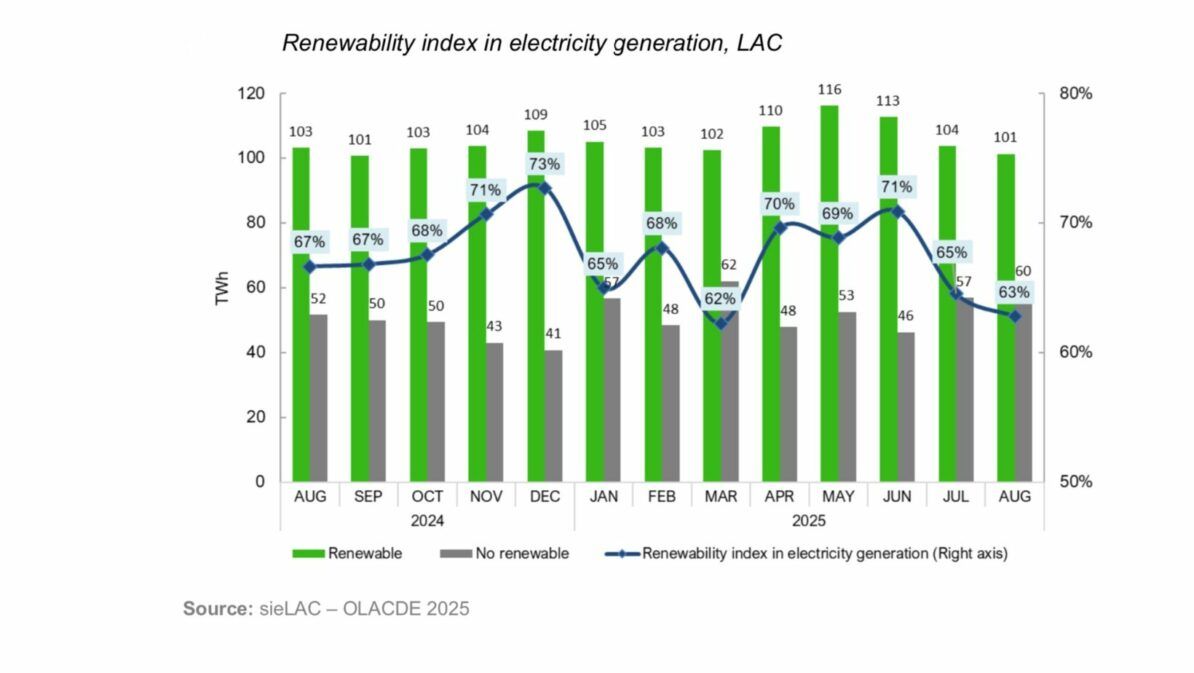
Despite the predominance of renewables (101 TWh), the regional Renewability Index fell to 63% in August 2025, down from 65% in July, marking one of the lowest values in the last five months. This decline is mainly explained by dependence on hydroelectric generation and the increase in non-renewable sources, which totaled 60 TWh.