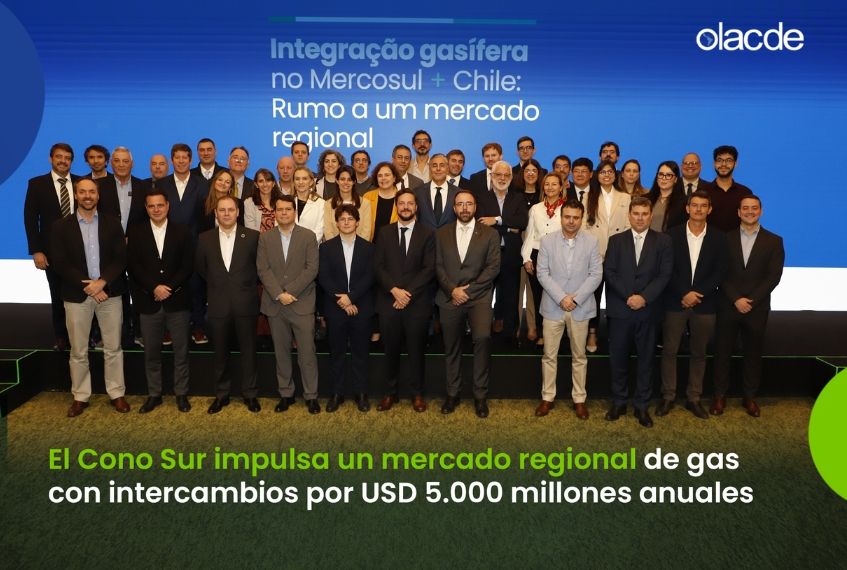
The Latin American and Caribbean Energy Organization (OLACDE) and the Development Bank of Latin America and the Caribbean (CAF) held the meeting “Gas Integration in MERCOSUR + Chile: Toward a Regional Market” in São Paulo, bringing together representatives from governments, energy sector companies, regulatory bodies and international organizations from the region.
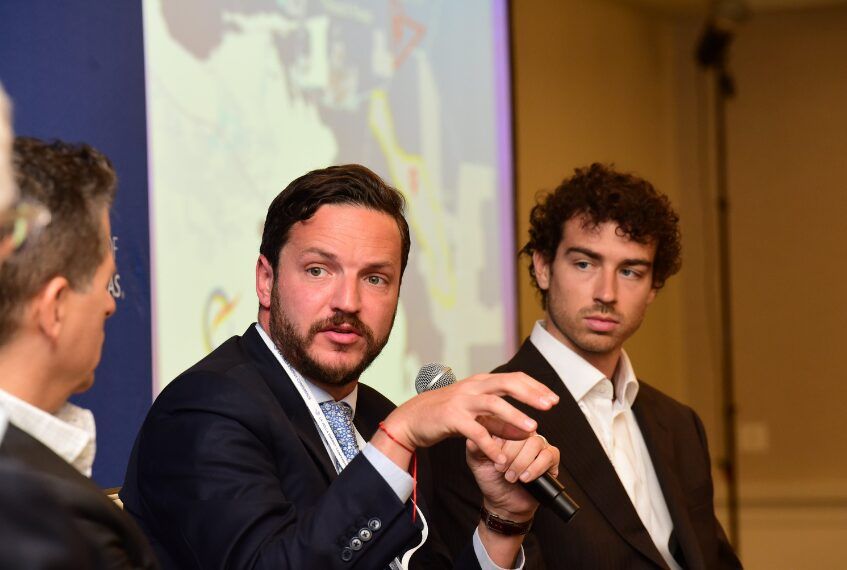
During the opening, OLACDE’s Head of Strategic Advisory, Guido Maiulini, highlighted: “In an international scenario that is increasingly volatile and uncertain for energy markets, South America has a historic opportunity to move toward deeper integration, based on infrastructure but also on regional coordination, regulatory convergence and mechanisms that allow for expanding gas trade between countries. We are talking about regional gas trade of up to USD 5 billion a year and an investment project portfolio of more than USD 25 billion. This will not only strengthen energy security, it will generate more competitive, accessible and sustainable energy for our industries and our families.”
For his part, the Director of the Natural Gas Department of Brazil’s Ministry of Mines and Energy (MME), Marcello Gomes Weydt, stated: “Gas integration is strategic for countries seeking not only to monetize their energy resources, but also to bring the price of natural gas down to levels that are competitive for consumers. In this way, we can effectively drive regional economic development by increasing the competitiveness of energy-intensive industries, and that is the path Brazil is following.”
Meanwhile, Juan Carlos Elorza, Director of Technical and Sector Analysis at the Development Bank of Latin America and the Caribbean (CAF), stated that “today the challenge is no longer to think of national projects in isolation, but to move toward a regional architecture capable of building a gas market in the full sense of the term. And that cannot be built by a bank alone: it is built with information, institutions and dialogue among those who produce, transport and consume energy, while also creating the conditions needed to attract long-term investment. That is why, at CAF, we promote studies and dialogue spaces that can turn that vision into concrete action.”
Likewise, the Executive Director of Natural Gas at the Brazilian Institute of Petroleum, Gas and Biofuels (IBP), Sylvie D’Apote, noted: “Having multiple sources of supply and greater regional interconnection strengthens the resilience of energy systems in the face of international, climate or supply shocks. In addition, natural gas has a strategic role in complementing the growth of renewable energy and supporting the region’s energy transition.”
In various technical working sessions, with participation from public and private sector stakeholders in the region, OLACDE presented 10 regional integration routes connecting natural gas production and consumption hubs in Argentina, Brazil, Bolivia, Chile, Uruguay and Paraguay. The alternatives include expansions and upgrades to the Gasoducto Norte, GasAndes, the Gasoducto Centro Oeste, GNEA, Tratayén–La Carlota, connections via Uruguaiana, Duque de Caxias–Taubaté, Siderópolis–Porto Alegre and San Jerónimo–Porto Alegre, along with projects linked to the Bioceanic Gas Pipeline and new regional connections between Argentina, Bolivia and Brazil. The initiatives analyzed involve approximately 6,000 kilometers of pipelines and more than 1 million HP of compression capacity, with estimated investments ranging from USD 500 million to USD 5 billion per route, exceeding USD 25 billion in total.
The projections highlight the complementarity between the expansion of Vaca Muerta and the development of Brazil’s Pré-Sal, together with expected growth in gas demand in markets such as São Paulo, the Midwest and southern Brazil. Simulations show that, with the right infrastructure, regional export flows could reach between 35 and 40 MMm³/day under current demand conditions and exceed 60 MMm³/day under regional expansion scenarios. Greater integration would also make it possible to reduce supply costs, expand regional exports, optimize existing infrastructure and reduce dependence on LNG imports, diesel and electricity imports. The project also identifies opportunities to boost natural gas-intensive industries, such as nitrogen fertilizer production, the steel industry and baseload power generation, particularly in corridors such as the bioceanic corridor linked to the Paraguayan Chaco, where initial demand of 4 MMm³/day is projected, with potential for expansion.
The results indicate that the viability of several corridors also depends on firm long-term contracts and regulatory conditions capable of providing predictability and attracting investment for regional infrastructure development. In this context, issues related to the regional transit of gas through Bolivia, the redistribution of transport capacity and new tariffs in Argentina were addressed, along with different tariff flexibilization schemes and the use of already-amortized infrastructure. Changes in transport tariffs and regulatory conditions could significantly alter the competitiveness of different regional routes and trade flows between countries.
Finally, various regional integration scenarios were presented, whose results indicate that, under scenarios of greater tariff flexibilization and increased regional demand, the MERCOSUR countries and Chile could reach regional natural gas trade of between 60 and 70 MMm³/day, for an estimated total of close to USD 5 billion a year. Aggregate regional benefits, including savings in supply costs and transit revenues, could range between USD 900 million and USD 2 billion a year, depending on the scenario analyzed. The study concludes that greater regional integration would strengthen the energy security of the Southern Cone, reduce the region’s exposure to external shocks on energy markets, and create conditions to support the region’s energy transition and industrial development processes.
The meeting concluded with four panels open to the public, focused on the role of gas integration in the global geopolitical context and regional energy security, the regulatory changes needed to move forward with a regional natural gas market, the structure of the chain and distribution of risks needed to make long-term investments viable, and the role of Brazilian demand in consolidating a more integrated regional market.
Representatives from governments, sector companies, regulatory bodies and international specialists agreed on the need to strengthen technical and regulatory coordination, generate predictability to attract investment, and advance mechanisms that expand regional trade and strengthen the energy security of the Southern Cone in an international scenario marked by growing uncertainty over global energy flows.