
August 26
Electricity Generation Report No. 16 – Latin America and the Caribbean
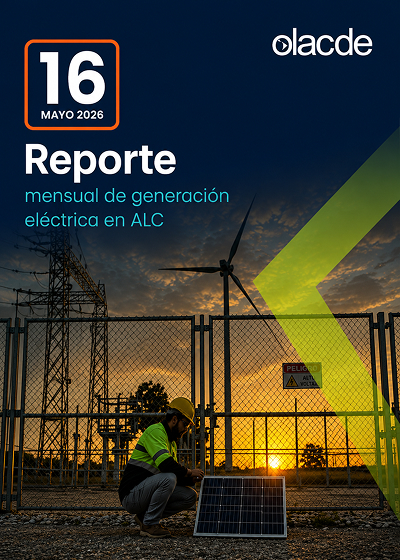
In May 2026, electricity generation in Latin America and the Caribbean reached 176 TWh, marking a 7.32% monthly increase compared to April. The regional power mix remained led by hydropower (43.4%), followed by natural gas (24.4%) and wind generation (11.6%), which together accounted for most of the electricity produced during the month. Other sources maintained […]

July 26
Electricity Generation Report No. 15 – Latin America and the Caribbean
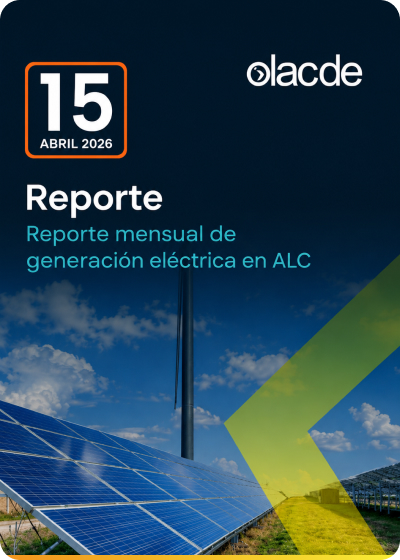
In April 2026, electricity generation in Latin America and the Caribbean (LAC) reached 164 TWh, representing a 4.31% decrease compared with March 2026 and a 3.80% increase relative to February 2026. The regional generation mix continued to be led by hydropower, which accounted for 44.6% of total electricity generation, followed by natural gas (23.2%) and […]

June 2026
Electricity Generation Report No. 14 in Latin America and the Caribbean
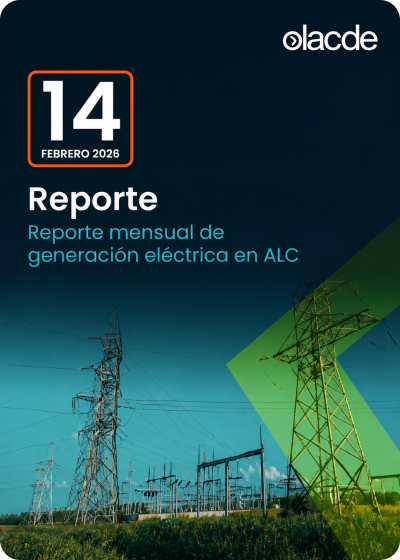
In February 2026, electricity generation in LAC reached 158 TWh, with the generation mix led by hydropower (45.4%), followed by natural gas (22.7%) and wind power (12.2%). Together, hydropower, natural gas, and wind accounted for more than 80% of monthly electricity generation. Overall, renewable energy sources contributed 67.7% of total electricity generation. Monthly electricity generation […]

May 2026
Report No. 13 Electricity Generation in Latin America and the Caribbean (LAC)
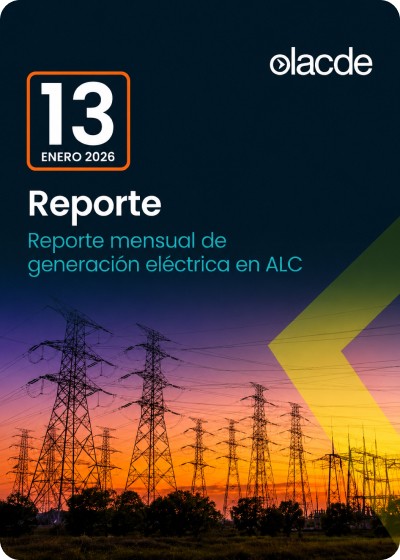
In January 2026, Latin America and the Caribbean (LAC) generated 171 TWh of electricity, with hydropower remaining the dominant technology. This outcome is associated with greater water availability and a reduction in the system’s hydrological constraints, favoring lower marginal-cost dispatch and the partial displacement of thermal generation with higher variable costs. Despite the greater hydroelectric […]

April 2026
Report No. 12 Electricity Generation in Latin America and the Caribbean
In December 2025, electricity generation in LAC reached 153 TWh, with a year-on-year growth of 2.7% and a monthly increase of 1.3%. The generation mix remained predominantly renewable, led by hydropower (43.9%), although conditioned by hydrological variability. Natural gas (22.8%) consolidated its role as the main backup source due to its operational flexibility, while wind […]

March 2026
Report No. 11 – Electricity Generation in Latin America and the Caribbean
In October 2025, total electricity generation in Latin America and the Caribbean (LAC) reached 158 TWh, with more than 50% supplied by hydropower. This represents the highest level of hydroelectric generation recorded since June 2025. Electricity generation from natural gas fell to one of its lowest levels since February 2025. This trend reflects the favorable […]

January 2026
Report No. 10 Electricity Generation in Latin America and the Caribbean
In September 2025, LAC achieved a total electricity generation of 156 TWh, the second lowest figure in 2025 after February. Hydropower is the most widely used resource for electricity generation in LAC, accounting for 45.7% of the total, an increase from 43.6% in August, thanks to improved hydrological conditions in the region. Electricity generation from […]

December 2025
Report No. 9 Electricity Generation in Latin America and the Caribbean
In August 2025, electricity generation in Latin America and the Caribbean reached 161 TWh, a level similar to that of the previous month. Nevertheless, variations were observed in the relative shares of the different generation sources, along with a positive year-on-year increase of 3.9% compared to August 2024, confirming a trend of moderate but sustained […]

November 2025
Report No. 8 Electricity Generation in Latin America and the Caribbean
In July 2025, electricity generation in Latin America and the Caribbean reached 161 TWh, with hydropower as the main source (45.7%), although it decreased compared to June due to drought conditions. Natural gas increased its share as backup in response to reduced hydropower output and renewable intermittency. Compared to July 2024, total generation grew 4.5%, […]

October 2025
Report No. 7 Electricity Generation in Latin America and the Caribbean
In June 2025, total electricity generation in Latin America and the Caribbean (LAC) decreased by 6% compared to May of the same year, due to lower electricity demand. However, the renewability index of this generation increased by two percentage points, reaching 71%, the highest value recorded in the first half of 2025. In year-on-year terms, […]

October 2025
Report No. 7 Electricity Generation in Latin America and the Caribbean

Newsletter summary

In June 2025, total electricity generation in Latin America and the Caribbean (LAC) decreased by 6% compared to May of the same year, due to lower electricity demand. However, the renewability index of this generation increased by two percentage points, reaching 71%, the highest value recorded in the first half of 2025. In year-on-year terms, […]

Knowledge and Training

We promote advanced technical training programs that facilitate the exchange of experiences, as well as the development of the human and institutional capacities needed to support the energy transformations in our region.

Our academic offering includes executive programs, postgraduate diplomas, master’s degrees, and innovative initiatives focused on topics such as energy transition, conventional energy, renewable energy, e-mobility, and regional integration.

OLACDE creates a regional network focused on energy knowledge that connects governments, young professionals, academics, and sector experts to drive collaborative solutions through technical cooperation and talent development to address future energy and climate challenges.

Technical cooperation and financing

We strengthen South-South and triangular cooperation ties as drivers to accelerate energy transitions in Latin America and the Caribbean. OLACDE brings together efforts among governments, multilateral organizations, academic institutions, and the private sector to mobilize financing, technical capacities, and innovative solutions tailored to our regional reality.

We promote strategic initiatives aimed at directing resources toward projects focused on decarbonization, conventional energy, renewable energy, and energy justice, with the objective of establishing a more efficient, inclusive, and sustainable regional cooperation architecture.

Regional Energy Community

We are building a regional energy community with a global outlook that seeks to position Latin America and the Caribbean as a key player on the international stage. OLACDE strengthens its representation in major multilateral forums related to energy, trade, and climate by fostering strategic alliances and promoting international cooperation.

Through events such as Energy Week, together with new spaces for international dialogue, we promote a collective voice that helps attract financial investment and create new opportunities for sustainable development across our region.

Energy Transition and Strategic Projects

We drive an energy transition based on principles of sustainability, energy security, and social inclusion. OLACDE supports countries in adopting new technologies related to energy efficiency, energy storage, green hydrogen, electromobility, and grid digitalization to accelerate the sector’s decarbonization process.

Our approach also includes promoting strategic projects that strengthen energy resilience at the regional level, contributing to emission reductions while consolidating a cleaner and more competitive energy infrastructure. Initiatives such as OEMLAC position our region as a leading reference in climate innovation and sustainable energy transition.

Energy information and data

We develop regional platforms dedicated to energy information, technical analysis, and strategic data systems that strengthen both public and private decision-making in the sector. OLACDE promotes the digital transformation of the sector through the use of artificial intelligence, georeferencing, and advanced tools for regional energy analysis.

The integration of systems such as SieLAC, together with new regional platforms, allows for the consolidation of reliable and up-to-date technical information, facilitating modern, interoperable, and evidence-based energy planning.

Regional Energy Integration

We promote cooperation in the regional energy sector, focused on collaboration, infrastructure development, and regulatory harmonization, with the objective of strengthening energy security in Latin America and the Caribbean. OLACDE coordinates projects related to electrical interconnection, gas integration, and regional energy planning, seeking to create efficient and sustainable partnerships.

Through cooperation with the governments of our 27 member countries, regional blocs, multilateral institutions, and both public and private stakeholders, we drive strategic initiatives that promote regulatory harmonization and new energy exchange mechanisms, in order to enhance national capacities and accelerate an integrated energy transition at the regional level.