Latin America and the Caribbean coordinate joint actions in the face of the global energy crisis

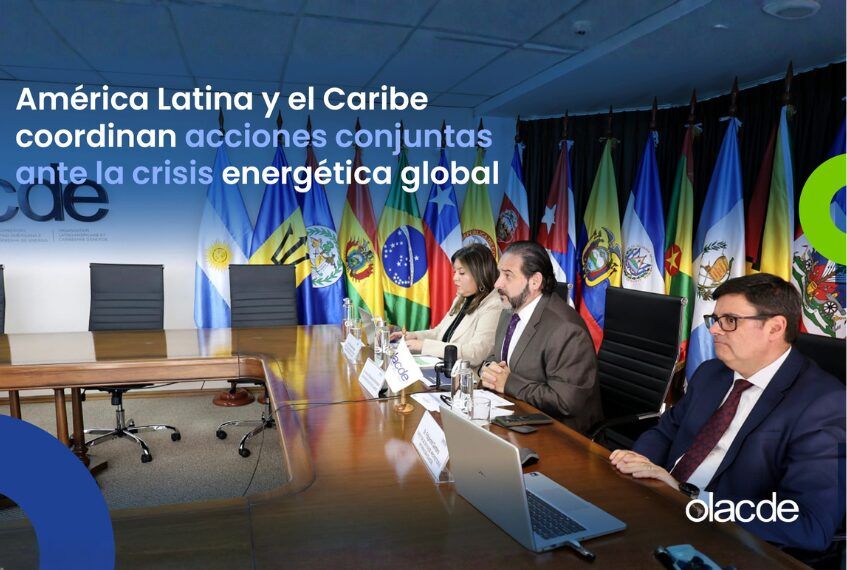
Latin America and the Caribbean are coordinating actions in response to one of the most severe external shocks in recent decades. The region’s Energy Ministers agreed that the current crisis will be better addressed collectively, rather than only through national reactions and measures.

A globally fragile scenario

The urgency is underscored by the global outlook presented by Keisuke Sadamori, Director of Energy Markets at the International Energy Agency (IEA). According to Sadamori, the conflict has caused significant damage to more than 80 strategic facilities, including refineries and liquefied natural gas (LNG) plants.

“Accumulated oil supply losses exceeded 300 million barrels in March and could reach 400 million in April,” warned the IEA official, noting that volatility has driven up prices at certain distribution hubs. This global deficit is placing direct pressure on Latin American and Caribbean economies, which are already facing increases of up to 64% in diesel prices.

Not just isolated efforts in the region

Faced with this diagnosis, representatives of the region’s countries agreed that a regional response should include three strategic pillars:

Unity in the face of emergency: Willingness to work jointly and in a coordinated manner to deepen regional energy integration.

A planned roadmap: Regional energy planning that provides and facilitates responses to the crisis.

Energy transition: The ministers emphasized that the transition is not only an environmental objective, but a tool of sovereignty to reduce dependence on imported fuels.

Resilience and renewable leadership

Despite the complex environment, the dialogue highlighted the region’s competitive advantages. Currently, 70% of Latin America and the Caribbean’s electricity generation comes from renewable sources, the highest proportion in the world.

Andrés Rebolledo, Executive Secretary of OLACDE, stated that “since the start of the armed conflict, the price of oil has risen by nearly 50%, with an impact on gasoline and diesel prices that has increased, on average, by 15% and 21% respectively, generating strong inflationary pressures and higher fiscal spending in response to this economic shock.”

Furthermore, Rebolledo noted that “it is clear that there is a willingness to work in a coordinated manner in collaboration and move forward from that perspective as a region in the face of one of the largest energy crises in recent times,” and emphasized that the current situation requires accelerating integration to strengthen energy security.

Latin America and the Caribbean must evolve from reactive responses toward a more robust and sustainable energy architecture, consolidating itself as a strategic bloc amid the greatest geopolitical energy uncertainty the world is experiencing today.

For more information contact:
Diana Soriano, Head of Communications
diana.soriano@olacde.org
Share this news

Latin America and the Caribbean coordinate joint actions in the face of the global energy crisis

Newsletter summary

Latin America and the Caribbean are coordinating actions in response to one of the most severe external shocks in recent decades. The region’s Energy Ministers agreed that the current crisis will be better addressed collectively, rather than only through national reactions and measures. A globally fragile scenario The urgency is underscored by the global outlook […]

Knowledge and Training

We promote advanced technical training programs that facilitate the exchange of experiences, as well as the development of the human and institutional capacities needed to support the energy transformations in our region.

Our academic offering includes executive programs, postgraduate diplomas, master’s degrees, and innovative initiatives focused on topics such as energy transition, conventional energy, renewable energy, e-mobility, and regional integration.

OLACDE creates a regional network focused on energy knowledge that connects governments, young professionals, academics, and sector experts to drive collaborative solutions through technical cooperation and talent development to address future energy and climate challenges.

Technical cooperation and financing

We strengthen South-South and triangular cooperation ties as drivers to accelerate energy transitions in Latin America and the Caribbean. OLACDE brings together efforts among governments, multilateral organizations, academic institutions, and the private sector to mobilize financing, technical capacities, and innovative solutions tailored to our regional reality.

We promote strategic initiatives aimed at directing resources toward projects focused on decarbonization, conventional energy, renewable energy, and energy justice, with the objective of establishing a more efficient, inclusive, and sustainable regional cooperation architecture.

Regional Energy Community

We are building a regional energy community with a global outlook that seeks to position Latin America and the Caribbean as a key player on the international stage. OLACDE strengthens its representation in major multilateral forums related to energy, trade, and climate by fostering strategic alliances and promoting international cooperation.

Through events such as Energy Week, together with new spaces for international dialogue, we promote a collective voice that helps attract financial investment and create new opportunities for sustainable development across our region.

Energy Transition and Strategic Projects

We drive an energy transition based on principles of sustainability, energy security, and social inclusion. OLACDE supports countries in adopting new technologies related to energy efficiency, energy storage, green hydrogen, electromobility, and grid digitalization to accelerate the sector’s decarbonization process.

Our approach also includes promoting strategic projects that strengthen energy resilience at the regional level, contributing to emission reductions while consolidating a cleaner and more competitive energy infrastructure. Initiatives such as OEMLAC position our region as a leading reference in climate innovation and sustainable energy transition.

Energy information and data

We develop regional platforms dedicated to energy information, technical analysis, and strategic data systems that strengthen both public and private decision-making in the sector. OLACDE promotes the digital transformation of the sector through the use of artificial intelligence, georeferencing, and advanced tools for regional energy analysis.

The integration of systems such as SieLAC, together with new regional platforms, allows for the consolidation of reliable and up-to-date technical information, facilitating modern, interoperable, and evidence-based energy planning.

Regional Energy Integration

We promote cooperation in the regional energy sector, focused on collaboration, infrastructure development, and regulatory harmonization, with the objective of strengthening energy security in Latin America and the Caribbean. OLACDE coordinates projects related to electrical interconnection, gas integration, and regional energy planning, seeking to create efficient and sustainable partnerships.

Through cooperation with the governments of our 27 member countries, regional blocs, multilateral institutions, and both public and private stakeholders, we drive strategic initiatives that promote regulatory harmonization and new energy exchange mechanisms, in order to enhance national capacities and accelerate an integrated energy transition at the regional level.