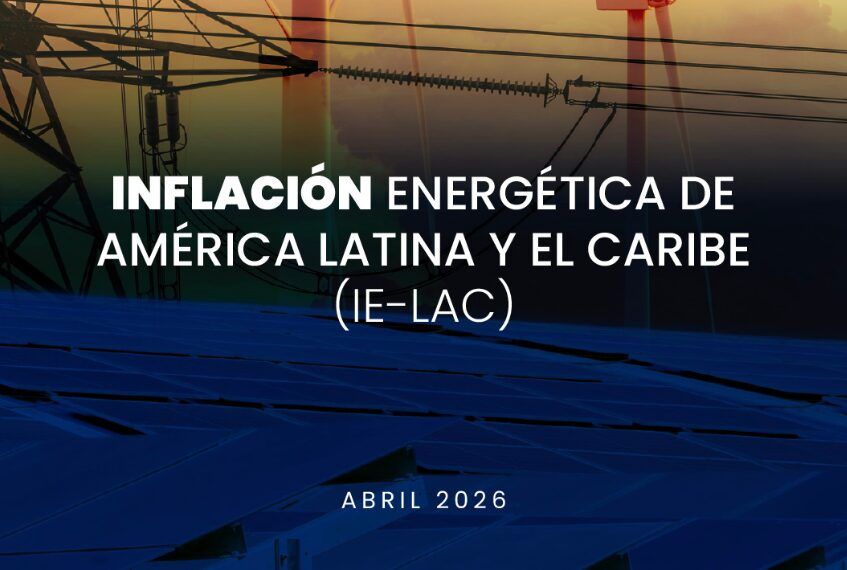
The Latin American and Caribbean Energy Organization (OLACDE) presented its most recent Energy Inflation report (IE-LAC), revealing that the region began the year with a negative variation of -0.11% in sector prices. This decline, which contrasts with the increase in general inflation (0.35%), marks a trend of relief in energy costs for regional consumers ahead of recent pressures in international markets.
This behavior responds mainly to the strengthening of renewable generation —especially hydro and solar— and to strategic adjustments in electricity subsidies in 11 of the 20 countries analyzed. According to the report, the region’s energy infrastructure is not only advancing toward decarbonization, but is also acting as a critical buffer against the volatility of external prices, stabilizing marginal operating costs.
Technical data from the report:
Monthly variation: Energy inflation went from 0% in December 2025 to -0.11% in January 2026.
Coverage: 55% of the countries in the region recorded a net decrease in their energy prices.
Market contrast: While energy prices fell, categories such as food, health, and education pushed total inflation upward.
- Total inflation rises from 0.30% to 0.35%.
Main drivers:
- Higher renewable generation (hydro and solar) → reduction of marginal costs.
- Increase in electricity subsidies → tariff relief.
Commodities: Despite the regional relief, WTI crude and natural gas began an upward trend since December 2025 due to seasonal and supply factors.
-
- Oil (WTI): downward trend in 2025, with an upward turn since December 2025.
- Natural gas: increase due to seasonal demand in the northern hemisphere.
- Coal: sustained growth due to higher demand and supply restrictions associated with climate regulations.
For more information and access to the full report: https://www.olacde.org/publicaciones/abril-2026reporte-n-23-inflacion-energetica-de-america-latina-y-el-caribe-ie-lac/