The inflationary truce the energy sector of Latin America and the Caribbean (LAC) had been experiencing has come to an end. After hitting its lowest level of the period analyzed in February 2026 — close to zero — regional energy inflation accelerated steadily from March onward, driven by geopolitical tensions in the Middle East and the Strait of Hormuz.
According to our report, the region’s year-over-year energy inflation jumped to 2.12% in March, climbed to 4.52% in April, and rose to 6.41% in May 2026. May’s figure is triple the rate reported just two months earlier.
By contrast, the overall price index in LAC showed more stable performance, registering moderate variations in recent months (closing at 4.13% in May). This gap reflects that the general index better absorbs the impacts thanks to a broad basket of goods and services, while the energy sector directly absorbs the global shock.
Fuel prices
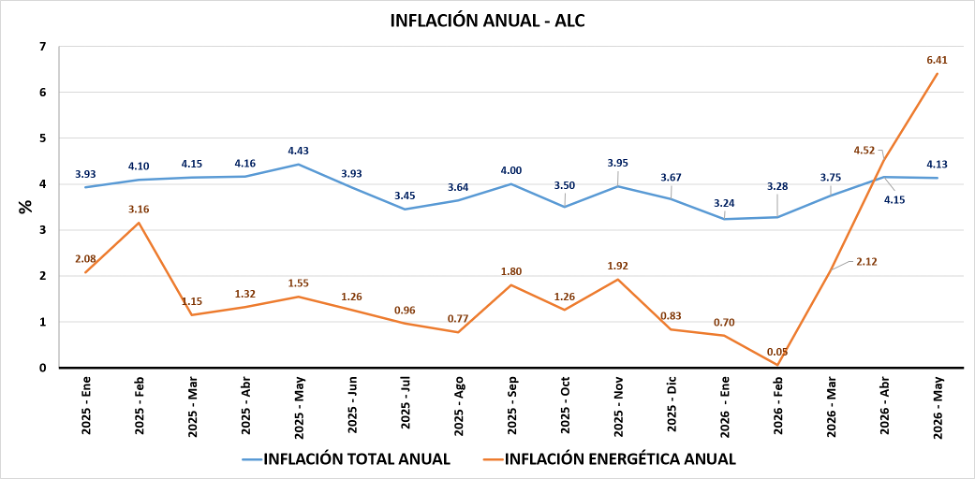
Source: Prepared in-house using data from the Statistics Institutes and Central Banks of OLACDE Member Countries
Fuel prices
The international escalation is keeping import, refining, transportation, and marketing costs under pressure across the region. As a result, final consumer prices remain above pre-conflict levels in the Middle East:
• Gasoline: The average price remains 16% above its reference level, showing greater resistance to declining.
• Diesel: Registers a 13% difference on the upside, despite a slight partial correction in recent weeks.
OLACDE notes that pressure on domestic prices persists even as global crude markets begin to ease. The pass-through of this international shock to fuel pumps has been neither immediate nor uniform, due to factors such as inventories purchased at earlier costs, taxes, subsidies, and national price stabilization mechanisms.
Access the full report here: https://www.olacde.org/publicaciones/juio-2026reporte-n-26/