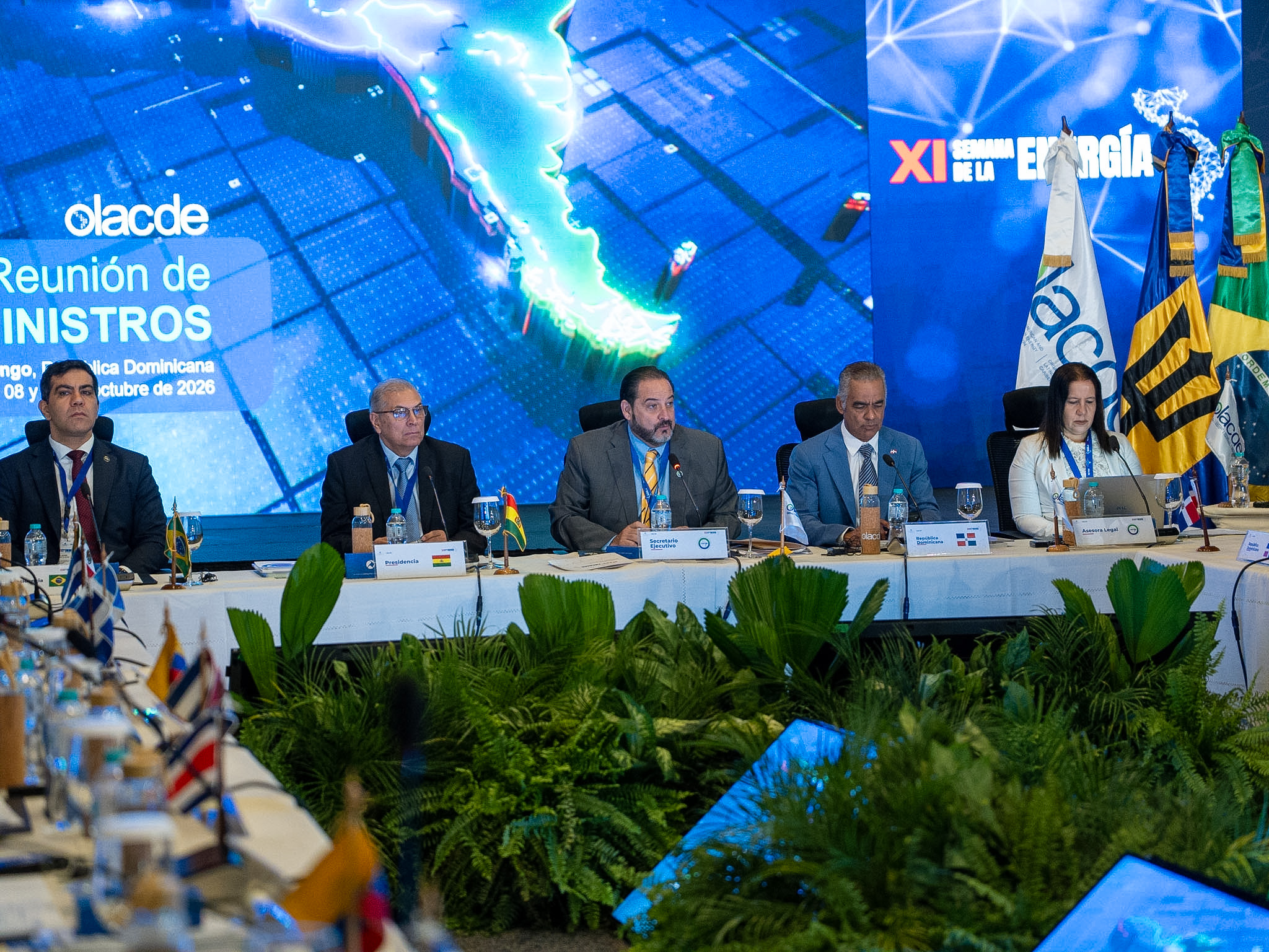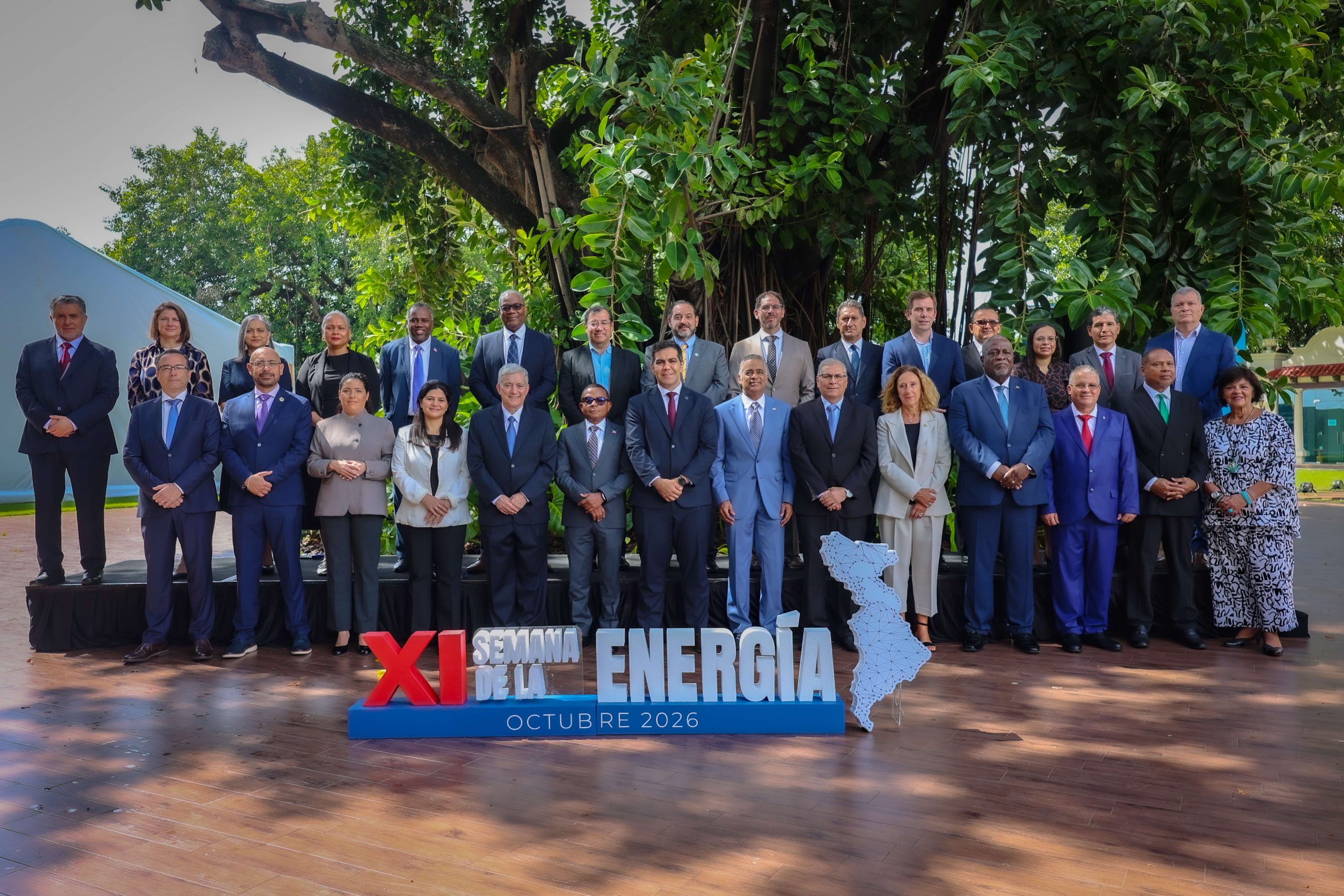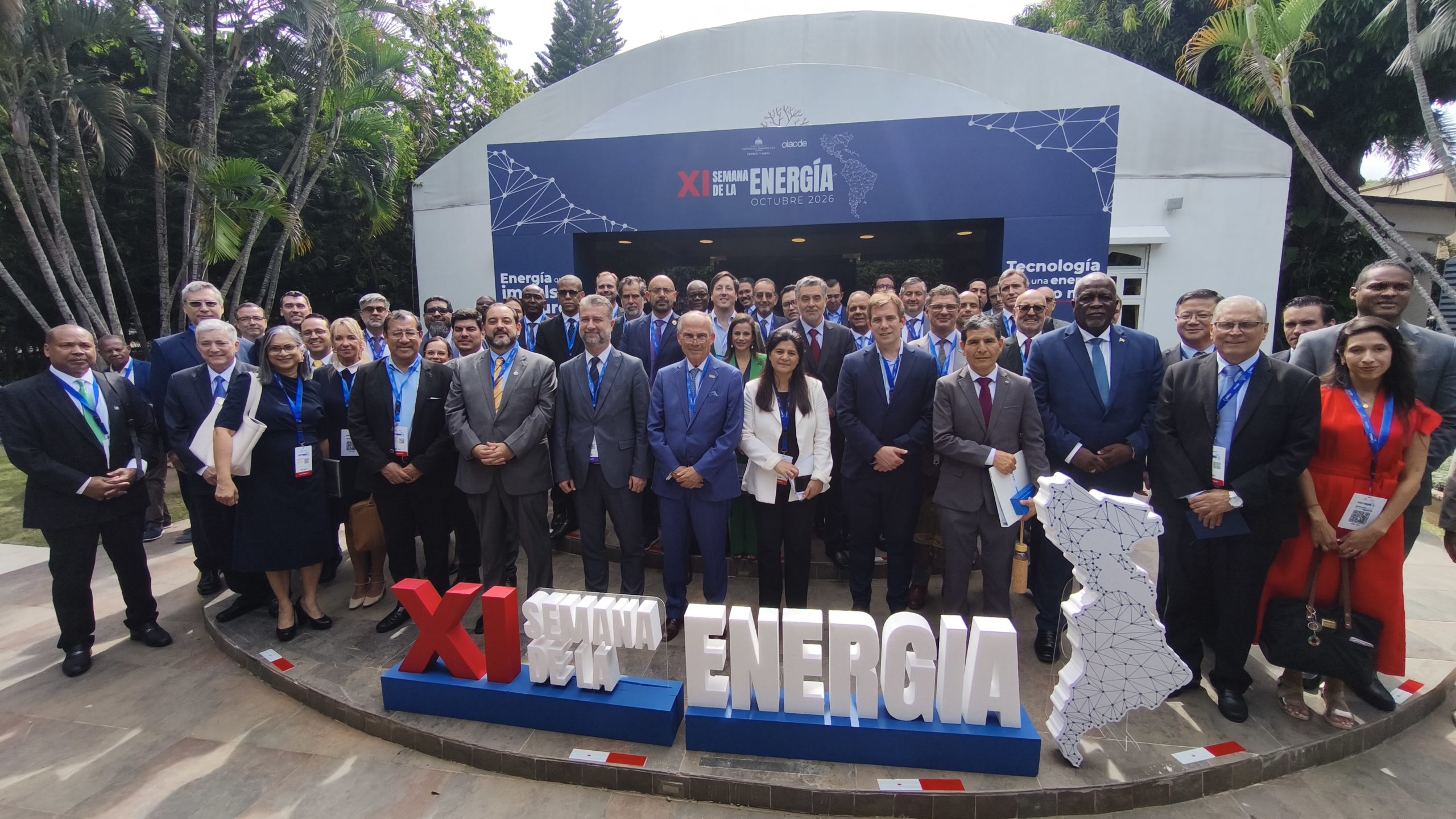
The Fourth Public-Private Dialogue of OLACDE’s Business Council opened on Thursday in the Dominican capital during Energy Week, bringing together governments, leading companies and academia to align strategic priorities. The meeting seeks to translate policy discussions into concrete action to strengthen energy security and accelerate a just transition in Latin America and the Caribbean.
During the opening plenary, the Business Council—the business policy forum of the Latin American and Caribbean Energy Organization—examined the impact of the international geopolitical situation. Global tensions have driven a 45% increase in oil prices since February 2026, with peaks above US$110 per barrel following attacks in the Strait of Hormuz, directly affecting domestic prices, inflation and fiscal balances across the region. Against this backdrop, regional energy inflation rose sharply, from 0.05% in February to a peak of 8.03% in June 2026.
Strategic priorities and thematic working groups
To address structural challenges, the Council organized its discussions into four thematic working groups in partnership with international strategic partners:
Working Group 1: Hydrocarbons and Natural Gas, held in partnership with ARPEL, highlighted the region’s growing role as a global production powerhouse. Output increased from 7.5 million barrels per day in 2020 to 10 million in 2026, accounting for 10% of global production, driven by Guyana, Brazil and Vaca Muerta. Discussions also addressed progress in natural gas integration across the Southern Cone, Central America and the Caribbean.
The group acknowledged that hydrocarbons will continue to play a role, requiring the industry to adopt technologies to detect leaks and losses in production and transportation to meet decarbonization, energy security and competitiveness objectives, while strengthening the region’s position as a reliable global energy supplier. It therefore called on OLACDE to advance the standardization of permitting procedures, promote regulatory dialogue and position the region to attract new investment.
Working Group 2: Demand Decarbonization, held in partnership with the World Economic Forum (WEF), addressed the management of complex systems amid rising electricity demand driven by mobility and data centres.
To meet this challenge, the group highlighted the need to translate regional potential into bankable projects and advance integration through hubs and corridors that create scale and demand. It also emphasized prioritizing decarbonization to strengthen energy security and competitiveness, while accelerating implementation through incremental solutions and close public-private coordination.
Working Group 3: Renewable Energy, held in collaboration with IRENA, focused on making projects bankable, developing grid infrastructure and ensuring resilience as systems accommodate a 20% share of variable renewable energy, taking into account the region’s 3.4 gigawatts of installed battery storage capacity.
To achieve these goals, the group highlighted the importance of establishing rules that allow renewables to compete on a level playing field, reducing risks and unforeseen obstacles that increase costs or hold back investment, and shortening actual project development and implementation timelines. It stressed that further progress on decarbonization requires a new regulatory framework rather than adjustments to existing regulations. The group also emphasized the need for planning that accounts for new technologies, stronger technical and institutional capacity, and sustained progress towards regional integration.
Working Group 4: Energy Security, held in partnership with CCREEE, examined macroeconomic vulnerabilities, financing and regional integration to protect sectors exposed to price fluctuations. The Business Council reaffirmed that current challenges—including the transition towards a projected 35% share of electricity in energy demand by 2050 and the management of complex grids—require effective, sustained coordination between the public and private sectors.
To address these needs, the group highlighted the urgency of securing financing for strategic energy security projects, particularly in the Caribbean; promoting active cooperation among multilateral organizations, countries and financial institutions; and developing comprehensive planning that incorporates the full costs of energy security and the transition.