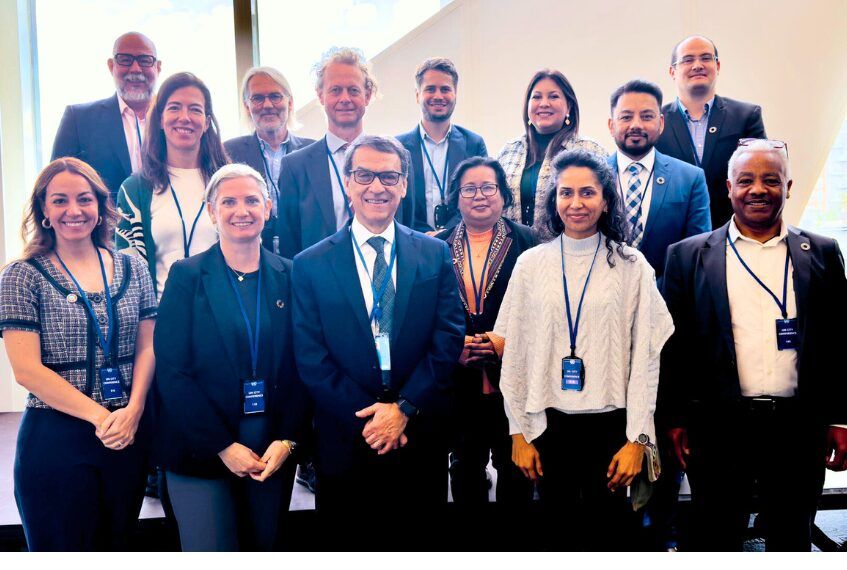
Gloria Alvarenga, Director of Integration, Access and Energy Security at the Latin American and Caribbean Energy Organization (OLACDE), held an active work agenda during the Sixth Global Conference on Energy and SDG Synergies, organized by UNDESA, UNFCCC and multilateral organizations.
During the technical forum on water-energy synergies, Alvarenga stated: “There is no energy transition without water, nor sustainable access to water without energy.”
In her remarks, she highlighted the relevance of hydropower in Latin America and the Caribbean, as well as its vulnerability to the impacts of climate change. She also underscored the potential of solutions such as solar microgrids, renewable desalination plants and biogas systems for rural and indigenous communities.
In the session focused on Sustainable Development Goal 7 (Affordable and Clean Energy), Alvarenga warned that 17 million people in the region still lack reliable access to energy. She proposed accelerating the deployment of decentralized technologies, such as microgrids in the Amazon or hybrid systems in Andean areas, accompanied by public policies with a gender and territorial focus.
She also addressed financing challenges, calling for greater climate investment to be channeled toward local energy adaptation solutions.
During her participation, she held a bilateral meeting with the Guatemalan Sugar Producers Association (Asazgua) and the Latin American Union of Sugar Producers (UNALA), with whom she agreed to strengthen regional alliances to promote biomass and cogeneration as part of the Global Network of Sustainable Water-Energy Solutions promoted by UNDESA.
Finally, at the side event “Promoting Climate-SDGs Synergies Through Energy Action,” Alvarenga reaffirmed OLACDE’s commitment to energy planning aligned with the Sustainable Development Goals (SDGs) and climate resilience.
“We must move from fragmentation to synergy, and from isolated resilience to shared resilience.”
She closed by highlighting the need for clear regulatory frameworks, inclusive financing and interoperable data to accelerate climate action from the energy sector.