Latin America and the Caribbean Strengthens Its Climate Agenda with a Focus on Methane at Regional Summit in Peru

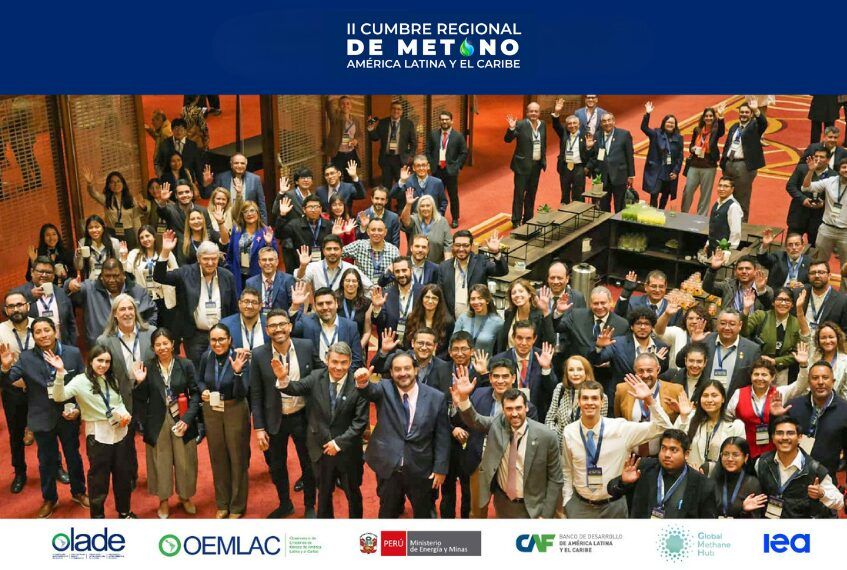
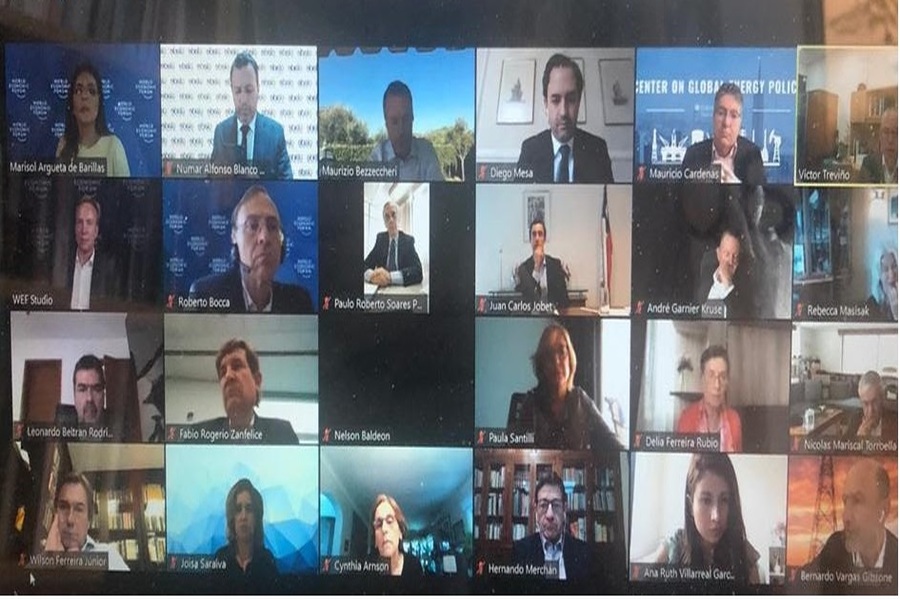
The city of Lima hosted the Second Regional Latin American and Caribbean Methane Summit, held on July 23 and 24. The event established itself as a milestone on the regional climate calendar, bringing together senior ministerial officials, representatives of the energy sector, multilateral organizations, and international experts to discuss concrete solutions for mitigating methane emissions, one of the greenhouse gases.

The summit was organized by the Latin American and Caribbean Energy Organization (OLACDE), the Development Bank of Latin America and the Caribbean (CAF), the Global Methane Hub (GMH), Peru’s Ministry of Energy and Mines, and the International Energy Agency (IEA).

During the opening session, Peru’s Vice Minister of Electricity, Iris Cárdenas, emphasized that one ton of methane has an impact equivalent to 28 tons of CO2, making its control a cost-effective strategy for meeting the Paris Agreement, protecting public health, and promoting a low-emissions economy. She also reaffirmed the country’s commitment to developing natural gas as a transition energy source.

Marcelo Mena, CEO of the GMH, noted that Latin America and the Caribbean is a world leader in renewable energy share and has a growing number of companies committed to measuring and reducing methane. He warned that climate change is increasing global economic risks: “as the temperature rises, the world becomes less insurable,” while Santiago Rojas, CAF’s regional manager, praised the creation of the Methane Emissions Observatory as a key tool for consolidating regional reduction commitments.

OLACDE’s Executive Secretary, Andrés Rebolledo, pointed out that, despite accounting for only 5% of global natural gas production, Latin America concentrates 30% of the regional energy sector’s emissions linked to oil and gas. Rebolledo highlighted the role of natural gas and the importance of advancing energy integration through existing infrastructure such as the region’s 70,000 kilometers of pipelines.

The summit included 11 thematic panels, with more than 40 speakers and representatives from 22 countries. Topics addressed included financing mechanisms for methane mitigation, the development of biomethane as a decarbonization alternative, regulatory frameworks, and the current status of NDCs within the context of climate negotiations.

Successful experiences from companies, governments, and public-private partnerships in implementing technologies and policies for measuring, reporting, and verifying emissions were also shared.

At the closing session, Gastón Siroit, director of the Methane Emissions Observatory (OEMLAC), called for strengthening collaborative work among governments, parliaments, academia, multilateral organizations, and the private sector:

“Collective commitment was key to the success of this summit. We must keep these shared efforts alive and continue driving forward an agenda that links regulation, financing, data, and technological innovation as pillars of sustainable development.”

With this summit concluded, the region is moving more firmly toward coordinated climate action, with an emphasis on methane as a strategic vector for accelerating the energy transition and strengthening regional resilience.
Share this news

Latin America and the Caribbean Strengthens Its Climate Agenda with a Focus on Methane at Regional Summit in Peru

Newsletter summary

The city of Lima hosted the Second Regional Latin American and Caribbean Methane Summit, held on July 23 and 24. The event established itself as a milestone on the regional climate calendar, bringing together senior ministerial officials, representatives of the energy sector, multilateral organizations, and international experts to discuss concrete solutions for mitigating methane emissions, […]

Knowledge and Training

We promote advanced technical training programs that facilitate the exchange of experiences, as well as the development of the human and institutional capacities needed to support the energy transformations in our region.

Our academic offering includes executive programs, postgraduate diplomas, master’s degrees, and innovative initiatives focused on topics such as energy transition, conventional energy, renewable energy, e-mobility, and regional integration.

OLACDE creates a regional network focused on energy knowledge that connects governments, young professionals, academics, and sector experts to drive collaborative solutions through technical cooperation and talent development to address future energy and climate challenges.

Technical cooperation and financing

We strengthen South-South and triangular cooperation ties as drivers to accelerate energy transitions in Latin America and the Caribbean. OLACDE brings together efforts among governments, multilateral organizations, academic institutions, and the private sector to mobilize financing, technical capacities, and innovative solutions tailored to our regional reality.

We promote strategic initiatives aimed at directing resources toward projects focused on decarbonization, conventional energy, renewable energy, and energy justice, with the objective of establishing a more efficient, inclusive, and sustainable regional cooperation architecture.

Regional Energy Community

We are building a regional energy community with a global outlook that seeks to position Latin America and the Caribbean as a key player on the international stage. OLACDE strengthens its representation in major multilateral forums related to energy, trade, and climate by fostering strategic alliances and promoting international cooperation.

Through events such as Energy Week, together with new spaces for international dialogue, we promote a collective voice that helps attract financial investment and create new opportunities for sustainable development across our region.

Energy Transition and Strategic Projects

We drive an energy transition based on principles of sustainability, energy security, and social inclusion. OLACDE supports countries in adopting new technologies related to energy efficiency, energy storage, green hydrogen, electromobility, and grid digitalization to accelerate the sector’s decarbonization process.

Our approach also includes promoting strategic projects that strengthen energy resilience at the regional level, contributing to emission reductions while consolidating a cleaner and more competitive energy infrastructure. Initiatives such as OEMLAC position our region as a leading reference in climate innovation and sustainable energy transition.

Energy information and data

We develop regional platforms dedicated to energy information, technical analysis, and strategic data systems that strengthen both public and private decision-making in the sector. OLACDE promotes the digital transformation of the sector through the use of artificial intelligence, georeferencing, and advanced tools for regional energy analysis.

The integration of systems such as SieLAC, together with new regional platforms, allows for the consolidation of reliable and up-to-date technical information, facilitating modern, interoperable, and evidence-based energy planning.

Regional Energy Integration

We promote cooperation in the regional energy sector, focused on collaboration, infrastructure development, and regulatory harmonization, with the objective of strengthening energy security in Latin America and the Caribbean. OLACDE coordinates projects related to electrical interconnection, gas integration, and regional energy planning, seeking to create efficient and sustainable partnerships.

Through cooperation with the governments of our 27 member countries, regional blocs, multilateral institutions, and both public and private stakeholders, we drive strategic initiatives that promote regulatory harmonization and new energy exchange mechanisms, in order to enhance national capacities and accelerate an integrated energy transition at the regional level.