As part of the Future Energy Summit Southern Cone 2025, held in Santiago, Chile, OLACDE’s Executive Secretary, Andrés Rebolledo, moderated two strategic panels dedicated to analyzing public policy priorities and the challenges of energy development in Latin America and the Caribbean.
In the panel “Public policy priorities on energy for the incoming Government,” Rebolledo highlighted the importance of having spaces for cross-cutting dialogue among authorities, experts and stakeholders in the energy sector, stressing that these forums are essential for shaping public policies that drive the energy transformation and strengthen regional leadership. In his words, “this panel reflects the institutional value of engaging in cross-cutting dialogue on the energy agenda and projecting a vision for the region’s future.”
During the discussion, the panelists agreed on the need to strengthen public and institutional trust in the sector, move toward a consensus-based roadmap to guide the energy transition, and address the challenges linked to costs, supply security and regulatory modernization. The urgency of deep reforms in distribution, adjustments to transmission systems and a progressive approach toward new generation models was emphasized. Likewise, the importance of coordinating technical-political leadership, improving communication with citizens and promoting investment in human capital to meet current technological and climate demands was highlighted.
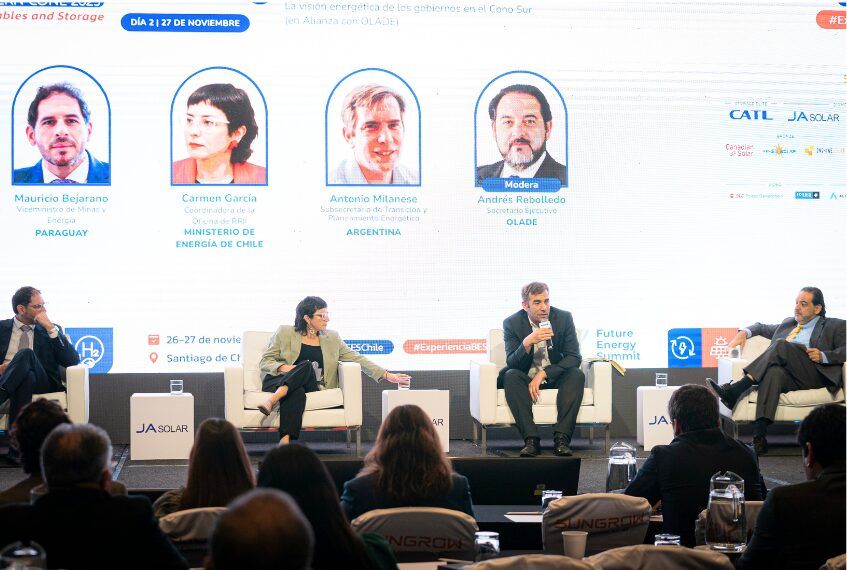
On the second day of the event, Rebolledo moderated the opening panel titled “The energy vision of governments in the Southern Cone,” which addressed the sector’s main priorities, opportunities and challenges in the region. He underscored the importance of coordinating efforts between the public and private sectors to move toward sustainable energy development, stating that “having the opportunity to hear firsthand the vision of those who play roles in planning and regulation is fundamental for energy development.”
In this panel, Paraguay highlighted the need to diversify its generation matrix in light of the rapid growth in electricity demand driven by new industries, emphasizing work on regulatory frameworks and incentives for self-generation and cogeneration. Chile presented its long-term goals for a more renewable matrix by 2030 and an emissions-free matrix by 2050, underscoring the relevance of regional integration, regulatory harmonization, strengthening transmission, and promoting green hydrogen and electromobility. Argentina, for its part, described its process of normalizing the energy market after years of subsidies and regulations, moving toward a more competitive scheme with an emphasis on thermal and renewable generation, as well as demand management to strengthen energy security.
OLACDE’s participation in the Future Energy Summit Southern Cone 2025 reaffirms its commitment to promoting technical dialogue, regional cooperation and the construction of policies that drive a just, sustainable energy transition aligned with the needs and potential of Latin American and Caribbean countries.