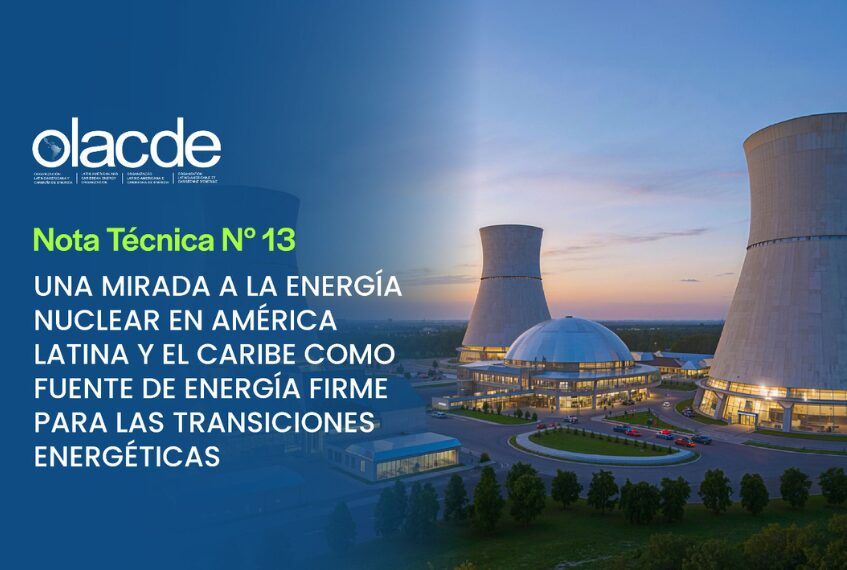
According to OLACDE’s Technical Note No. 13, titled “A Look at Nuclear Energy as a Firm Energy Source in the Energy Transitions of Latin America and the Caribbean,” nuclear energy reaffirms its relevance as a firm, reliable and low-CO₂-emission source, indispensable for achieving the region’s energy transition goals.
The document highlights the strategic role nuclear energy can play in diversifying the regional energy matrix by reducing dependence on fossil-fuel-based thermoelectric plants. Currently, its use for electricity generation in Latin America and the Caribbean is concentrated solely in Argentina, Brazil and Mexico, which together account for an installed capacity of 5,353 MW, representing just 1% of the region’s total capacity.
Argentina has 1,755 MW, equivalent to 4% of its installed capacity, and has extended the operational life of strategic plants such as Embalse by an additional 30 years. Brazil has 1,900 MW, representing 1% of its installed capacity, while Mexico operates 1,608 MW through the Laguna Verde Nuclear Power Plant, owned by the Federal Electricity Commission (CFE).
Despite its low current share, several countries in the region that do not yet have this technology are actively considering it in their medium- and long-term expansion plans. One example is Ecuador, which has signed a memorandum of understanding with the International Atomic Energy Agency (IAEA) to explore the peaceful use of nuclear energy and advance the diversification of its energy matrix.
However, the development of nuclear energy in the region faces significant challenges, including financial viability, due to the high investments required for construction, operation and decommissioning; strengthening a robust regulatory and safety framework, with independent authorities and compliance with international treaties such as the Treaty on the Non-Proliferation of Nuclear Weapons (NPT) and IAEA agreements; the safe long-term management of radioactive waste; the training of highly specialized human resources; and social and political acceptance, which requires public participation processes, transparency and ongoing communication.
OLACDE stresses that countries opting to develop this technology must build comprehensive infrastructure, including clear policies for the entire fuel cycle, decommissioning plans from the project design stage onward, as well as a robust radiological safety and protection system, ensuring that nuclear energy can contribute responsibly and sustainably to the energy transition of Latin America and the Caribbean.
Read the full technical note: https://www.olacde.org/publicaciones/nota-tecnica-n-13-energia-nuclear/