

The post-pandemic scenario could open space for business models supported by renewable energies
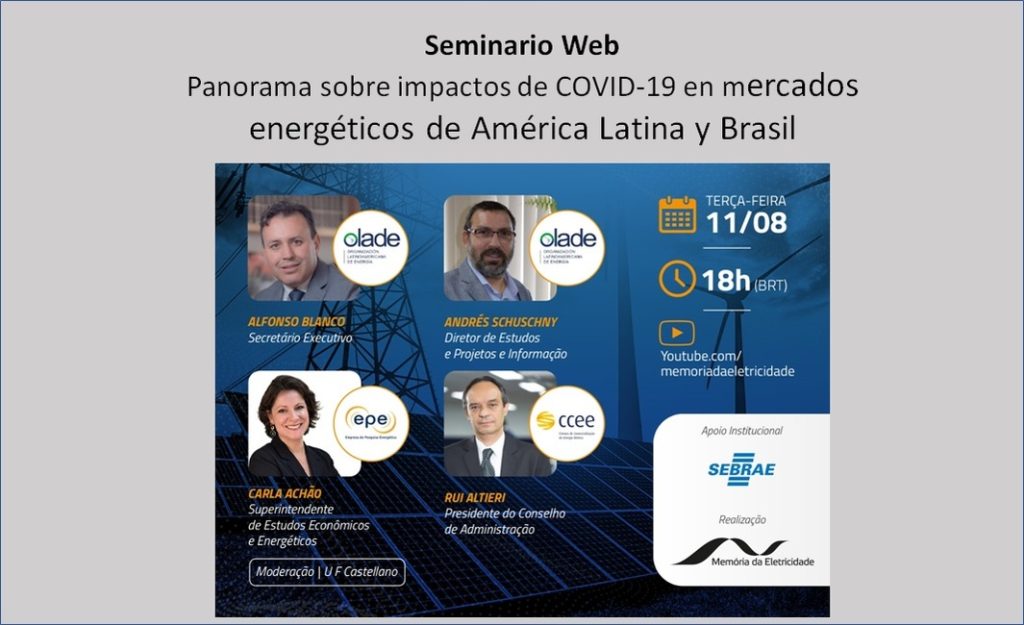
The Web Seminar “Outlook on the impacts of COVID-19 in energy markets in Latin America and Brazil”, promoted by Memória da Eletricidade with the collaboration of the Sustainable Campus – Unicamp project and the support of Sebrae, held on August 11, 2020, featured with a massive virtual call from the energy sector community in the region. Space where The Latin American and Caribbean Energy Organization (OLACDE) participated in conjunction with the Empresa de Pesquisa Energética (EPE) and the Câmara de Comercialização de Energia Elétrica (CCEE).
The Executive Secretary of OLACDE, Alfonso Blanco, in his presentation on the outlook of the impacts of COVID-19 in the energy sector of Latin America and the Caribbean, explained that “the post-pandemic scenario is going to have an even greater impact on the economies of countries that are oil exporters, since the regional oil-exporting economies, faced with a sharp drop in international demand, are also seeing their fiscal income reduced ”.
In this context, the Executive Secretary of OLACDE predicts that the economies of Latin America and the Caribbean will contract between 3% and 15%, as a consequence of the increase in the fiscal deficit, which has been generated by a fall in tax collection and an increase of public spending due to the pandemic.
On the other hand, he stated that this situation could open space for business models supported by renewable energies and could even be an opportunity to accelerate the energy transition, with the help of public policies that allow the creation of new associations that help to overcome the economic crisis and to accelerate the desired transition.
In this regard, he explained that the contraction in demand, which has a direct cause in the containment measures, impacts the commercial and services sector that are the most affected, but highlights that in parallel to this there was a change in consumption patterns. “Consumers adopted new consumption patterns in many things: telework is present, electric mobility may have a greater development as a result of this pandemic, aspects associated with smart grids, self-production of energy, distributed generation, are elements that we are going to have to keep in mind and that we are going to have to incorporate. We are facing a change of era ”.
In the intervention of the Director of Studies, Projects and Information of OLACDE, Andrés Schuschny, the disaggregated data of several countries in the region was presented and the drop in production was analyzed. He reported that a decrease of between 6% and 32% was evidenced in the demand for electricity in the countries of Latin America and the Caribbean with respect to the situation prior to social isolation by COVID-19.
The Director of Studies, Projects and Information of OLACDE, pointed out that Peru suffered the greatest drop in demand, reaching a reduction of almost 36%, followed by Bolivia with 29%, Argentina with 26%, Colombia and Ecuador 16%, Panama 15 %, Uruguay 14% and Chile 6%.
To this, he added that the generation of hydroelectric energy was favored because many thermal plants had to be shut down due to this decrease and pointed out as an example the case of Peru, where the production of electrical energy on average fell 32% since the declaration of quarantine of the March 15, 2020, while there was a significant reduction in the contribution of natural gas to the energy matrix, going from 25% to 5% on average and currently hydraulic energy reaches close to 90% participation.
For her part, EPE’s Superintendent of Economic and Energy Studies, Carla Achão, conducted an in-depth analysis of energy demand in Brazil, highlighting not only the impacts of COVID-19 on energy consumption, but also the vision of the EPE on market prospects. Despite the slight recovery in June, Carla Achão pointed out that the negative result expected for 2020 represents a continuation of the trajectory of the crisis and the low growth that has occurred since 2015.
Rui Altieri, Chairman of the CCEE Board of Directors, presented the impacts of the pandemic on electricity consumption, pointing to a greater drop for the month of April, reaching 12.1%. It also showed a gradual and more positive resumption starting in May. Furthermore, compared to the period when social isolation began, Rui Altieri showed that the impact of the crisis was less intense in the free market than in the regulated market.
Communication Department
and Institutional Relations
gabriela.jarrin@OLACDE.org
OLACDE together with the IDB strengthen capacities in the management of energy information at the regional level
The Latin American and Caribbean Energy Organization (OLACDE) with the support of the Inter-American Development Bank (IDB), within the framework of the “Program to Strengthen the Management and Dissemination of Energy Information for Sustainable Development in Latin America and the Caribbean, from July 20 to August 11, 2020, carried out the “Training Workshop on Methodological Harmonization of Energy Statistics”, in virtual mode. This activity had the participation of 156 specialists from 19 countries in the region.
The first socialization activity of the project “Incidence of climate change in energy planning” begins in 11 beneficiary countries
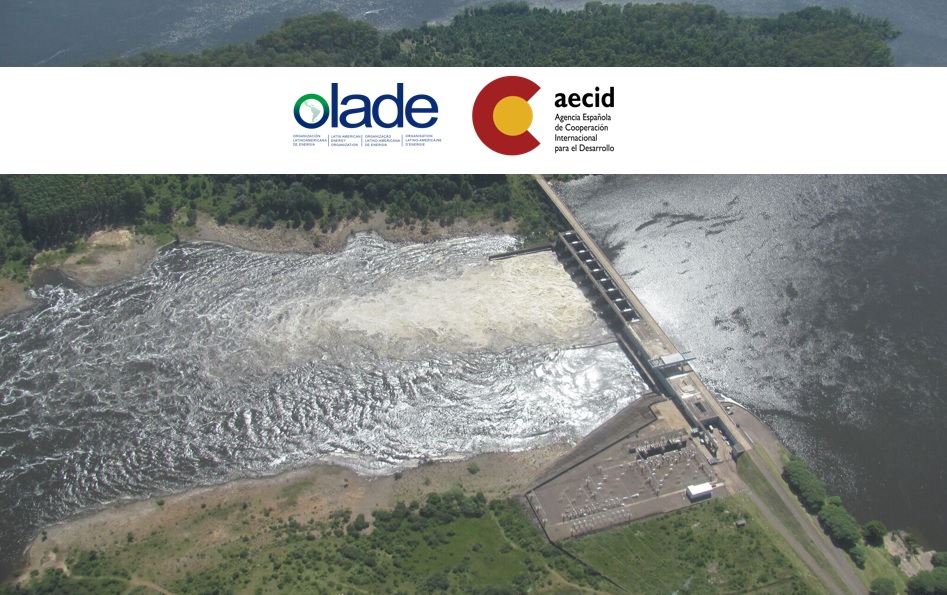
The Latin American and Caribbean Energy Organization (OLACDE) with the support of the Spanish International Cooperation Agency (AECID), in the context of the ARAUCLIMA initiative, is executing the project: Incidence of climate change in energy planning: Screening for global assessment of the vulnerability and climatic risks of the energy system of Latin America and the […]
How to boost private companies and implement energy efficiency programs with local governments was discussed during dialogue
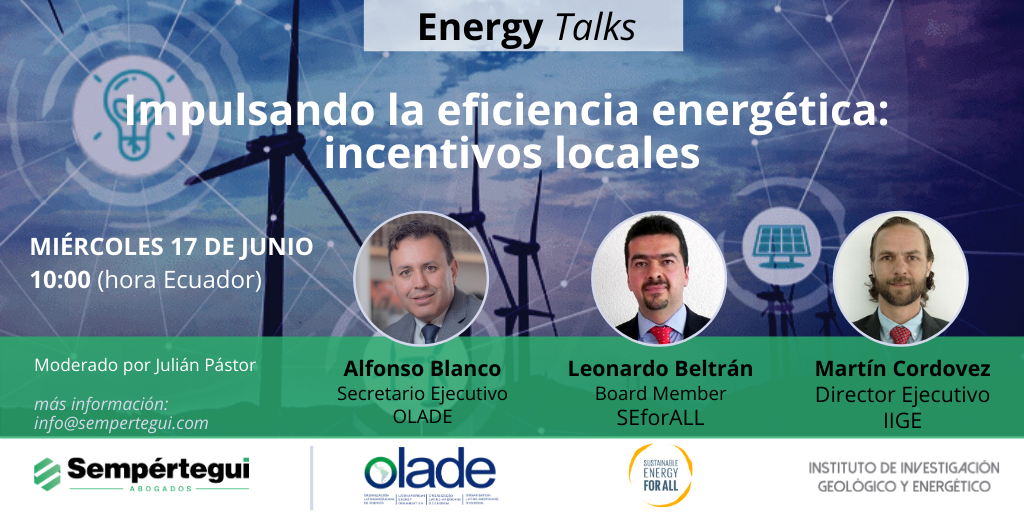
The Executive Secretary of The Latin American and Caribbean Energy Organization, Alfonso Blanco, during the dialogue “Boosting energy efficiency: local incentives”, organized by Sempértegui Abogados of Ecuador, mentioned some of the actions and barriers that exist around Energy Efficiency (EE) in the region, a space where the panel shared with the Executive Director of the […]
The Technological University of Uruguay has an 11 kW photovoltaic system as part of the ETRELA project activities
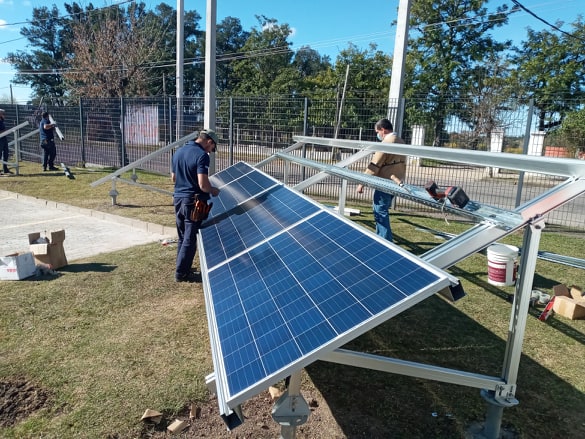
The Technological University of Uruguay in the city of Durazno has an 11 kW photovoltaic system connected to the grid, a system that includes an installation of 40 solar panels, of 275 Wp each, at two locations: on the roof (20) and on structures mounted on the ground (20). This system will benefit the processes […]
8 JUL 2020 OLACDE and IRENA Put Renewables at Heart of Post-Pandemic Economic Recovery in Latin America and the Caribbean
Accelerating renewables could bring 3 million jobs to Latin America as region battles COVID-19 Abu Dhabi, United Arab Emirates: July 8th, 2020 — The International Renewable Energy Agency (IRENA) and The Latin American and Caribbean Energy Organization (OLACDE) will boost ties to put the renewables driven energy transformation at the heart of Latin America and […]
Natural gas as a strategy to develop markets in the region and thus accelerate the decarbonisation of the regional energy matrix
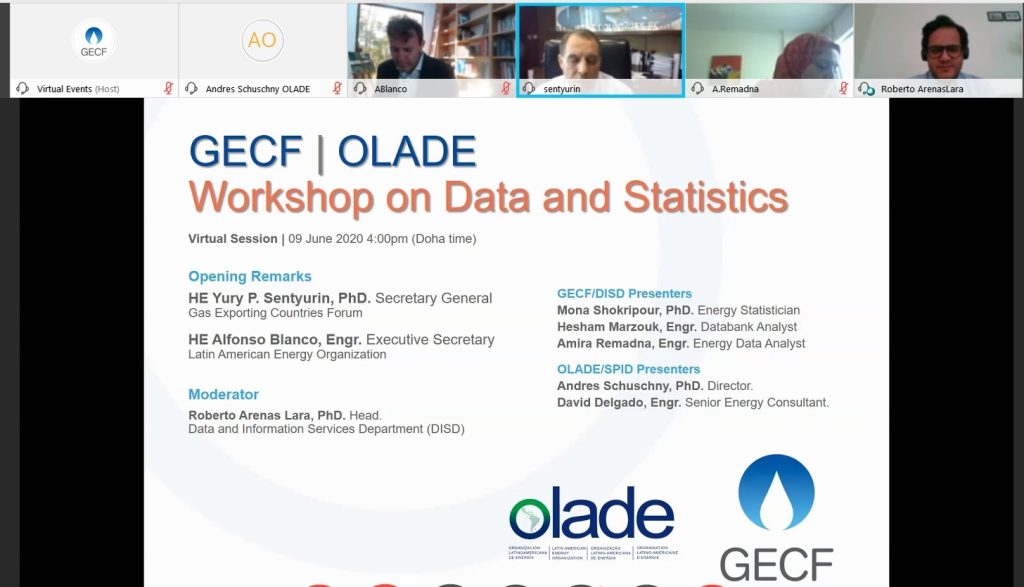
The highest authorities representing The Latin American and Caribbean Energy Organization and the Forum of Gas Exporting Countries (GECF), Alfonso Blanco and Yury P. Sentyurin, respectively, led the virtual session on the morning of June 9, 2020 on data and statistics, an activity carried out within the framework of the agreement between OLACDE and GECF. […]
In a new publication OLACDE analyzes the impacts of the COVID-19 pandemic on the LAC energy sector
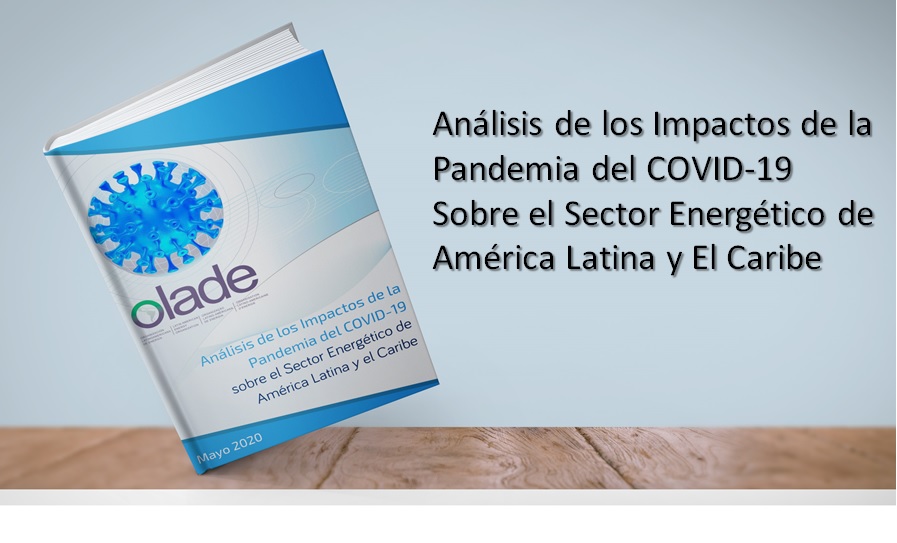
In a new publication, prepared by The Latin American and Caribbean Energy Organization (OLACDE), the impacts of the COVID-19 pandemic on the energy sector in Latin America and the Caribbean are analyzed; mainly the drop in energy demand by making an average comparison of the pre and post confinement situation, and taking as reference 2 […]
The first stage of the ETRELA project was completed
Within the framework of the ETRELA project, through the Renewables Academy-RENAC platform, five online courses were implemented for Argentina (2), Peru (2) and Uruguay (1) in the areas of energy efficiency and renewable energy. These courses were free to access and had 342 participants from 11 countries in the region. The virtual courses correspond to: […]
Covid-19: A challenge and an opportunity for renewable energy
#SectorEnergiaEnTiemposDePandemiaArticles and webinars on the health crisis analyzing the impact on the energy sector.Covid-19: Un reto y una oportunidad para las energías renovablesLa cara de la pandemiaEl mundo vive, desde el mes de marzo de 2020, una situación insólita nunca vista en la historia moderna. La pandemia del Nuevo Coronavirus o COVID19, que ha sumido […]
