


Infraestructura de la Calidad para Programas de Eficiencia Energética en América Latina y El Caribe
2019. The study describes the importance of energy policy in the context of climate change. It lists the key elements necessary for the conformity assessment and explains the relevance of these elements in the context of energy efficiency programs. It summarizes the experiences of cooperation among the various actors in the region and describes some practical examples of implementation in LAC countries. It is expected that this study becomes a reference that contributes to promoting the consolidation of the Quality Infrastructure and facilitates a greater coordination and integration on the subject among the countries of the region (avaliable only in Spanish).
Energy outlook of Latin America and the Caribbean 2018
2019. This publication offers more than 1000 graphs that detail the recent evolution of the energy matrices of the 27 Member Countries of OLACDE. The 2018 edition of the Energy Outlook contains the following topics: relevant events of 2017; origin of the indicators and sources of information used; methodology and definition of indicators; energy statistics and indicators of LAC and the world; energy profile of the Member Countries of the Organization; legislation, regulation and energy policy; and global and regional energy prospective for the period 2016 – 2040, using the model for the Simulation and Analysis of the Energy Matrix (SAME) of OLACDE.
Energy Barometer in Latin America and the Caribbean 2018
Energy planning must consider processes that include a wide range of perspectives generated by the different market players, since these expectations are what will condition future decision-making at the sector level, and that will allow them to articulate them with social, environmental and economic. OLACDE has developed the Latin American and the Caribbean Energy Barometer, […]
MRV Methodology For Energy Efficiency Implementation Measures In Commercial And Public Buildings For Countries Of The Caribbean Region
2018. The document offers a proposal of MRV (Measurement-Report-Verification) oriented to the application of efficiency measures for public and commercial buildings in the Caribbean. MRV is a fairly new concept, so it is recommended to adopt a two-stage approach to implement MRV. The first stage includes the domestic activities to be implemented. Then the MRV […]
Energy Access And Affordability. Voluntary Action Plan For Latin America And The Caribbean
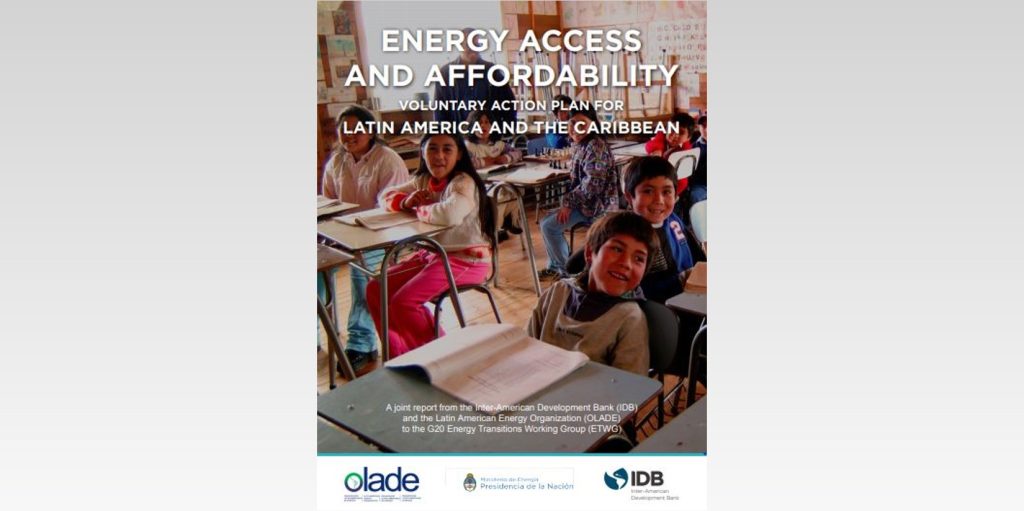
2018. This report from IDB and OLACDE sets out a set of voluntary actions to increase energy access in LAC, and it is structured as follow: the vision of the Argentine Presidency for the G20 as it relates to improving energy access and affordability in the LAC region; describes the issues relating to getting to […]
Energy Policy And Ndcs In Latin America And The Caribbean
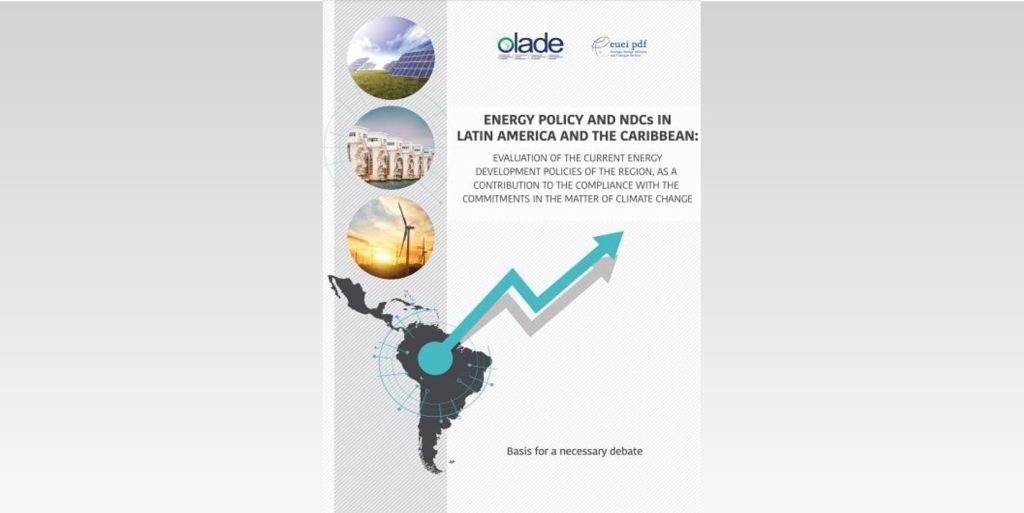
2018.This study analyzes the effectiveness of current energy development policies in the countries of Latin America and the Caribbean (LAC), as a contribution to achieving the goals set out in the NDCs, on reducing GHG emissions by 2030; and if necessary, more ambitious energy efficiency measures and penetration of renewable energy sources are proposed, which […]
White Paper. Tripartite Dialogues
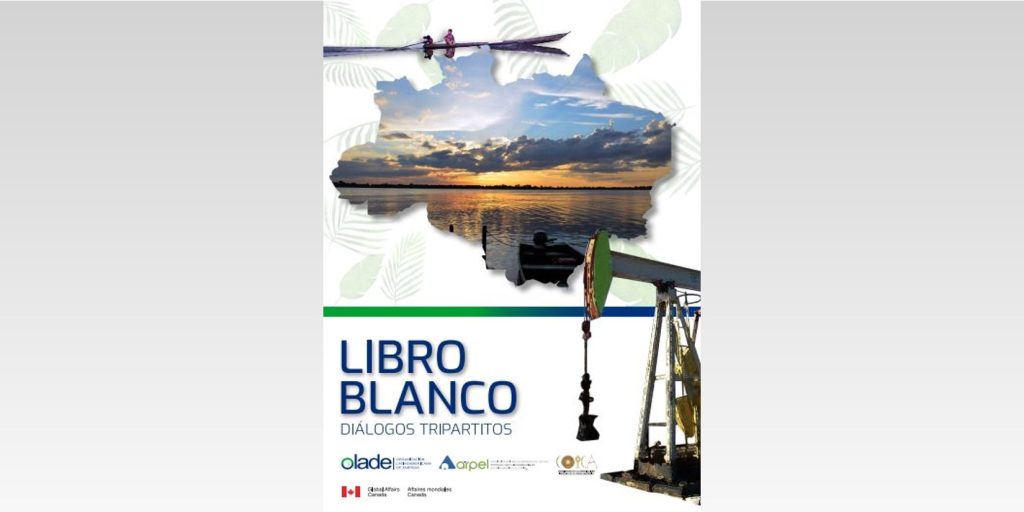
2018. The document focuses to the hydrocarbon field of the Amazon Basin and is addressed to the indigenous peoples, the State and the oil and gas companies that are part of the Prior Consultation and that interact in the territorial area of BO, CO, EC, PE and VE, and that recognize the right to Prior […]
Free, Prior and Informed Consultation. Challenges for its Application in the Hydrocarbon Sector
2018. Tripartite dialogue is a tool for citizen participation where individuals are part of the process of consultation and creation of proposals. This document is based on the search, systematization and analysis of the references of the dialogues implemented in BO, CO, EC, PE and VE within the framework of the EAP Program. (Available only […]
Energy Efficiency y Latin America and the Caribbean. Progress and Opportunities.
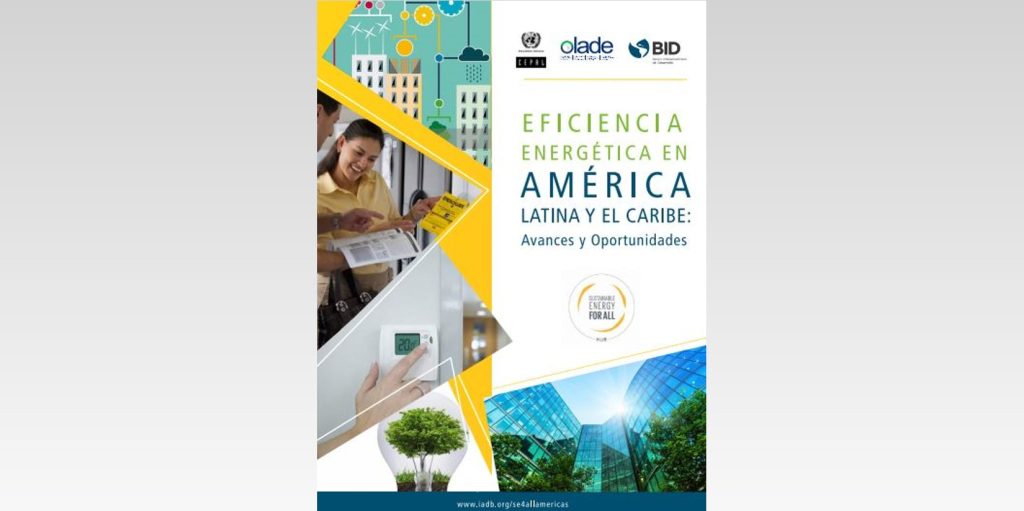
2017. The present work traces an overview of the state of the art of energy efficiency in Latin America and the Caribbean, it shows the results of the 2030 energy prospective study prepared for OLACDE and it seeks to harmonize the results of this study with world energy scenarios proposed by the International Energy Agency. […]
Energy Statistics Yearbook 2017
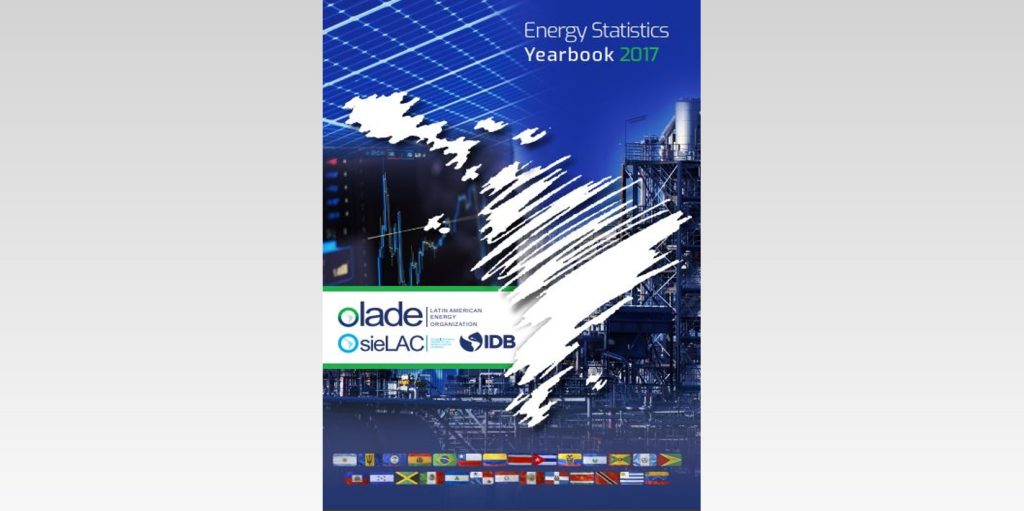
2017. OLACDE presents a renewed edition of the Energy Statistics Report that it offers annually. This Yearbook of Statistics provides graphically and easily, processed information that facilitates knowledge about the evolution of the different subsectors and main indicators that delineate a profile in energy subjects of the countries of the Organization.
