


OLACDE Drives Sustainable Energy Development in LAC Through 2025 Training Program
OLACDE presents its 2025 Training Program to promote a sustainable energy transition in LAC.
OLACDE and WMO sign Memorandum to boost the energy transition in LAC

OLACDE and WMO join forces to strengthen the energy transition in LAC.
CAF and OLACDE Complete the First Phase of the Mercosur Gas Integration Project

OLACDE and CAF announced the successful completion of the first phase of the Mercosur Gas Integration Regional Project.
OLACDE participates in the “First International Economic Forum of Latin America and the Caribbean in Panama”
The Latin American and Caribbean Energy Organization (OLACDE) participated in the First International Economic Forum of Latin America and the Caribbean
OLACDE and EUROCLIMA Successfully Conclude the BEU Project in Paraguay

OLACDE has successfully completed the intervention of the project “Preparation of the National Energy Balance in Useful Energy Terms for the Commercial, Services, and Public Sector of Paraguay” (BEU PY).
Energy inflation in Latin America and the Caribbean below OECD prices after nearly two years.
In November 2024, it was 0.03%, and the annual rate was 0.54%.
OLACDE participates in the XV Assembly of IRENA.
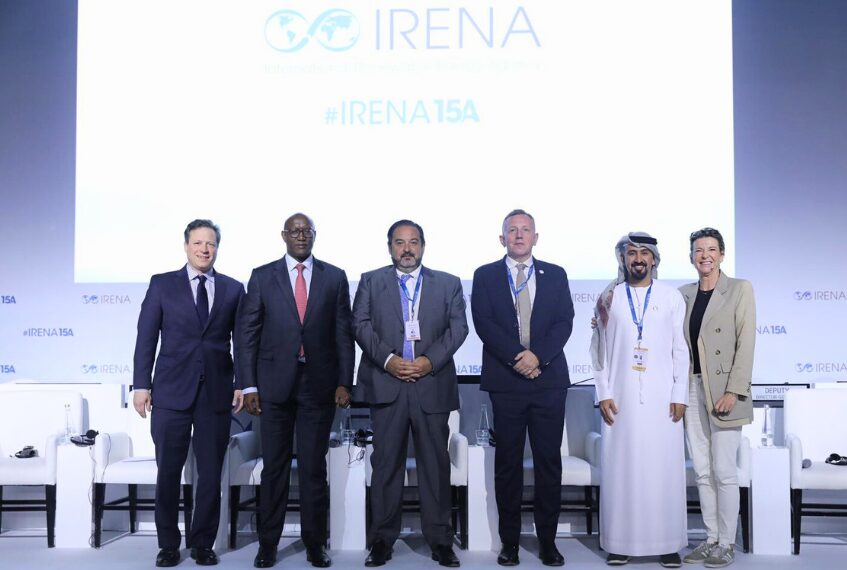
OLACDE called for strengthening regulatory frameworks, international cooperation, and climate financing to ensure renewable energy and universal access in the region.
First Study on Methane Emissions Inventory in Latin America and the Caribbean
The report highlights the development and maturity of national GHG inventory systems in LAC, showcasing notable progress in countries such as Argentina and Colombia.
OLACDE Launches the “2024 Energy Outlook for Latin America and the Caribbean”
Latin America and the Caribbean Accelerate Their Energy Transition: By 2024, 79% of new installed capacity will be renewable.
Offshore wind, nuclear, and storage: key energy trends in 2025, according to OLACDE
The organization warned that despite the region having ample potential and the necessary primary energy resources for the accelerated decarbonization of the power generation matrix, “it would not necessarily have the economic or financial resources required for this transition.
