The Latin American and Caribbean Energy Organization (OLACDE) has published its Energy Inflation Indicator for Latin America and the Caribbean (IE-LAC) for February 2025. This report offers a detailed analysis of energy trends in the region, which is crucial for understanding the behavior of energy markets and their impact on the economy and sustainability of Latin American and Caribbean countries.
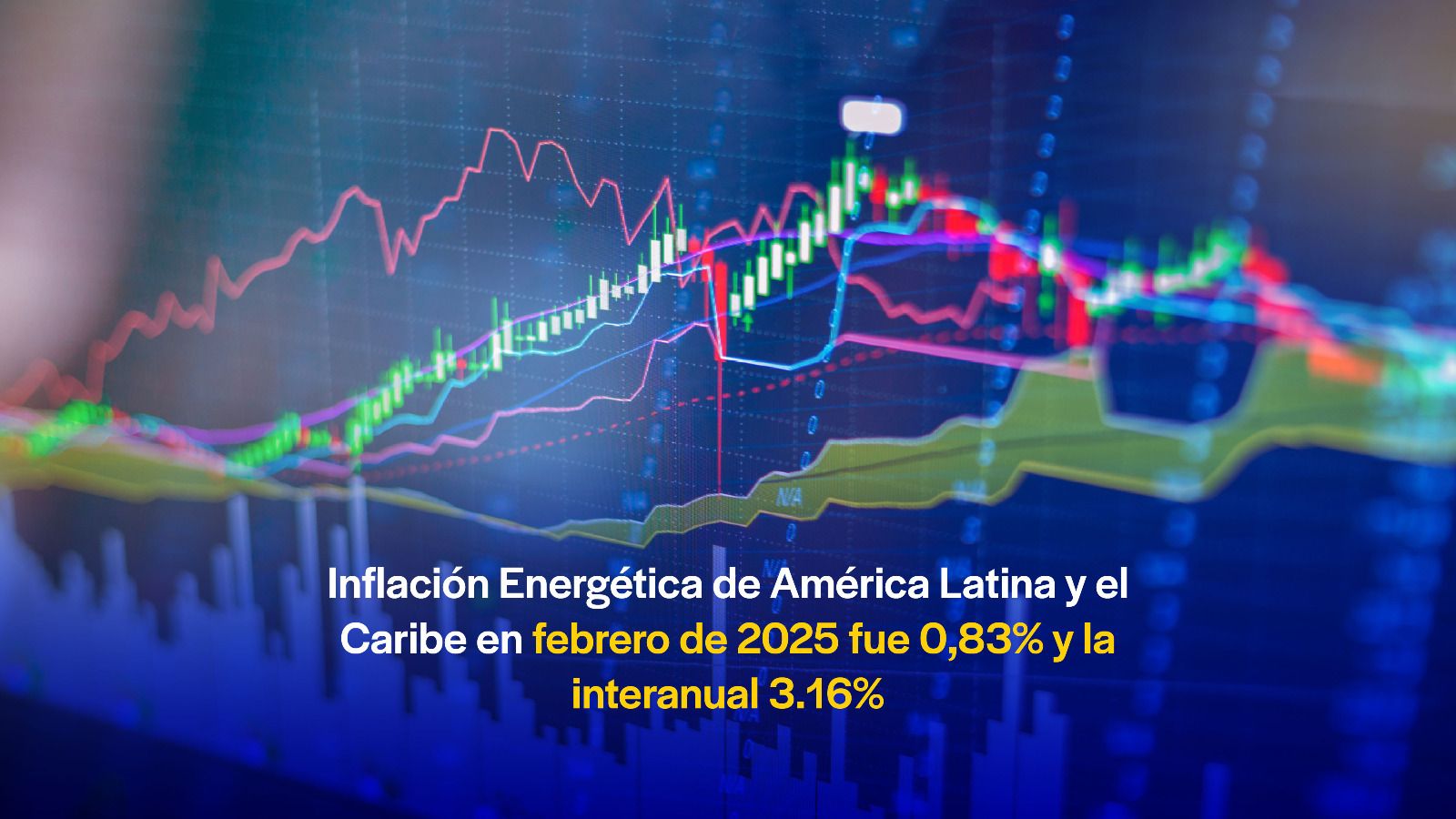
Monthly energy inflation increased 3.3-fold, rising from 0.26% in January 2025 to 0.86% in February of the same year. Despite a 5.3% drop in oil prices compared to January, this decrease has not translated into lower fuel rates in the region. It should be noted that oil prices account for approximately 60% of the variation in this index. In other words, this month it is electricity rates for the industrial and residential sectors that primarily explain the rise in the index, as a result of the reduction of subsidies in several Latin American and Caribbean countries.
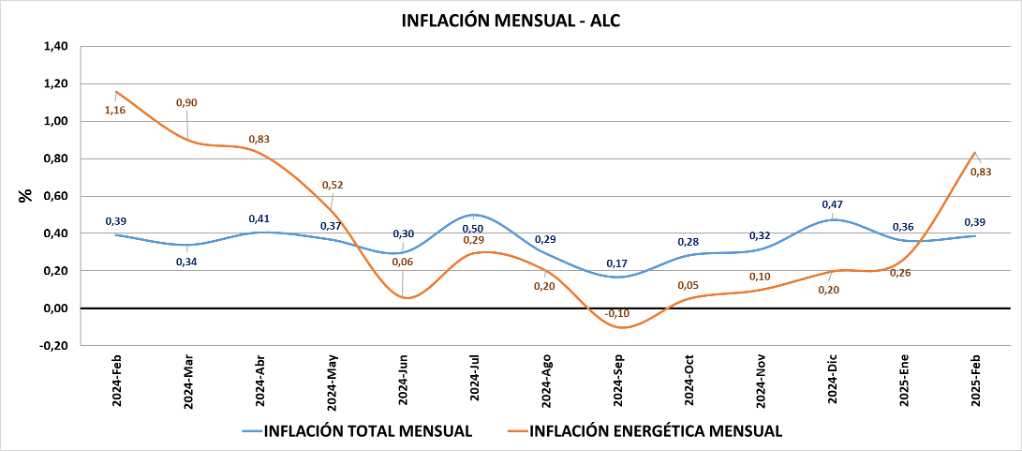
Source: OLACDE, based on information published by the Institutes of Statistics and Census and Central Banks of OLACDE Member Countries.
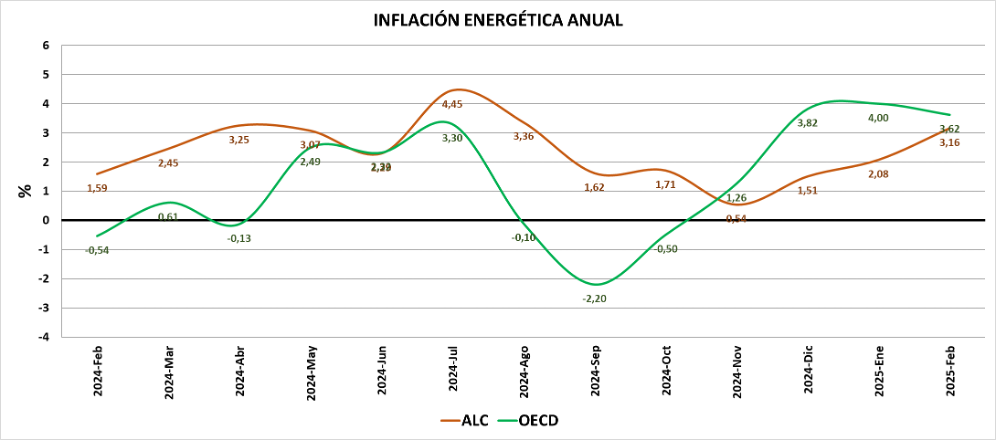
In February 2025, annual energy inflation in Latin America and the Caribbean reached 3.16% compared to February 2024. Although this is one of the highest figures of the past four months, it remained below overall inflation, which stood at 4.10%.
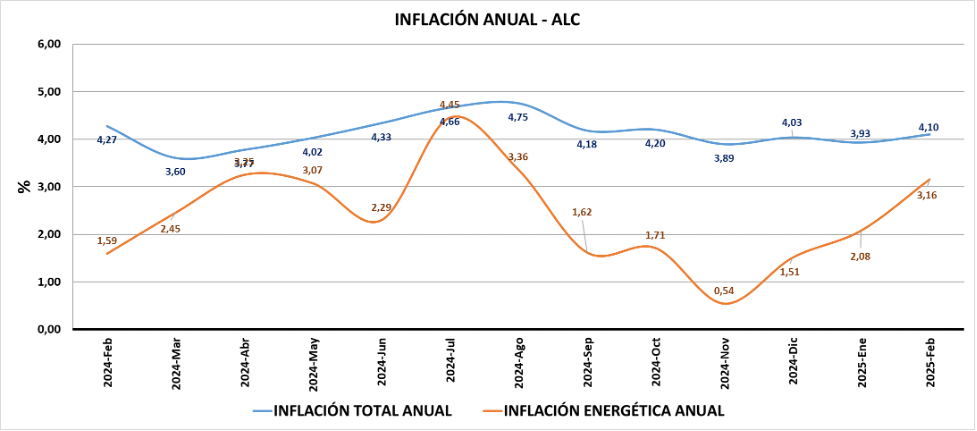
Source: OLACDE, based on information published by the Institutes of Statistics and Census and Central Banks of OLACDE Member Countries.
In February 2025, year-on-year energy inflation in OECD countries fell to 3.62%, after having registered 4.0% in January. By contrast, Latin America and the Caribbean has shown an increase in energy inflation over the past four months, reaching 3.16% in February 2025, although still below the OECD countries’ average.